
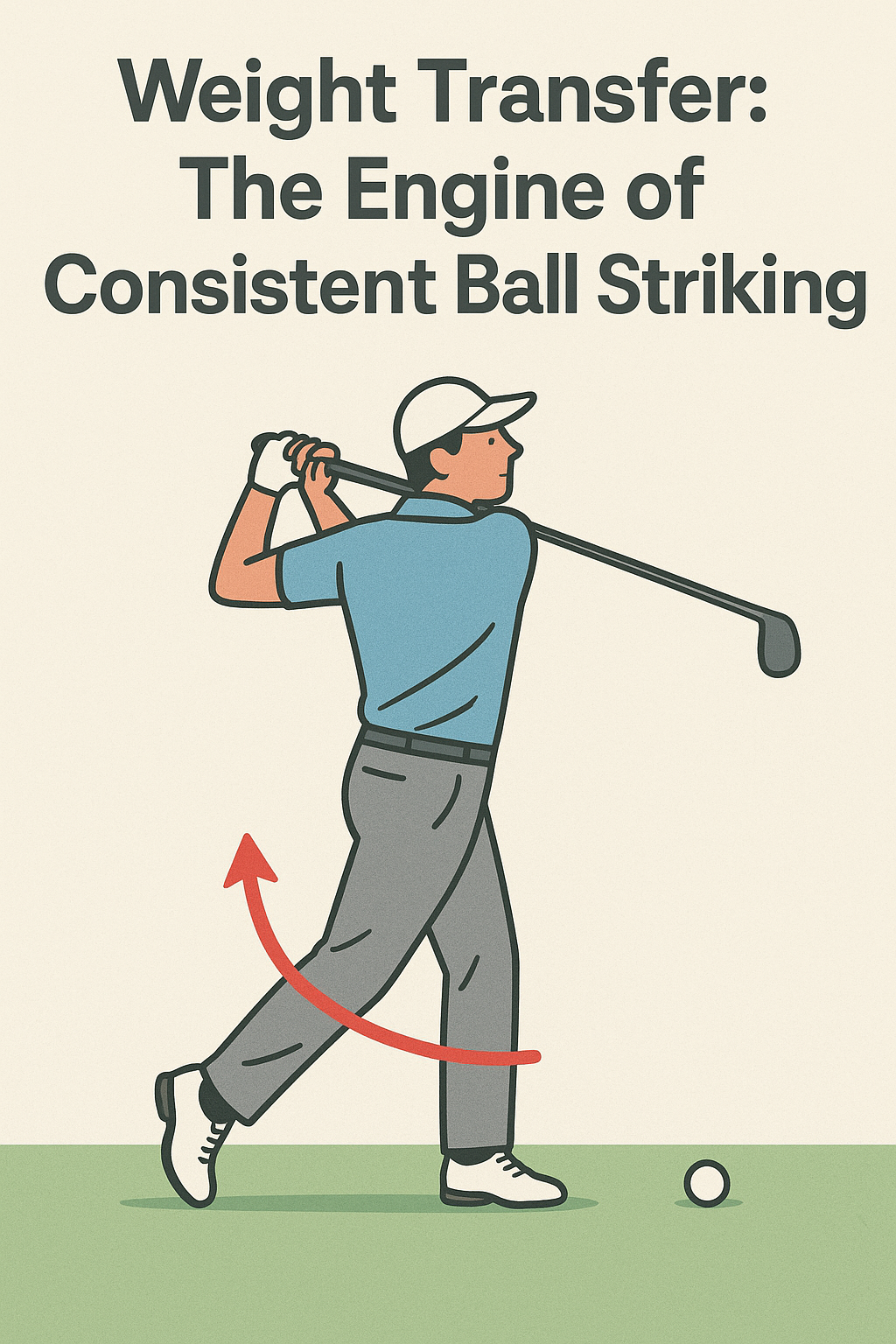
Weight Transfer: The Engine of Consistent Ball Striking
In golf, clean contact and solid distance all start with one simple idea: shifting your weight from the back foot to the front foot through impact. This is weight transfer. When you get it right, you’ll feel balance, compress the ball, and hit more solidly time after time.
What the concept is
Weight transfer is the deliberate movement of your center of gravity from your trail (back) side toward your lead (front) side as you move from the backswing into the downswing and through contact. It’s not a dramatic lunge or a snap; it’s a controlled, gradual shift that keeps your body in a good athletic posture and lets the club meet the ball with forward momentum.
Why it matters to the golf swing
- Promotes solid contact: moving the weight forward helps the club strike the ball with a descending path, especially with slightly descending iron shots.
- Improves consistency: a steady, forward transfer keeps your spine angle and balance, so shots aren’t topping or fatting.
- Optimizes power: a well-timed transfer releases stored energy through impact, translating to better ball speed without extra effort.
What the golfer should feel when doing it correctly
- At setup, you feel more weight on the balls of your feet as you start the swing, then a smooth shift toward the lead foot as you approach impact.
- During the downswing, your hips rotate toward the target and your chest slightly tilts toward the target while your weight moves forward.
- At impact, most of your weight should be on the lead foot (you should feel your front leg supporting you) with your trail knee unlocking a bit to allow the transition.
- You finish with your weight largely on the front foot and your chest facing the target, showing a balanced, athletic finish.
2–3 common mistakes and simple fixes
- Mistake 1: Weight never moves forward (staying back)
Why it hurts your strike: You often bottom out or blade/duck-shot the ball because the club meets the ball while your weight is still on your back foot.
Fix: Feel a gradual shift of pressure from the back foot to the front foot starting just after the halfway point of the backswing. Imagine you’re trying to “step into” the lead foot during the downswing without spinning your hips too early. Practice with a mirror or video to confirm your weight line moves forward through impact. - Mistake 2: Swaying or sliding (loss of balance)
Why it hurts your strike: Your center of gravity moves sideways, breaking the swing arc and making solid contact harder.
Fix: Keep a single, stable arc by maintaining a quiet lower body. Think of your belt buckle and chest tracing a line toward the target rather than moving toward the ball. Practice with a short backswing and a narrow stance to feel the balance stay centered while weight shifts. - Mistake 3: Weight shift happens too soon or too late
Why it hurts your strike: If the shift is too early, you lose lag and clubhead speed; if too late, you don’t compress the ball.
Fix: Let weight transfer occur as part of the sequence: smooth backswing, then gradual transfer during the downswing. Don’t rush the move. Focus on rotating your hips toward the target while your upper body remains on its intended plane, allowing the weight shift to happen naturally into impact.
One easy practice drill you can do at home or on the range
Step-Through Weight Transfer Drill
- Set up with a normal grip and a comfortable stance. Stand with your feet shoulder-width apart, but for this drill, keep your feet relatively flat rather than gripping the ground hard.
- Take a small, half backswing (about 30% of a full swing) and feel your weight start toward the trail side. Then pause at the top for a moment.
- During the downswing, imagine stepping into your lead foot as you rotate the hips toward the target. Your trail foot should come up slightly as you transfer weight forward.
- Finish with most of your weight on the lead foot and a balanced, athletic finish. Repeat slowly several times, focusing on a smooth, continuous transfer rather than a snap.
Tips for success: keep your head steady relative to the ball, avoid gripping the ground with your feet, and breathe out softly as you complete the transfer. As you get more confident, increase the swing length while maintaining the same transfer sequence.
Weight transfer isn’t the whole swing, but it’s a powerful lever for consistent contact and distance. Practice these cues and drills, and you’ll start to notice cleaner strikes and more dependable ball flight over time.
Weight Transfer: The Engine of Consistent Ball Striking
Why Weight transfer Matters in Ball Striking
In any sport that involves hitting a ball—golf, tennis, baseball, or even cricket—weight transfer is the hidden engine that drives power, control, and consistency. When you load the back foot, shift your weight through the swing, and release it at the right moment, you maximize collision efficiency between club, racquet, or bat and the ball. Poor or late weight transfer commonly manifests as mishits, slices, hooks, or off-center contact, which rob speed and accuracy.
Think of weight transfer as a carefully choreographed sequence of body movements that connects the ground to the hands. The body acts as a kinetic chain: feet, legs, hips, torso, arms, and leverage at the wrists all contribute to the moment of impact. If any link in the chain is mis-timed or underutilized, the energy you generate in the swing won’t translate into a solid, repeatable strike.
the Physics Behind Weight Transfer
Center of Gravity and Ground Reaction Forces
Weight transfer begins with the ground. Ground reaction forces (GRFs) push back as you push into the ground with your feet. By intentionally shifting weight from the rear foot to the lead foot during the downswing or forward motion, you load the muscles that propel the club or racquet. This transfer helps align the center of gravity over the target line at impact, increasing the likelihood of solid contact and consistent ball flight.
Sequencing: Proximal-to-Distal Shift
Professional hitters—whether golfers, tennis players, or batters—rely on a proximal-to-distal sequencing pattern. The hips and torso initiate the turn, the shoulders follow, and the arms and hands release the club or racquet.Proper weight transfer accelerates this sequence and minimizes early reaching or casting. The result is faster clubhead or racquet speed at the moment of impact and a more direct path to the ball.
Common Misconceptions
- Weight transfer is only about leaning forward. In reality, it’s a coordinated shift through the legs, hips, and torso, not just a forward lean.
- You should keep your weight on the back foot throughout the swing.Effective transfer requires moving weight toward the lead side before contact.
- Weight transfer is the same for every player. Individual differences in build, flexibility, and sport-specific technique influence how you transfer weight optimally.
Weight Transfer Phases in the Swing
Setup, Load, and Ground Preparation
During setup, establish a stable base with athletic knees, a slight athletic tilt, and evenly distributed pressure. The initial “load” involves slightly increasing pressure into the trail leg,without collapsing the posture. This preload readies the hips and torso for an efficient turn and weight shift, setting the stage for a precise transfer at impact.
Transition and Coiling
As the swing transitions from backswing to downswing, the hips begin to rotate toward the target while the upper body coils. The aim is to create a stored energy that will release through the impact zone. Real-time feedback—such as feeling the trunk rotate and the back foot slightly flatten—helps maintain balance and promotes a smooth transfer of weight from the back to the front foot.
Impact: The Moment of Truth
Impact is the critical moment when weight transfer is most visible. A well-timed shift toward the lead foot ensures the club or racquet makes clean contact with the ball. The energy stored during the transition is unleashed,increasing ball speed and improving launch conditions. Variations exist across sports, but the core principle remains: efficient transfer at impact equals higher quality contact.
Follow-Through: Rebalancing and Rhythm
After impact, your body continues to move, rebalancing weight as the swing completes. A balanced finish supports repeatability and reduces the risk of overextension or loss of control. A smooth follow-through helps engrain the motor pattern,making the weight transfer feel automatic in future swings.
Benefits of Proper Weight Transfer
- Increased ball speed and distance through efficient energy transfer from ground to club/racquet.
- more consistent contact and dispersion, reducing mishits and off-center shots.
- Enhanced accuracy by stabilizing the swing path and face alignment at impact.
- Improved balance and posture, reducing fatigue and injury risk during practice and competition.
- Better adaptability across multiple surfaces and shot types (draws, fades, power shots, and touch shots).
Practical tips to Improve Weight Transfer
- Feel the shift: During practice, focus on the sensation of loading the trail leg and then gradually pressing into the lead leg as you approach contact.
- Use a simple tempo cue: “Load, rotate, release.” A gentle tempo helps synchronize the hips, torso, and arms for smoother weight transfer.
- Align your stance to target: A stable base makes it easier to transfer weight cleanly without compensations like excess sway or early extension.
- Maintain posture: Keep a slight spine angle and avoid standing up too early in the downswing, which can derail weight transfer.
- Drill with impact bags or towels: Place a towel under your lead foot and practice transferring weight without slipping.this provides immediate feedback on balance and pressure shift.
- Video feedback: Record from face-on and side angles to observe how the hips and shoulders move in relation to weight shift. Look for a smooth, continuous transfer instead of abrupt stops.
Drills and Practice Plans
| Drill | What it trains | How to perform | Common cues |
|---|---|---|---|
| Pump Drill | Weight transfer and sequence | Take a stance, swing back halfway, pause, and swing through to finish. Repeat in sets. | “Load, shift, unleash.” |
| Step-Through Drill | Lead-leg pressure and rotation | Place a small target marker forward. From backswing, step toward the target with the lead foot and finish balanced. | “Step into the hit.” |
| Towel Under Front Foot | Stability and lead-foot action | Place a towel under the lead foot and practice weight transfer without sliding the foot laterally. | “Solid base, clear transfer.” |
| Impact Bag Drill | Impact timing and transfer | Hit an upright impact bag with a focus on feeling weight move toward the front foot at impact. | “Feel the front foot load.” |
| Shadow Swings with Tempo | Rhythm and sequencing | Do slow, intentional swings focusing on orderly weight shift, then gradually speed up. | “Load, rotate, release—slow to fast.” |
Case Studies: Weight transfer in Action
Case Study 1: Amateur Golfer Improves Consistency by 25%
Situation: A 14-handicap golfer struggled with inconsistent contact and frequent pushes to the right. Intervention focused on structured weight transfer cues, daily drills, and video feedback.
- Approach: Emphasized load on the trail leg, controlled transition, and a balanced finish. Used the Pump Drill and towel-under-front-foot drill three times per week for 6 weeks.
- Outcome: Average shot dispersion reduced by 28%, and the golfer reported a measurable increase in center-face contact. Estimated clubhead speed increase of 3–4 mph due to more efficient energy transfer.
Case Study 2: tennis Player Refines Groundstroke through Weight Transfer
Situation: A competitive junior tennis player faced inconsistent forehand depth and depth control, especially on cross-court shots.
- Approach: Focused on forward weight transfer through the shot, with emphasis on the sequence from legs to hips to arm extension. Drills included step-through pattern on forehand side and video checks for weight path alignment.
- Outcome: Notable improvement in ball depth and stability, with fewer net errors and more pace on consistent contact balls.
First-Hand Experience: A Coach’s Log
Week 1: Noticed nearly every player defaults to a late transfer or flat footed strike. We introduced a simple cue: “Load the back,feel the drive forward.” We started with the Pump Drill and towel drill. Immediate feedback showed players initiating hip rotation later and losing some pace at impact.
Week 3: With consistent practice, players began finishing with stronger lead-side pressure. The transfer felt more like a smooth river rather than a abrupt jerk. Contact improved, and players described more “solid” feel on the face of the club or racquet.
Week 6: Ball speeds increased, and dispersion narrowed. We noticed a correlation between better weight transfer and reproducible swing patterns across different shot types. The most meaningful changes came from small, intentional shifts rather than dramatic adjustments.
Frequently Asked Questions
How long does it take to feel weight transfer in a swing?
most players begin noticing a more natural transfer within 2–4 weeks of consistent drills and feedback. The speed of improvement depends on baseline mobility, balance, and how often you practice with explicit transfer cues.
Can weight transfer fix a slice or mishits?
Weight transfer is a major factor in contact quality. Properly timed transfer can reduce slice tendencies by aligning the clubface and swing path more consistently at impact. It’s usually part of a broader technical fix that may also involve grip, stance width, and swing path adjustments.
Is weight transfer different for men and women or across ages?
the physics of weight transfer is universal, but individual physical factors—like hip mobility, ankle flexibility, and core strength—affect how you implement it. Training should be customized to mobility, strength, and athletic background while preserving the core principle of efficient transfer from back foot to lead foot during impact.
Terminology and Speedy Reference
- Weight transfer: The deliberate shift of body mass from the back foot toward the lead foot during the swing to maximize energy transfer to the ball.
- Ground reaction forces (GRFs): the forces exerted by the ground against the body, which drive the initial energy for the swing.
- Center of gravity (COG): The balance point of the body that shifts as weight moves through the swing.
- Proximal-to-distal sequencing: The kinetic pattern where larger muscle groups (hips, torso) initiate movement followed by the limbs (arms) to maximize speed and control.
- Impact conditions: The alignment of hips, shoulders, clubface, and weight distribution at the moment of contact with the ball.
Final Thoughts on Implementing Weight Transfer
Weight transfer is a practical, repeatable principle that applies across ball-striking disciplines. By understanding the phases—setup, load, transition, impact, and follow-through—and by training with targeted drills, you can unlock more consistent contact, greater ball speed, and better on-course or on-court performance. Focus on the feel of the weight shift, cultivate a smooth timing rhythm, and use feedback—whether from video, a coach, or a simple tactile cue—to reinforce the right transfer pattern. The result is a more reliable swing that translates your athletic potential into tangible results.