
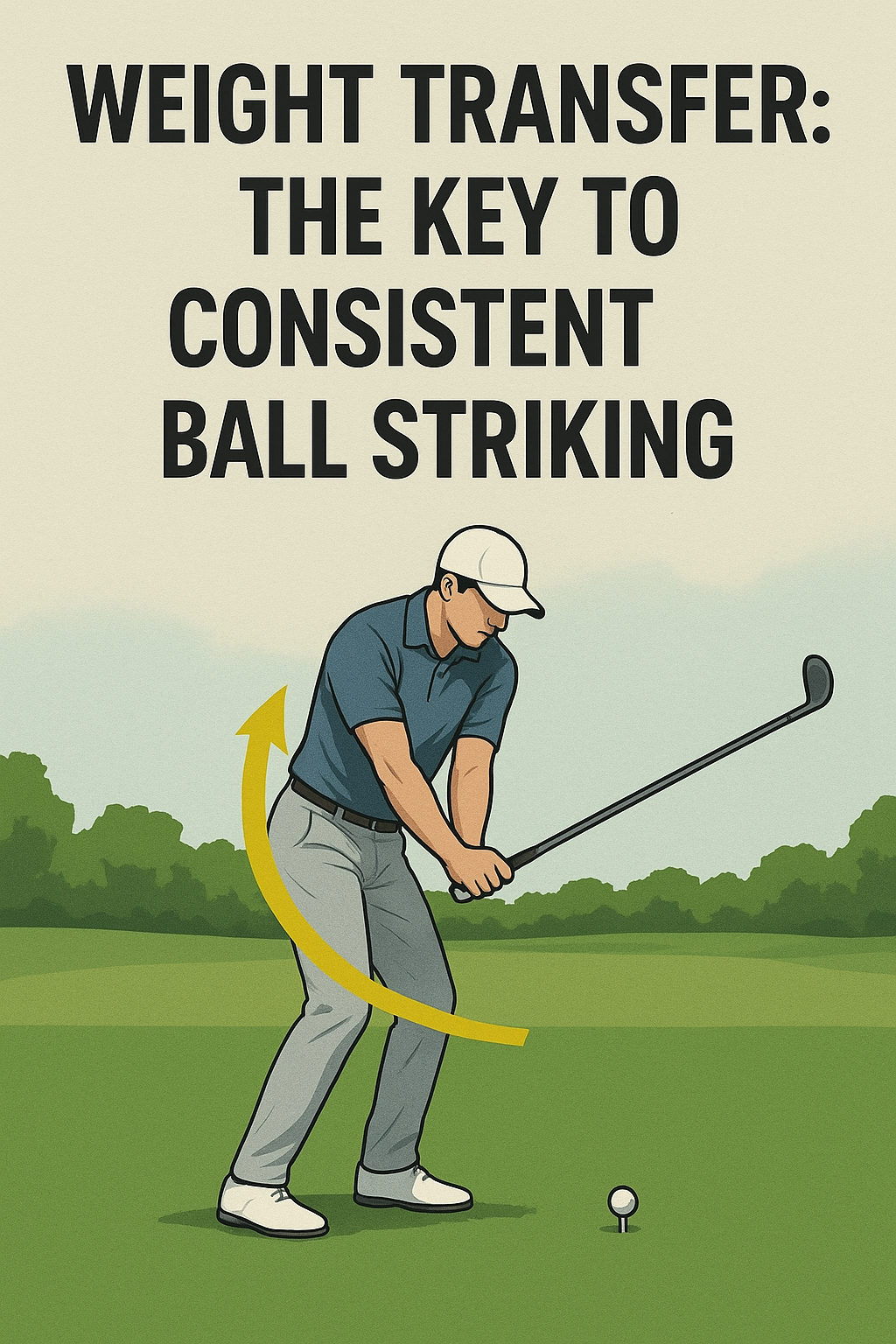
Weight Transfer: The Key to Consistent Ball Striking
Today we’re focusing on one powerful idea that quietly drives better contact and more solid shots: weight transfer. In plain terms, it’s how you move your balance from your trail foot toward your lead foot as you swing through the ball. Master this, and you’ll feel more control, more solid contact, and more consistent ball flights.
What the concept is
Weight transfer is the deliberate shift of your center of gravity from the back side of your stance toward the front side as you come into and through impact. For a right-handed golfer, that means a shift from the right foot toward the left foot; for a left-handed golfer, the opposite. The move is guided by your hips and torso rotating toward the target while your spine stays tilted rather than standing upright. It’s not a quick slide; it’s a coordinated, gradual transfer that happens during the downswing and through impact.
Why it matters to the golf swing
- Solid contact: Proper weight transfer helps the club strike the ball in a stable, level arc, reducing fat or thin shots.
- Consistent height and compression: Moving your weight enables the club to meet the ball with the right angle of attack, helping you compress the ball more reliably.
- Power with control: By loading on the trail side and releasing toward the lead side, you store energy and release it smoothly through impact.
What you should feel when doing it correctly
- A gradual shift of weight from the back foot to the front foot as you start the downswing.
- Pressure building onto the lead-side foot (the foot you’re stepping into) as you approach impact.
- Hips rotating toward the target while your spine maintains its tilt, keeping your balance centered between the feet.
- A stable chest angle and a smooth, coordinated sequence rather than a sudden lurch forward.
2–3 common mistakes and simple fixes
Mistake 1: Too little weight shift
Symptoms: You stay mostly on your back foot into impact, often producing thin or weak shots.
Fixes:
- Bump the hips slightly toward the target in the downswing to initiate the transfer.
- Feel the pressure move from the trail foot into the lead foot as you approach impact.
- Keep the trail knee flexed a touch longer to maintain balance before transferring.
Mistake 2: Weight shifts too early
Symptoms: Weight moves to the lead foot before you’ve fully rotated your upper body, causing off-center contact and pulls/hooks.
Fixes:
- Rotates hips first, then lets the weight shift as you square the clubface toward the ball.
- Think “coil then unload”: hold the back (trail) side slightly longer, then shift and release through impact.
- Widen your stance just enough to maintain balance so you don’t jump onto the front foot early.
Mistake 3: Over-shifting or swaying into the lead side
Symptoms: You slide too far onto the lead foot or lose center balance, often toe-ing the ball or losing lag.
Fixes:
- Maintain a slight spine tilt and keep upper-body angles intact as you transfer weight.
- Feel a deliberate but controlled push toward the target rather than a big sideways lunge.
- Practice with a focus on balance: keep your head relatively still over the beltline while your hips rotate.
One easy drill you can do at home or on the range
Step-Through Weight Transfer Drill
- Set up with a normal stance and a mid-iron or wedge.
- Take a slow backswing, then during the downswing, step your lead foot gently toward the target as if you’re stepping into the shot.
- Finish with your hips rotated, weight mostly on the lead foot, and your chest facing the target. Pause for a moment, then swing again with the same step-through feeling.
- Do 8–12 reps, focusing on a smooth, timed transfer rather than power.
A quick home-friendly cue to remember
- “Coil, then transfer, then release.” Initiate the downswing with hip rotation, transfer weight to the lead foot, and release through impact with a balanced finish.
Putting it into your routine
Use weight transfer as a checkpoint on every swing. If you’re struggling, pause at the top of your backswing and rehearse the transition: feel the hips start to turn, feel the weight shift forward, then complete the swing with balance. With practice, the transfer becomes natural and your strikes become more repeatable.
Weight Transfer: The Key to Consistent Ball Striking
Why weight Transfer Matters in the Golf Swing
In golf, the path to consistent ball striking starts with how your weight moves through the swing. Weight transfer refers to the purposeful shift of your body’s mass from the back foot to the front foot as you swing from takeaway to impact. When executed with precision, this transition stabilizes your spine angle, optimizes the contact point, and improves the predictability of shot shape and distance. It isn’t solely about power; it’s about timing, balance, and the sequencing of your body’s segments to deliver the clubface squarely to the ball at the moment of impact.
Think of weight transfer as the foundation of your swing’s kinetic chain. Your legs, hips, torso, and arms must work in harmony, with the ground providing the necessary reaction forces. The better you transfer weight toward the target at impact, the cleaner your strike tends to be, leading to more solid contact and increased ball speed without sacrificing control.
The Physics of Weight Transfer
Weight transfer is governed by physics principles like center of gravity, ground reaction forces, and angular momentum. As you rotate into the downswing, your weight shifts from the trailing foot toward the lead foot. This shift creates a forward-leaning pressure vector that helps the club drop onto the correct swing plane and release through the ball with a stable base. A well-timed transition minimizes sliding or lateral sway and maximizes the amount of energy transferred from the body to the club.
During impact, most of the ground reaction force should be directed along the line of target, with a controlled amount of vertical force that keeps you from topping or fatting the shot. A smooth, purposeful weight transfer reduces the risk of early extension, reverse pivot, and inconsistency in strike location. In short, mastering weight transfer improves algarve-level balance on the golf course: more distance, tighter dispersion, and better feel for your shots.
The Kinematic Sequence and Ground-Reaction Forces
Elite players rely on a well-timed kinetic sequence: ankles first, then knees, hips, torso, and finaly the arms. when weight shifts correctly, the ground reaction forces initiate from the ground, travel up through the legs, and help unwind the hips and torso in the proper order. This sequencing stores energy in the legs and core and releases it through the arms into the club at impact. practically, this means the lower body acts as the engine for power, while the upper body provides accuracy and control.
Practical Steps to Master Weight Transfer
Below is a practical, step-by-step approach to building consistent weight transfer into your golf swing. Use these guidelines to diagnose issues in your current swing and to build drills that reinforce good habits.
Setup and Stance
- Adopt a comfortable athletic stance with feet shoulder-width apart and knees slightly flexed.
- Distribute your weight approximately 50/50 between the balls of the feet and the heels for balance.
- Position the ball slightly forward of center for shorter clubs and progressively closer to center for longer clubs, supporting a natural path to the ball.
- Keep your spine angle steady with a relaxed grip and soft hands; avoid gripping too tight, which can impede weight shift.
The Backswing: Loading on the trail Side
During the backswing, allow your trail knee to flex modestly and your weight to feel like it shifts toward the right foot (for right-handed players).The goal is to store energy by loading the hips and torso while maintaining a stable spine angle. A common cue is “turn and tilt” rather than “lift and flare,” which helps you keep the center of gravity over the base while loading the trail leg.
- Rotate your hips and slightly rotate the upper body away from the target, keeping the lead arm relatively extended.
- Feel the weight move toward the right midfoot and heel—enough to create a subtle pressure shift without losing balance.
- Maintain a quiet head position and avoid excessive lateral sway that could derail the sequencing.
The Downswing and Impact: Unloading to the Lead Foot
The downswing should feel like a controlled uncoiling of energy from the ground up. As the lead foot becomes the primary base of support, the hips and torso rotate toward the target, transferring weight forward. The key is to start this shift early enough to release power through the ball but late enough to avoid early extension or loss of lag.
- Initiate the downswing with a slight lateral move toward the target and a hip turn that clears space for the arms to drop into the correct swing plane.
- By the time you reach impact, the majority of your weight should be on the lead foot, with pressure applied from the midfoot to the big toe.
- Keep the hands in front of the clubhead through impact to maintain proper shaft lean and solid contact.
Post-Impact and Recovery
After impact, allow your body to rotate naturally through the follow-through while maintaining balance. A successful finish shows you’ve completed the weight transfer sequence: weight on the lead foot,hips and shoulders square to the target,and a stable base throughout the finish. This reinforces consistency across shots and reduces the likelihood of post-impact misreads.
Benefits of Proper Weight Transfer
- Improved ball contact: cleaner strikes and reduced mis-hits.
- A more consistent launch with better dispersion and distance control.
- Enhanced balance through the swing,reducing wobble and fatigue on the course.
- Increased power efficiency: energy stored in the legs and hips is released through the clubface.
- Lower injury risk: stable weight transfer reduces compensatory moves that strain the back and wrists.
Common Mistakes and How to Fix them
- Overweight staying on the back foot at impact: fix by practicing drills that encourage forward shift and lead foot pressure, such as the step drill (described below).
- Excessive sway or lateral movement: work on a centered stance and hip-driven rotation rather than side-to-side motion.
- Early extension: focus on maintaining spine angle by keeping the chest centered over the ball longer during downswing.
- Reverse pivot: ensure the hips rotate enough toward the target to allow a natural transfer rather than reversing the weight back to the trailing foot.
- Inconsistent foot pressure: incorporate balance and proprioception exercises to feel the ground forces more clearly.
For each mistake, a corresponding drill can help retrain the body to deliver the weight transfer more consistently. The drills below are designed to be integrated into a regular practice routine.
Drills and Training Plans
These drills reinforce the feel of weight transfer, using cues and simple movements to build reliable sequencing. Use them with your current clubs,gradually increasing speed as you gain confidence.
| Drill | Cues / How to Do It | Duration | reps / sets |
|---|---|---|---|
| Toe-Tap drill | Tap the lead toe just before impact to feel weight shift forward. | 2–3 minutes per side | 2 sets of 8–12 taps |
| Step Drill | Take a small backward step with your trail foot at the top of the backswing to promote forward weight transfer during transition. | 5 minutes | 3 sets of 6 reps |
| Pivot Drill | Rotate hips on the backswing and then pivot toward the target on the downswing to feel the weight shift to the lead side. | 4 minutes | 2–3 sets of 5 reps |
| Quarter-Swing Drill | Use 50% swing speed to focus on weight transfer without rushing through impact. | 6 minutes | 4 sets of 8 reps |
| Balance Board Drill | Stand on a balance board with a single club; practice weight shift from back foot to lead foot while maintaining spine angle. | 5–7 minutes | 3 sets of 1 minute |
Case Studies and First-Hand Experience
Real players see the benefits of improved weight transfer when they translate practice into on-course results. Here are two concise case observations from both amateur and developing pro players.
- A mid-teen handicap player who struggled with fat shots found consistency after a four-week drill block focused on forward weight shift. Within two weeks, the dispersion narrowed from a 20-yard spread to about 12 yards, and contact improved from inconsistent to solid on 7-iron through driver.The key adjustment was feeling the pressure build in the lead foot earlier in the downswing, stabilizing the strike plane.
- Developing Pro Case: A collegiate golfer refined weight transfer to enhance driver performance. By combining the Toe-Tap Drill with a Pivot Drill,the player achieved a more repeatable swing path and a tighter shot window. They reported reduced lower back strain and steadier tempo, measuring progress via launch monitor data that showed improved carry distance consistency and lower variability in face angle at impact.
FAQ: Weight Transfer in Golf
- Can weight transfer fix a slicer?
- Weight transfer helps stabilize your swing sequence and can reduce over-rotation that encourages an outside-to-in path. Pair it with an inside-to-out path cue and face control work for best results.
- Is weight transfer different for irons and drivers?
- The essential principle is the same, but driver swings often require more aggressive lower-body initiation and a broader base to maintain balance through longer arc and higher swing speed.
- How do I measure progress?
- Track contact quality, dispersion, and carry distance with a launch monitor or practice net. A consistent trend toward tighter shot grouping and more centered ball contact indicates improved weight transfer.
- Should I feel the weight shift in my feet or in my hips?
- Both are involved,but the feel should start from the ground up. Focus on your feet pressuring into the ground and the hips turning to allow the weight to move forward smoothly.
The equipment and fitness Side: Supporting Weight Transfer
Weight transfer isn’t only a swing cue—it benefits from proper conditioning and equipment setup. A few practical considerations can support better transfer and balance:
- Core stability: planks, anti-rotation holds, and cable chop exercises improve torso control and sequencing.
- Leg strength: squats, lunges, and step-ups bolster the legs’ capacity to drive weight forward without losing posture.
- Mobility: hip hinge mechanics and ankle mobility help you rotate and transfer weight without compensations.
- Footwear and ground feel: stable, well-fitting golf shoes with a solid heel cup improve contact and balance during transition.
Integrating conditioning with swing practice helps you sustain a consistent weight transfer over 18 holes, reducing fatigue-related breakdowns and keeping your ball striking reliable in the late rounds.
Key Takeaways
- Weight transfer is the deliberate shift of weight from the trail foot to the lead foot, starting from the backswing through impact.
- A well-timed weight transfer stabilizes the swing, improves contact, and adds consistency to distance and trajectory.
- Ground reaction forces and the kinetic sequence are central to effective weight transfer.
- Practical drills like toe-tap, step drill, pivot drill, and balance work reinforce the correct feel and timing.
- Consistent practice combining technique, drills, and conditioning yields measurable improvements in ball striking.