
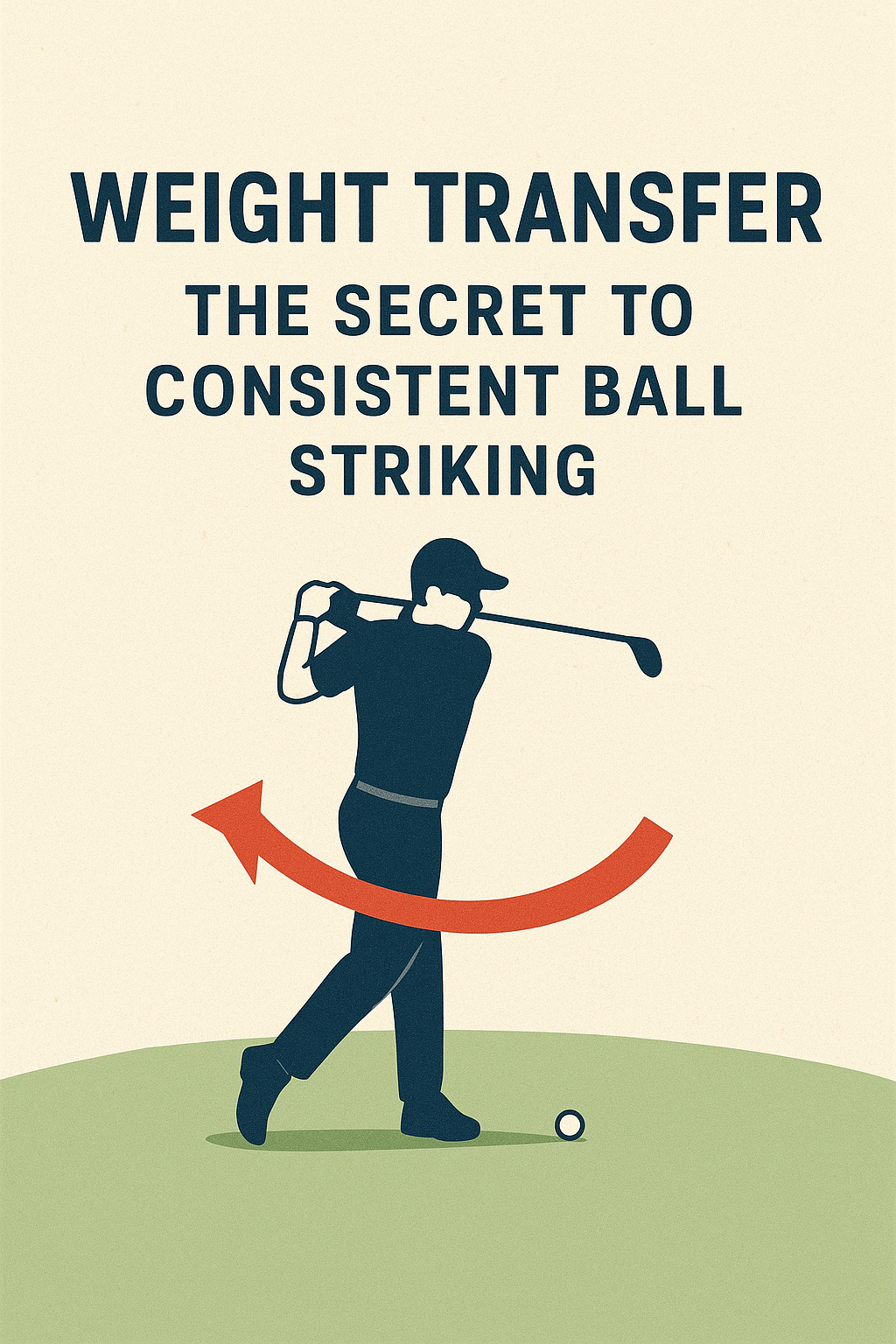
Weight Transfer: The Secret to Consistent Ball Striking
Focus topic: how you move your body weight from the trail foot to the lead foot during the swing. This is the foundation of solid contact and distance control for most amateur players.
What the concept is
Weight transfer means shifting your center of gravity smoothly from your back foot (trail) toward your front foot (lead) as you swing. You don’t want to “hang back” or slide out of balance. Instead, your weight should progressively move through the ball and finish with most of your weight on the lead foot.
Why it matters to the golf swing
- Improves solid contact: a well-timed transfer helps the club strike the ball a touch before the bottom of your arc, promoting clean contact.
- Increases ball speed and control: efficient transfer creates a more stable base, letting the clubface stay on target and reducing mis-hit tendencies.
- Supports better balance: staying centered through impact makes it easier to finish with good posture and accuracy.
What you should feel when doing it correctly
- As you start the downswing, you should feel your hips rotate toward the target and your weight shifting off the trail foot.
- By impact, most of your weight is on the lead foot, with light pressure remaining on the trail foot.
- Your spine angle stays relatively quiet and you finish balanced, with the chest facing the target and your weight over the lead foot.
2–3 common mistakes with weight transfer
- Mistake 1: Hanging back on the trail foot. The body stays heavy on the right foot (for right-handed golfers), which often leads to thin shots, topped balls, or loss of power.
- Mistake 2: Swaying laterally instead of rotating. The lower body slides sideways rather than rotating, throwing off balance and contact.
- Mistake 3: Rushing the transfer. Weight moves forward too quickly, causing early release and inconsistent timing.
Fixes you can apply
- Fix for Mistake 1 (hanging back): At address, feel about 60% of your weight on the lead foot and 40% on the trail foot. During the swing, imagine you’re pressing into the ground with the trail heel and then gradually transferring weight forward. Practice with no ball first to feel the shift.
- Fix for Mistake 2 (excess sway): Focus on rotation, not slide. Keep your spine angle steady and rotate your hips toward the target while allowing the lead knee to flex naturally. A simple cue is “rotate the belt buckle toward the target, not the hips to the side.”
- Fix for Mistake 3 (rushing transfer): Slow the tempo and introduce a small pause at the top of the backswing. On the downswing, trust gravity and rotation to move the weight smoothly rather than forcing it forward. Use a metronome or count 1-2-3 across the swing to cue a calm rhythm.
A simple drill you can do at home or on the range
- Weight-Shift Pump Drill (6–8 reps, then add a ball):
- Stand with your feet close together to reduce side-to-side motion.
- Take your normal grip and posture. Without a ball, swing back to about 45 degrees, pause for a beat, then swing down and finish with your weight on the lead foot. Do not let the trail heel lift aggressively; keep balance in the center.
- Repeat 6–8 times, focusing on a smooth, continuous transfer from trail to lead.
- Progress to a short iron with a ball, maintaining the same feel. If you feel your weight creeping to the back foot, reset and recheck your tempo and hip rotation.
Consistency with weight transfer builds a reliable base for your entire swing. Start with small, controlled motions, then layer in ball striking at the range. With patience and repetition, you’ll notice cleaner hits and more solid distance control.
Weight Transfer: The Secret to Consistent Ball Striking
Understanding Weight Transfer in Ball Striking
Weight transfer is the deliberate movement of your center of gravity from the back foot toward the front foot during the golf swing (or any ball-striking motion). When performed correctly, this shift optimizes the sequence of forces that generate speed, control, and accuracy. Think of weight transfer as the engine behind a smooth, repeatable strike: it helps your body sequence initiates from the ground up, rather than from the arms alone.
At its core, weight transfer relies on the body’s kinetic chain: feet push into the ground, legs and hips rotate, the torso coils, and finally the arms deliver the club through the ball. The goal is to maintain balance and a stable head position while gradually loading and unloading weight to produce a powerful,consistent impact.
Keywords: weight transfer, weight shift, ball striking, golf swing, ground reaction force, kinetic chain, center of gravity, balance, impact position.
Phases of Weight Transfer in the golf Swing
Setup and Address Position
A solid weight transfer begins before you swing. In a well-balanced setup, your weight is evenly distributed between the arches of your feet with a slight bias toward the balls of the feet. A agreeable athletic stance sets you up to feel the ground through your feet, which is essential for a controlled transfer later in the swing.
Balls, Backswing, and Loading
During the backswing, your weight typically shifts toward the inside of your trail foot (the right foot for a right-handed golfer). This loading phase stores elastic energy in the hips and trunk. The goal is not to slide sideways but to rotate the pelvis and torso while maintaining a steady spine angle and head position.
Transition and Transition Cues
The transition is where weight transfer becomes decisive.As you approach the top of the swing, your hips begin to move toward the target, and your weight re-centers toward the front leg. Think “uncoil from the ground up”—the legs and hips transfer energy first, then the torso, then the arms.
Impact Position
At impact, you want a momentary stack of weight on the lead leg with the trail knee flexed and the pelvis rotated open to the target. A properly transferred weight helps you strike the ball with a stable, down-and-trough path, reducing the tendency to scoot or lift during contact.
Follow-Through and Balance
After impact, the weight continues its journey toward the front foot while you rotate through to a balanced finish. A controlled finish position reinforces repeatable weight transfer and reduces the risk of compensations that degrade contact.
Why proper Weight Transfer Improves Consistency
- Increased clubhead speed at impact: Energy is generated progressively from the ground up, not abruptly from the arms.
- Improved contact and ball flight: Forward weight transfer helps you strike the ball before you swing past it, promoting solid center-face contact.
- Enhanced balance and stability: A deliberate shift in weight reduces over-rotation and lateral movement that disrupts rhythm.
- predictable strike pattern: When weight shifts with the sequence, similar impact conditions recur, aiding consistency across rounds.
- reduced injury risk: A well-timed transfer minimizes excessive early extension or over-rotation that stress joints.
Common Mistakes and How to Fix Them
- Mistake: Early weight shift toward the front foot in the backswing. Fix: Maintain a slight knee flex and pressure into the trail foot during the backswing; feel the load in the back hip, not a slide forward.
- Mistake: Lateral slide instead of rotation. Fix: Use pelvis rotation to shift weight, not a fatal slide. practice with feet fixed and rotate hips to feel the seam of rotation and weight transfer.
- mistake: Head moves excessively during the swing. Fix: Keep a quiet head by staying centered over the ball and using a short tripod stance cue to limit lateral movement.
- Mistake: Rushing the transition. Fix: Focus on a deliberate, smooth transition and maintain balance before accelerating through impact.
- mistake: Collision with the ball at a steep angle.Fix: Rehearse with slow, controlled tempo, then gradually increase speed while preserving transfer mechanics.
Benefits and Practical Tips
- Tempo and sequencing: A consistent weight transfer creates a reliable tempo, making it easier to repeat swings under pressure.
- Grip and posture alignment: Pair weight transfer with proper grip pressure and posture to avoid compensations that derail contact.
- On-course adaptability: When you can transfer weight effectively, you adapt better to different lies and shot shapes.
- Injury-preventive benefits: Balanced loading reduces abnormal stresses on the lumbar spine and knees.
- Longer drive potential: Efficient weight transfer translates to higher ball velocity without sacrificing control.
Drills to Develop Efficient Weight Transfer
1) Elevator Drill (Ground-force Awareness)
Start with your feet hip-width apart. Shift weight onto your back foot while maintaining knee flex. Push into the ground with the trail foot, then gradually lift into the lead foot as you rotate the hips. This drill teaches the progression from back to front through the ground, not by sliding.
2) Alignment Stick Series (Feel the Path)
Place an alignment stick along your spine or under your right shoulder. As you swing, focus on keeping the stick aligned with your spine and avoiding excessive lateral tilt. The stick acts as a cue to manage weight transfer without losing spine angle.
3) Step-Through Drill (Transition Timing)
With a partial backswing, take a short step toward the target with your lead foot, then rotate through impact. This drill emphasizes moving weight as a unit and coordinating the step with the hip rotation for a clean transition.
4) Medicine Ball Rotations (Core Sequencing)
Stand tall and perform controlled torso rotations with a light medicine ball. The focus is on initiating the rotation from the hips and transferring weight forward as you rotate, mimicking the sequencing of a golf swing.
5) Impact Tape Feedback (Immediate Results)
Use impact tape or a reflective impact marker system to observe where you hit the face.Consistent weight transfer usually yields more centered contact. Review the markers and adjust weight shift cues to improve precision.
6) Slow-Mreak Drills (Tempo Building)
perform a 50% swing tempo repeatedly, focusing on a deliberate loading phase in the backswing and a smooth, decisive weight transfer into the front foot at impact.
Case Studies
Case study 1: Mike’s Distance and Accuracy Gains
Mike, a 45-year-old recreational golfer, struggled with inconsistent contact and a frequent left-to-right miss. After six weeks of focused weight-transfer work, including the Step-Through and Elevation drills, he reported a 12% advancement in fairways hit and a 6–8 yards increase in carry distance on average. Key takeaway: developing a reliable weight transfer sequence reduced compensations in his swing and freed his hips to contribute more energy to the strike.
Case Study 2: Sarah’s Consistency Under Pressure
Sarah, in her late 20s, felt her swing become erratic under pressure, especially on approach shots.A program centered on load-control cues and pelvic rotation helped her transfer weight more predictably, leading to a 15% reduction in shot dispersion and a noticeable improvement in green-hit quality. Her anecdotal note: “When I feel the weight move forward smoothly, the ball just seems to stay on path.”
Firsthand Experience: Coaching and Player Perspectives
Coaches consistently report that players who master weight transfer tend to gain both confidence and control. The best players don’t “hunt” for power; they cultivate a repeatable sequence that starts at the ground. The sensation is often described as “feeling the weight travel from the back foot to the front foot with a controlled pelvic turn,” followed by the torso unwinding and the hands delivering the club at a precise moment.
A practical coaching tip: integrate feedback cues such as “load, rotate, deliver.” Use slow-motion video to verify that the trail knee flex remains through the backswing,that the lead knee stabilizes during the strike,and that the head remains relatively steady. When players report a wobble or a loss of balance, it’s typically a sign that weight transfer has become reactive rather than deliberate.
weight Transfer Checklist
Use this quick reference to ensure your weight transfer is clean and repeatable across practice and play.
| Phase | Key Feel/Cue | Common Mistakes | Drills/Reminders |
|---|---|---|---|
| Setup | Balanced weight on arches; slight bias to balls of feet | Weight heavy on heels; arms compensate | Quiet stance, slow weight shift into trail foot |
| Backswing | Load into trail leg; hips rotate away from target | Sliding hip, early forward motion | Pelvic rotation drill; keep spine angle constant |
| Transition | Shift toward lead foot; hips open to target | Rush to impact; loss of balance | Step-through cue; practice with slow tempo |
| Impact | Lead-side solid; trail knee flexed; weight onto lead foot | Over-acceleration; head movement | Impact tape feedback; smooth acceleration |
| Follow-Through | Weight advances; balanced finish | Pulling off early; hanging back | Hold finish; track balance with mirror or video |
FAQs About Weight Transfer and Ball Striking
- Q: How quickly should weight transfer occur? A: In a well-tuned swing, weight transfer is a smooth, continuous process that begins in the early downswing, not an abrupt snap. The pace should match your tempo and comfort level, then become faster only as you gain control.
- Q: Can you overdo weight transfer? A: Yes. Excessive forward weight at impact can lead to chopping across the ball or topping it. The aim is a balanced, efficient transfer that aligns with your swing’s arc.
- Q: Is weight transfer different for drivers vs irons? A: The basic principle is the same, but the driver often requires a slightly longer unloading phase and a deeper weight shift to maximize distance while still maintaining control.
Remember: weight transfer is a skill that benefits from deliberate practice. Pair drills with video feedback, progressive tempo, and mindful cues to embed a repeatable pattern that translates to better, more consistent ball striking on the course.