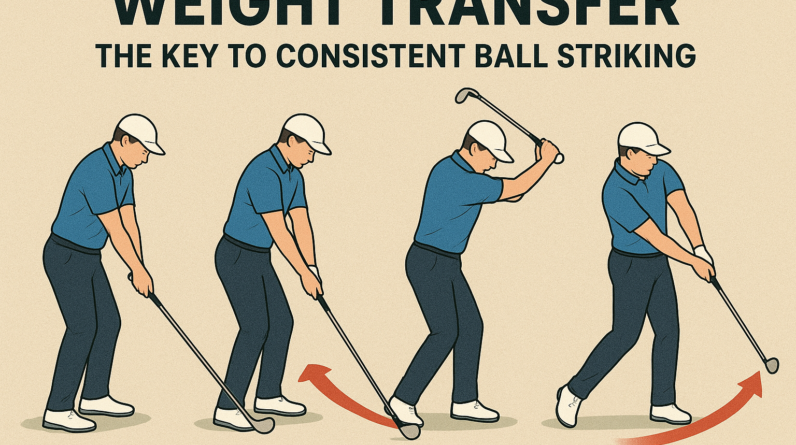

Weight Transfer for Consistent Ball Striking
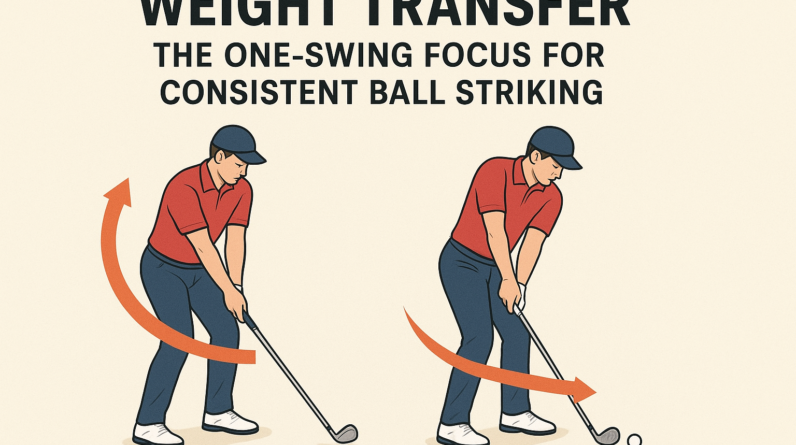
Today we’ll lock in on a single, powerful concept: weight transfer. Specifically, how your body’s weight moves from the trail foot to the lead foot through impact. This isn’t about flashy moves; it’s about a simple, repeatable shift that helps you compress the ball, maintain balance, and hit more solid shots.
What the concept is
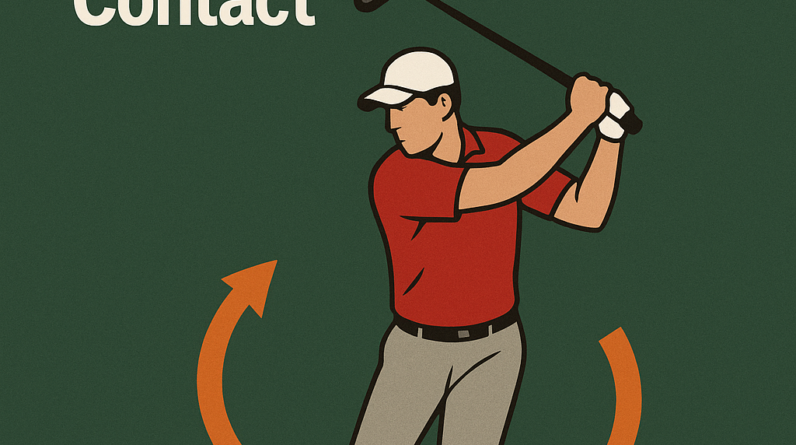
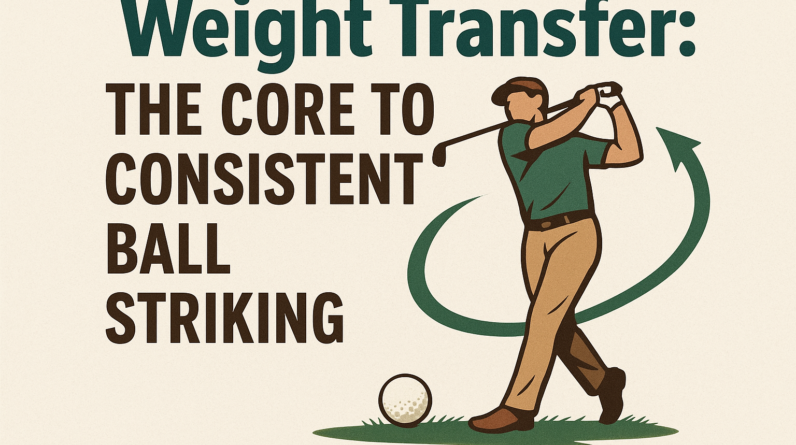
Weight transfer is the deliberate shift of pressure from your trail foot (the back foot for right-handed golfers) toward your lead foot (the front foot) as you move through the downswing and into impact. At address, you start with a balanced setup. As the club approaches the ball, your weight slides toward the lead side so that, at or just after impact, most of your pressure is on the lead foot (roughly 60–70% of your weight, depending on your body and shot). This transfer happens with your hips turning and your chest rotating toward the target, not with a jolt or a slide that throws you off balance.
Why it matters to the golf swing
- Promotes solid contact and compression, not fat or thin shots.
- Keeps your spine angle intact, reducing early rising or dipping at impact.
- Improves consistency of the swing path and clubface control by sequencing hips, torso, and arms together.
- Increases power efficiency by allowing you to rotate into the shot rather than jump or slide laterally.
What you should feel when it’s working
- A gradual shift of pressure from the back foot to the front foot as the club reaches the ball.
- A stable, athletic finish with your chest facing the target and your weight largely on the lead foot.
- A sense of “loading” into the lead side during the downswing, not a sudden, jerky move.
2–3 common mistakes with weight transfer
- Mistake 1: Sticking the weight on the trail foot through impact => Thin or fat shots, loss of compression.
- Mistake 2: Transferring weight too early in the downswing => Early release, loss of lag, off-center hits.
- Mistake 3: Sliding or spinning laterally instead of rotating and transferring forward => Balance issues, hooks or slices.
Simple, actionable fixes for each mistake
- Mistake 1 fix: Feel the pressure move to the lead foot during the downswing. Try the cue “press into the target.” Keep your trail knee flexed until impact, then allow the hips to rotate and the chest to face the target.
- Mistake 2 fix: Lag your downswing a touch longer by keeping the trail elbow close to your body during the early downswing. Focus on hitting the ball first, then stepping into the target. A small “step-through” helps train the timing.
- Mistake 3 fix: Don’t slide your feet apart; rotate your hips toward the target as you transfer weight. Keep your feet under your hips and finish tall with weight on the lead foot. Use a light, athletic stance instead of a wide, swaying base.
One easy practice drill you can do
Step-Through Drill (works on sequencing and weight transfer at impact):
- Start with a comfortable, athletic stance. Use a mid-iron to begin.
- Make a few half-swings to feel loading into the trail leg, then silently cue yourself to “step into the target.”
- During the downswing, softly shift your weight toward the lead foot and, at impact, step the lead foot forward a little so you finish with your chest and hips facing the target and most of your weight on the lead foot.
- Progression: perform with a ball at the range. Start with a small step, then gradually increase to a full, balanced finish. Repeat 20–30 reps, focusing on smooth, controlled weight transfer rather than speed.
Tip: keep the drill light and natural. Your goal is a reliable, repeatable sequence: load on the trail foot, transfer weight to the lead foot through impact, and finish balanced. With practice, weight transfer becomes automatic, helping every club—from wedge to driver—stay solid and consistent.
Weight Transfer for Consistent Ball Striking
Achieving consistent ball striking hinges on a simple yet powerful concept: moving your weight efficiently from the back foot to the front foot through the swing. Whether you’re teeing off in golf, returning a fast tennis ball, swinging a baseball bat, or taking a powerful soccer shot, effective weight transfer is the engine that drives speed, balance, and accuracy. This article breaks down the science behind weight transfer, offers sport-specific guidance, and provides practical drills you can start using today.
Understanding weight transfer: what it is and why it matters
Weight transfer describes how your body’s weight shifts from the rear side to the lead side during a swing or strike. When done correctly, the transfer is smooth, sequential, and driven by the hips and legs, not just the arms. This sequencing creates a stronger kinetic chain, improves contact quality, and reduces the risk of overuse injuries by distributing forces more evenly through the body.
Weight transfer across popular ball-striking sports
The exact timing and feel of weight transfer vary by sport, but the underlying principles remain the same: load, store energy, and release it through the point of contact. Here’s how it looks in different activities:
- Golf: Load your weight onto the back foot during setup, then progressively rotate your hips and shift pressure toward the lead foot as you swing through the ball. The goal is to crest max efficiency at impact with a quiet head and solid weight on the forward foot.
- Tennis: During serves and groundstrokes, initiate weight transfer with a clear step into the court, transferring weight from the back foot to the front foot as you accelerate the racket through the ball. A smooth transfer supports velocity without sacrificing control.
- Baseball: In a batter’s swing, load the back leg, coil through the hips, and drive weight forward into the front leg as you rotate the torso. This sequence helps you generate bat speed while maintaining balance at contact.
- Cricket: With front-foot hit and back-foot pull shots, collect the weight on the back foot, then transfer through the hips into the front foot to maximize bat head speed and control.
- Soccer: For powerful kicks, the planter leg stabilizes the body while weight shifts into the kicking leg, allowing the hip and torso to accelerate the foot toward the ball for a clean, forceful strike.
Core principles for consistent weight transfer
1) Stance and posture
- Adopt a balanced athletic stance with a slight knee bend and a neutral spine angle.
- Keep the center of mass over the arches of both feet; avoid leaning excessively forward or backward.
- Maintain even weight distribution through the midfoot for stability before initiating the swing.
2) Ground connection and balance
- Let your feet be the primary interface with the ground. Use ground reaction forces to propel the swing.
- Avoid excessive heel lift before impact; a slight heel release can help in some sports, but stability is key for consistency.
- Maintain a soft knee on the back leg to allow efficient energy storage and release.
3) Sequencing and hip rotation
- Initiate movement from the lower body—hips first—then allow the torso to follow, and finally the arms release through the strike.
- Visualize a kinetic chain: feet → legs → hips → torso → arms → club/racquet/foot that contacts the ball.
- Avoid “arm-dominant” strikes; power comes from the integrated rotation and weight shift, not just arm speed.
4) Timing and tempo
- Drill for a deliberate tempo: load (backward peak) -> store (coil) -> release (forward through impact).
- Consistency comes from repeating a repeatable tempo rather than chasing raw speed too early in practice.
- Use cueing phrases like “load, step, strike” to anchor your mental model.
5) Lead foot and trail foot mechanics
- During the strike, the lead foot frequently enough experiences a controlled push-off that contributes to forward momentum.
- The trail foot helps stabilize and store energy during the initial load phase; avoid early collapse of the back knee.
- Micro-adjustments to weight distribution on the platform can improve contact quality and line of flight.
Practical drills to improve weight transfer
Drill 1: Shadow swing with weight shift
- Stand in golf/tennis stance without a ball. focus on shifting weight from the back foot to the front foot as you swing your arms through the motion.
- Feel your hips initiating the movement first; the arms should follow, not lead.
- Perform 2 sets of 12–15 repetitions with a slow to moderate tempo.
Drill 2: Step-in drill
- Place a line or mark on the ground. Step into the line with the lead foot as you swing, ensuring weight transfers past the line during impact.
- Keep the head steady and eyes focused on a point a few feet in front of you.
- Do 3 sets of 8–10 reps per side.
Drill 3: Hip-rotation drill with a resistance band
- Place a light resistance band around the hips or thighs. Bend knees slightly and rotate hips toward the front foot as you swing.
- The resistance helps feel the load and release sequence more clearly.
- Complete 2–3 sets of 10 rotations per side.
Drill 4: Balance-to-contact drill
- Stand on one leg (rear foot off the ground if appropriate). Perform a controlled strike by transferring weight to the front leg at contact.
- Maintain a stable core and don’t let the torso wobble toward the strike side.
- Alternate legs for 2–3 rounds of 20 seconds each.
Drill 5: Medicine ball rotational throws (low impact)
- Hold a light medicine ball at chest height. Rotate hips and torso toward the target while transferring weight to the lead leg to throw the ball softly against a wall or to a partner.
- Focus on a smooth, powerful transfer rather than raw speed.
- 3 sets of 6 throws per side.
Drill 6: Lead-foot emphasis with feedback mirror
- Use a mirror to monitor where your weight sits at key points: setup, load, pre-impact, and impact.
- Make minor adjustments to ensure the lead foot is loaded at the right moment and weight shifts cleanly onto it at contact.
- 2–3 minutes of continuous practice, then 2–3 minutes of movement-specific practice.
Progression tip: Record short videos of your practice sessions and compare your weight transfer sequence side-by-side with professional model swings. Small refinements in timing ofen yield big gains in contact quality.
Drill progress and tracking: a rapid reference
| Drill | Objective | Setup / Setup tips | how to perform | Progress indicator |
|---|---|---|---|---|
| Shadow swing with weight shift | Feel weight transfer path | Stance + no ball | Load -> rotate -> strike | 3 levels: 8, 12, 15 reps |
| Step-in drill | Forward weight transfer past line | Line marker on ground | Step into line while swinging | Distance to line improved |
| Hip-rotation with band | Activate hips in the sequence | Light resistance band around hips | Rotate hips → swing | Resistance tolerance or reps |
| Balance-to-contact | Stability during weight transfer | Single-leg stance | Transfer to front leg at contact | Stability measure |
| Medicine ball rotational throws | Power and weight transfer synergy | Light medicine ball | Rotational throw with hip drive | Distance and control |
Benefits of proper weight transfer
- Increased consistency: Repeating the same transfer pattern helps you strike more balls in the sweet spot.
- Higher velocity with control: Efficient energy transfer enables greater club/racket speed without sacrificing accuracy.
- Enhanced balance and stability: A strong base reduces wobble and mis-hit risk,especially under pressure.
- Reduced injury risk: Proper sequencing distributes forces through joints and the kinetic chain, reducing peak loads on the elbow and shoulder.
- Versatility across sports: The same principles translate to golf, tennis, baseball, cricket, and soccer, making training transferable.
Case studies and first-hand experiences
Case Study 1: Amateur golfer improving greenside consistency
Alex, a recreational golfer, struggled with pulling shots and inconsistent contact. After focusing on weight transfer, specifically loading through the trail foot and initiating with hip rotation, Alex reported a noticeable improvement in contact quality by the second month of focused drills. The swing felt more connected, and the ball flight improved as the weight transfer sequence became habitual rather than forced. Key cues included “load, hips, lead through contact” and practicing the drills without power pressure to build rhythm.
Case Study 2: Tennis player stabilizing backhand timing
Maria, a tennis player transitioning from baseline rallies to more aggressive net pressure, found her backhand timing inconsistent due to late weight transfer. By emphasizing a deliberate step-in and hip-driven rotation, Maria learned to coil into the back leg, then transfer weight forward through the shot. Within six weeks, she reported fewer timing errors and more consistent depth on backhand returns, notably under pressure when the ball came fast.
Common faults and fixes
- Fault: arm-dominant strike with little hip involvement. Fix: Emphasize hip initiation and torso rotation before arm acceleration; feel the hips “lead” the swing.
- Fault: Excessive head movement or sway during contact. Fix: Maintain a stable spine angle and keep the gaze fixed on a point; balance drills help reduce drift.
- Fault: Over-rotation leading to off-target contact. Fix: Slow the tempo, focus on the sequence and ensure the arms stay in sync with hip rotation.
Quick reference by sport: key cues and fixes
| Sport | Key weight transfer cue | Common mistake | Fix |
|---|---|---|---|
| Golf | Load on back foot, shift to front foot through impact | Arms swing ahead of hips | Pause arms, lead with hips; imagine stepping into the ball |
| Tennis | Step into the shot; weight moves forward | racket speed without weight transfer | Coil, then push through with forward weight |
| Baseball | Back foot loading into front foot at contact | Over-rotation or head drift | Stable head, hip-driven rotation |
| Soccer | Transfer weight onto kicking leg as you strike | Ball contact with backward weight | Keep forward momentum and planted support leg |
First-hand tips from coaches and players
- Record and review: Short videos help identify where weight transfer breaks down in real time.
- Consistency beats power: Prioritize repeatable transfer patterns over chasing explosive speed in early practice.
- Integrate breathing cues: Exhale slightly as you release through impact to maintain rhythm and balance.
- Progress gradually: Add one drill at a time to avoid overload and ensure true integration into your swing or strike.
Putting it all together: a sample week plan
- Day 1: Fundamentals – stance, posture, and weight transfer basics with shadow swings (no ball).
- Day 2: Ground contact and balance – balance-to-contact drills and single-leg holds.
- Day 3: Hip-driven sequencing – hip rotation drills with light resistance and step-in variations.
- day 4: Sport-specific integration – apply the sequence to your sport’s primary strike (golf, tennis, baseball, or soccer).
- Day 5–7: Check and refine – review videos, refine cues, and repeat the drills with increased tempo if control remains strong.
SEO-friendly wrap-up: keywords and on-page considerations
To maximize search visibility while keeping the content reader-focused, weave keywords naturally into headings and body copy. Effective terms include weight transfer, ball striking, swing mechanics, footwork, balance, kinetic chain, hip rotation, contact quality, and sport-specific phrasing like golf swing, tennis backhand, baseball swing, cricket shot, and soccer strike. Use descriptive headings (H2 and H3) to guide readers and search engines through the content, and incorporate practical, evidence-based drills that readers can implement immediately.
Frequently asked questions
- What is weight transfer in a swing? Weight transfer is the deliberate movement of body weight from the back foot to the front foot during the swing, generating energy and maintaining balance for a solid strike.
- why is weight transfer so crucial for ball striking? It aligns the kinetic chain, increases power, improves contact quality, and reduces injury risk by distributing load through the hips, legs, and core.
- How can I improve weight transfer quickly? Start with stance and posture,practice hip-driven sequencing,and use progressive drills that emphasize gradual tempo and balance before increasing speed.