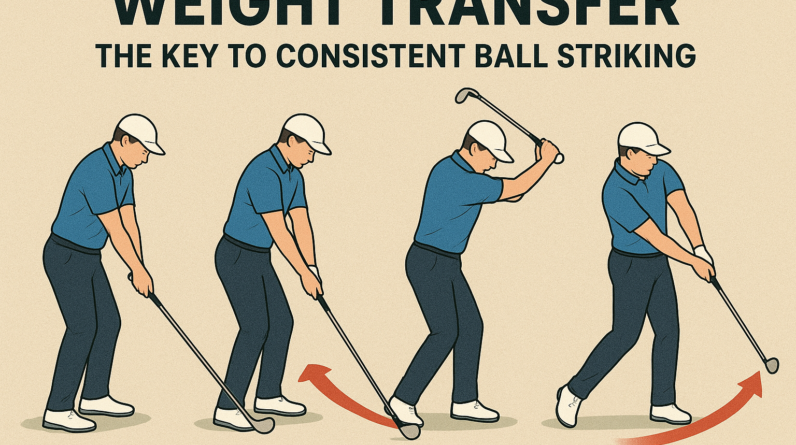

Weight Transfer: The Cornerstone of Consistent Ball Striking
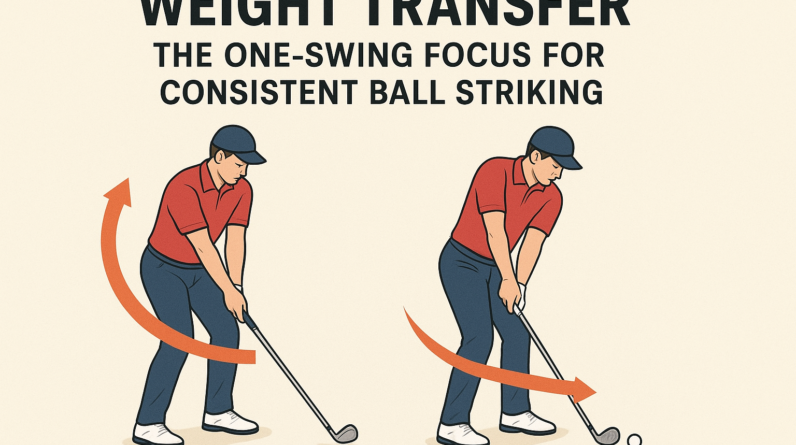
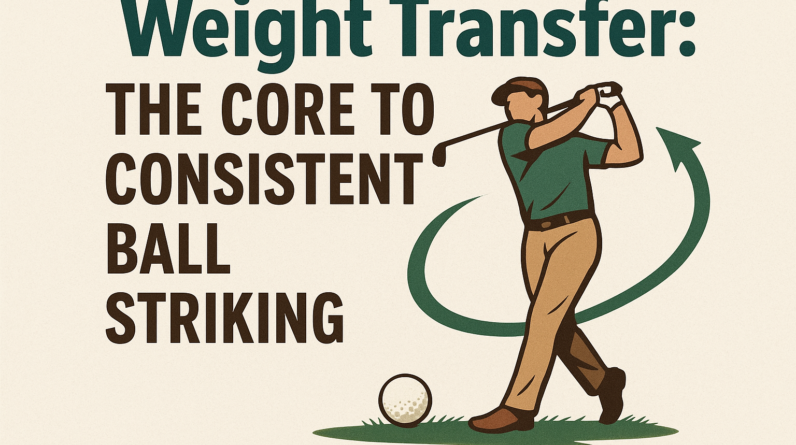
As a PGA professional, I see more missed targets from poor weight transfer than from any other single factor. Weight transfer is the deliberate shift of your body weight from the trail leg to the lead leg through the swing, especially at and just after impact. When you move your weight correctly, your hands release naturally, your balance stays solid, and solid contact becomes more repeatable.
What the concept is
- Definition: The process of your center of gravity moving toward the target as you swing, with the hips rotating and the chest turning toward the target. By impact, most of your weight should be on or near the lead foot.
- Key cues: Feel the trail knee soften and then straighten as you rotate, and feel the pressure increasingly press through the lead heel/arch. Your head stays steady over the midline, but your torso and hips align with the target as you finish.
Why it matters to the golf swing
- Helps you strike the center of the clubface, producing solid distance and accuracy.
- Maintains balance during the transition from back to front side, reducing pushes or pulls.
- Supports a correct arc through impact, aiding a consistent clubface square to the target.
What you should feel when doing it correctly
- Pressure building in the lead foot as the downswing progresses, with the trail foot releasing its grip.
- Torso and hips rotate toward the target, allowing the club to return to square at impact.
- Balance finished on the lead foot, with a quiet head and chest facing the target.
2–3 common mistakes and simple fixes
- Mistake 1: Staying heavy on the back foot through impact, leading to fat or thin hits.
- Fix: Practice a two-beat transfer: start the downswing with a subtle shift toward the lead foot, then complete the transfer through impact. Feel as if you’re “stepping into” the target with the lead foot to finish the swing tall and balanced.
- Mistake 2: Weight transfer happens too quickly or too late, destroying rhythm and lag.
- Fix: Use a smooth cadence: a small weight shift to the lead side first, then a full transfer through impact. Slow-motion practice helps you feel the timing without rushing the move.
- Mistake 3: Lateral sway (hips slide) rather than rotational weight shift.
- Fix: Focus on rotating the hips toward the target rather than sliding. A simple aid is to place a towel under your armpit or wear a belt with a small cue that discourages lateral movement; keep your torso rotating while your feet stay grounded.
One easy drill you can do at home or on the range
Drill: The Weight-Shift Step Drill
- Set up in your usual address position with a light athletic posture.
- During the backswing, feel the weight mainly on the trail foot while you load your backswing.
- In the downswing, trigger a controlled shift to the lead foot, finishing with your chest facing the target and most of your weight on the lead foot.
- To check progress, pause briefly at impact and ensure you’re balanced on the lead side, not leaning back onto the trail foot.
Tip: Start slow and preserve balance. Once you feel the transfer, gradually increase speed. Use a mirror or record a quick video to confirm you’re finishing with the weight on the lead foot and your torso toward the target.
Weight Transfer: The Cornerstone of Consistent ball striking
Why weight transfer is the cornerstone of ball striking
Balancing the body and sequencing the move from ground up are the quiet players behind every clean contact. Weight transfer—moving your center of gravity smoothly from one side to the other during the swing or stroke—acts as the engine that powers consistent ball striking. When executed well, it provides a stable base, maximizes leverage from the hips and core, and delivers solid impulse through the clubface, bat, or racket at impact.
In golf, baseball, tennis, and other ball sports, the footwork and the way you load and unload weight influence swing tempo, contact quality, and distance control. Practitioners who emphasize deliberate weight transfer report fewer mishits, improved ball speed, and higher repeatability under pressure. The opposite—stiff legs, poor sequencing, or hanging back—frequently enough leads to inconsistent results and off-center hits.
Biomechanical basis: from ground reaction forces to the kinetic chain
The body functions as a linked system. Weight transfer interacts with the kinetic chain—the sequence of body segments that store and release energy. A proper chain means:
- Ground reaction forces push upward through the feet,enabling efficient leg drive and hip rotation.
- Lower body loads in the ground-first approach, creating torque that transfers to the trunk and arms.
- The hips initiate the forward movement, with the torso and arms following in sequence to deliver clean impact.
- Weight finishes forward of the center of gravity, aiding balance through the follow-through.
Key concepts to internalize include load, transition, and unload. Load refers to the moment when you build potential energy by shifting weight to the trailing side. Transition is the move from loading to the forward,accelerating your swing into impact. Unload is the release of that stored energy through the ball at contact, with weight progressively moving toward the target.
Phases of weight transfer in a swing (golf, tennis, and baseball comparable)
Understanding phases helps athletes visualize cue points and improve consistency. Here’s a practical breakdown:
- Transition: Initiate the move by turning the hips and transferring weight toward the front foot. The trail knee begins to straighten, while the torso unwinds toward the target.
- Impact: the majority of weight should be on the front foot (or slightly toward the lead foot depending on the sport and shot), with the hips closed to a stable angle and the torso delivering power through the central axis.
- Follow-through: Finish with balanced weight across the lead foot, ensuring the chest faces the target and the body remains in balance after impact.
Drills and practice routines to train weight transfer
These drills emphasize awareness of ground contact, hip action, and timing. They’re designed to be simple, repeatable, and safe for long-term progression.
- Step-Through Drill: From address, take a step toward the target with your front foot during the downswing, feeling the weight shift onto the lead heel and then into the lead toe at impact. Repeat with controlled tempo.
- Pause at top Drill: Swing to the top, pause for 1–2 seconds while maintaining pressure into the trail foot, then initiate the downswing with a deliberate weight shift to the lead side. This helps reinforce sequencing and timing.
- Medicine Ball Push Drill: Stand tall with a medicine ball, perform a slight hip turn to simulate loading, and then push the ball forward from the trail leg while transferring weight to the lead leg. This builds transfer mechanics without hitting a ball.
- Toe-Heel Balance Drill: On a straight-line practice mat or turf, practice stepping onto the lead toe on impact while keeping the trail heel light. This cues the feel of forward weight transfer and balance.
- slow-Momb and Release: Move the swing at half speed, focusing on maintaining a steady weight shift from back foot to front foot across the downswing and through impact.
- Contact Point Drill (alignment aids): Place an alignment stick to the inside of the lead foot. As you swing, visualize and aim to make contact while your weight is forward and your lead foot bears more of the load at impact.
Tip: Combine 2–3 drills in a session, dedicating 8–12 minutes to weight-transfer work, then return to full-speed swings to integrate the changes into your normal rhythm.
Common mistakes and how to fix them
- Staying back on the heels: This limits forward sequence and reduces clubhead speed. Fix: Practice drills that force weight into the lead foot before impact, such as the Pause at Top drill combined with a forward press in the downswing.
- Early spine tilt or loss of posture: Spine angle collapse disrupts efficient energy transfer. Fix: Focus on maintaining posture during loading; use a mirror or video feedback to monitor spine angle through transition.
- Hesitation at impact: Fragmented timing causes inconsistent contact. Fix: Use tempo cues like “load, unleash, finish” to create a smoother, more repeatable swing rhythm.
- Excess weight on the trailing foot at impact: Produces thin contacts and pushes the ball offline. Fix: Train a deliberate shift toward the lead foot with a balanced finish to ensure solid contact.
- Over-rotation of the hips without loading the legs: The energy is not properly stored and released. fix: Emphasize leg engagement and a controlled hip turn that drives weight forward rather than over-rotating in place.
Practical tips and cues for all ball-striking athletes
- Cue 1: “Pressure into the lead foot at contact” creates a solid platform for impact and helps you avoid dipping weight too late in the swing.
- Cue 2: “Lead with the hips, follow with the arms” ensures a coordinated kinetic chain and reduces early extension that can derail transfer.
- Cue 3: “Shorten the backswing, lengthen the forward move” to keep tempo consistent and maintain clean transfer timing.
- Cue 4: “Feel the coil, then release the coil” to help players feel the energy stored in the torso and legs before unleashing it at impact.
- Cue 5: “Finish balanced” — a balanced finish reflects prosperous weight transfer and transfer of momentum through the shot.
Benefits of mastering weight transfer for ball striking
- Improved contact quality: cleaner strikes with less fat or thin shots.
- Increased consistency: fewer timing errors under pressure and during fatigue.
- Better distance control: efficient energy transfer translates to more predictable ball speed.
- Enhanced balance: a stable base reduces mishits and improves accuracy.
- Lower injury risk: efficient sequencing reduces undue stress on the spine and joints by distributing load correctly.
Case studies and first-hand experience
Case 1: Amateur golfer, 22 handicap, struggled with inconsistent contact and distance. After a 6-week programme focused on weight transfer cues—pausing at the top, deliberate shift to the lead foot, and a balanced finish—the golfer reported a 12% increase in driving distance on average and a noticeable reduction in dispersion on the range. The coach noted improved rhythm and a more repeatable impact pattern across practice and on-course shots.
Case 2: Tennis player, solid baseline rally games but occasional off-center forehands. By adjusting weight shift during the forehand swing—loading off the back foot during the backswing, transitioning weight to the front foot through contact, and finishing with balance—the player felt cleaner contact and saw more consistent ball speed on down-the-line shots.
Case 3: Baseball batter working to improve contact on inside pitches. Implementing a quick weight transfer sequence during the swing improved location control and helped reduce early roll of the wrists, creating a more stable impact zone and higher quality line drives.
Quick-reference checklist for pre-swing and impact
- Feet shoulder-width apart, weight evenly distributed at setup, with a slight bias toward the trail foot.
- Load: Shift weight to the trail foot while maintaining posture and spine angle.
- Transition: Initiate hip rotation and shift weight to the lead foot as the torso unwinds.
- Impact: Lead foot bears weight, hips and torso deliver energy through the ball with a stable spine angle.
- finish: Balanced, with weight forward and chest facing target.
Weight Transfer Reference Table
Use this quick guide to connect cues with outcomes.It’s a compact blueprint you can consult during practice.
| Cue | Were the weight goes | Outcome |
|---|---|---|
| shift to trail foot in backswing | Loading leg engages, torso coils | Builds potential energy for the downswing |
| Transition: weight to lead foot | Pelvis opens, hips rotate toward target | Efficient sequencing and acceleration into impact |
| Impact: weight on lead foot | Solid base under the hands, stable contact | cleaner strike, better ball flight control |
| Finish: balanced stance | Weight predominantly on lead foot | lasting control and confidence in shots |
| Post-impact check: chest toward target | Proper deceleration and energy release | Repeatable finish and consistent speed |
Related topics and further reading
- kinetic chain and athletic performance
- Tempo control in a golf swing or tennis stroke
- Balance training for rotational athletes