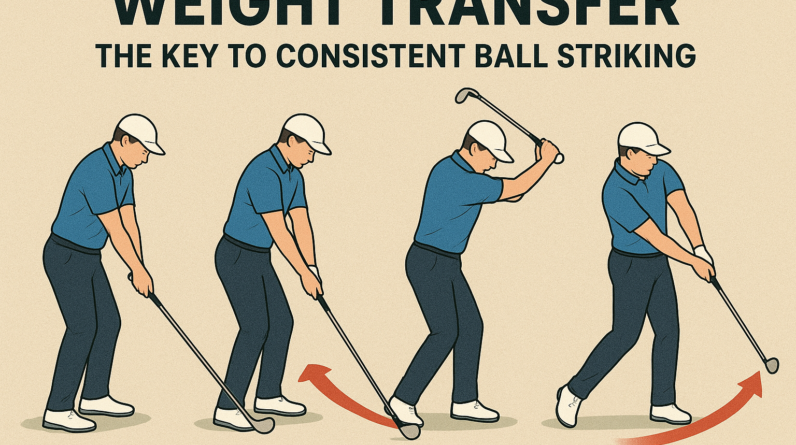

Weight Transfer: The One-Swing Focus for Consistent Ball Striking
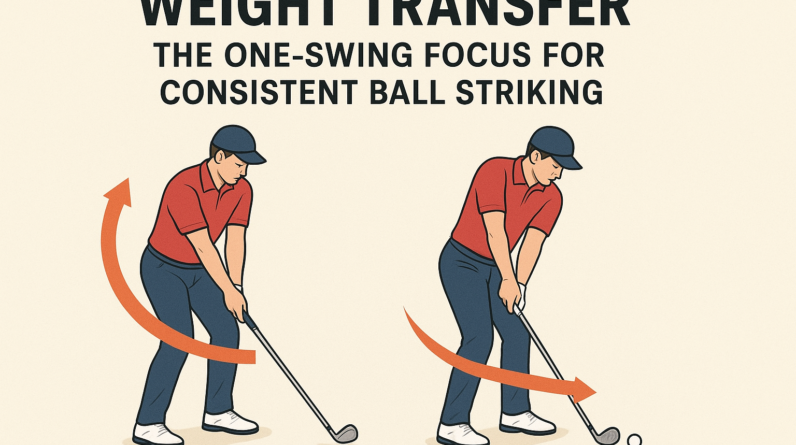
When we talk about delivering consistent contact, one simple, powerful idea often makes the biggest difference: weight transfer. This is the deliberate shift of your body weight from the back foot to the front foot as you swing through the ball. Done well, it helps you compress the ball, control your path, and finish in balance.
What the concept is
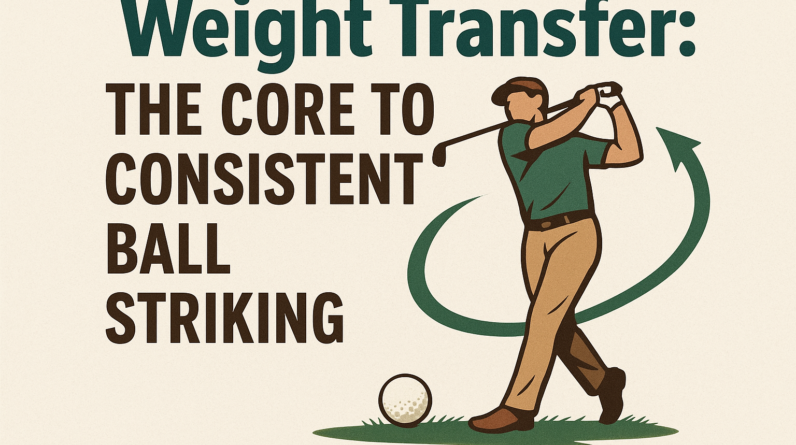
- Weight transfer means your body moves from the trail side (back foot) toward the lead side (front foot) in the downswing and through impact.
- It’s not just tipping your weight forward; it’s a coordinated motion where hips rotate, the torso unwinds, and the arms release with the lower body driving the action.
- Think of transferring energy from your legs and core into the clubhead so you can strike the ball with solid contact, not just swing with your arms.
Why it matters to the golf swing
- Better contact: Proper transfer keeps the clubface square to the ball for longer, reducing fat or thin shots.
- Consistent compression: Moving weight forward through impact helps you compress the ball and maximize ball speed from solid strikes.
- Improved balance and rhythm: A controlled transfer supports a smooth, repeatable swing instead of a chaotic, off-balance finish.
What the golfer should feel when doing it correctly
- At address: weight distributed fairly evenly, with a light pressure on both feet.
- On the backswing: you should feel a slight loading of the trail leg (the leg farthest from the target).
- During the downswing and through impact: your weight visibly shifts toward the lead foot; you feel the lead foot bearing more pressure as you release into the finish.
- Finish position: your chest and hips are facing the target with most of your weight on the lead foot and a confident, balanced finish position.
2–3 common mistakes and simple fixes
Mistake 1: Hanging back on the trail foot through impact
- Why it hurts: You lose forward contact, your path can become overly inside/out or fat the ball.
- Fix: Feel gentle pressure shift to the lead foot so the trail heel lightens as you approach impact. A simple cue is to imagine your belt buckle turning toward the target and your chest over the ball at impact.
Mistake 2: Weight shifts forward too early, before you strike
- Why it hurts: The club may approach the ball with less lag, producing thin shots or pushes.
- Fix: Slow the downswing tempo just a bit and allow the hips to lead the rotation while the trail knee stays soft. Think “rotate then transfer” rather than “go forward fast.”
Mistake 3: No real transfer—mostly arms, little lower-body action
- Why it hurts: You miss power and control, often leading to inconsistent strikes.
- Fix: Engage your core and hips early in the downswing. A simple reminder: while the arms start the swing, the hips and lead leg should actively drive weight toward the target line.
One easy practice drill you can do at home or on the range
Step-Through Weight Transfer Drill
- Set up normally, with a comfortable address position.
- Take a small backswing, then begin your downswing and, just after impact, step your lead foot forward onto the line you’re aiming at. Your weight should finish primarily on the lead foot with a balanced, athletic finish.
- Perform 8–12 repetitions, focusing on a deliberate, controlled transfer rather than a hurried lunge.
- Keep your head relatively steady and your chest toward the target as you step through. If you’re feeling off-balance, shorten the swing and repeat.
Tips for the drill:
- Start slow and progress to full-speed swings as you feel more comfortable with the transfer.
- Use a mirror or a training buddy to check that your lead knee is pointing toward the target and your weight ends on the lead foot.
Closing thought
Weight transfer is a foundational piece of consistent ball striking. When you feel your weight move from back to front in sync with hip rotation and arm release, you’ll notice cleaner contact, more controlled trajectories, and steadier balance. Practice the Step-Through Weight Transfer Drill regularly, and you’ll build a repeatable pattern you can rely on from a variety of lies and distances.
weight Transfer: The One-Swing Focus for Consistent Ball Striking
Weight Transfer: The One-Swing Focus for Consistent Ball Striking
understanding Weight Transfer in the Golf Swing
Weight transfer is a core biomechanical principle that influences how consistently you strike the golf ball. It refers to how your body shifts its mass from the trail foot toward the lead foot during the swing, especially through the downswing and at impact. When done correctly, weight transfer aligns your center of gravity with the target line, optimizes ground reaction forces, and promotes solid contact.
- Backswing: The weight sits slightly toward the trail foot, building stored energy in the legs and hips.
- Transition: The hips begin to unwind, and pressure moves toward the lead foot in preparation for impact.
- Downswing and impact: Most of the body’s weight should progressively shift to the lead side, helping the hands release naturally and the clubface strike the ball consistently.
- Post-impact: Weight continues to rotate through the finish, ensuring balance and repeatability.
A common miscue is “reverse weight shift”—ending with too much weight on the trail foot at impact or losing balance, which often leads to inconsistent strikes, mishits, or loss of distance.The goal is a controlled, efficient transfer that supports a square, solid contact with every swing.
The One-Swing Focus: Why It Works
The concept of a “one-swing focus” centers on simplifying the mental model: concentrate on a single, consistent weight-transfer action rather than chasing complex body positions. This approach helps you:
- Improve timing by aligning weight transfer with the natural kinematic sequence of the swing.
- Stabilize contact by keeping pressure under the lead foot during impact.
- Enhance balance and rhythm, reducing over-the-top moves and casting.
- Increase consistency across different clubs by using a repeatable weight-shift pattern.
In practice, the one-swing focus translates to a clear feeling: “press into the lead foot just before impact, while the hips rotate toward the target.” This cue helps golfers avoid early extension, over-rotation, or stalling through the ball.
Key Principles of Weight Transfer
Your feet are your foundation. Maintain even pressure through both feet early in the swing, then progressively load into the lead foot as you approach impact. Preserve spine tilt to maintain a consistent arc. Avoid excessive upright or collapsed postures that disrupt weight flow. Let the body lead the move; the arms follow with a natural release. For many players, rushing the hands undermines weight transfer and speed control. A well-executed finish reflects triumphant weight transfer. If you’re falling away or losing balance, revisit your weight-shift timing and hip rotation.
How to Train the One-Swing Focus
Below is a practical progression to cultivate reliable weight transfer.Practice these steps in a controlled setting,gradually enhancing speed as your feel and timing improve.
Align feet shoulder-width apart, ball position appropriate to the club, and a slight knee flex. Maintain a relaxed spine angle. “Hold the trail heel, shift to the lead foot.” This helps you feel the weight moving forward without sliding or lifting off the ground. Initiate the downswing with the hips while keeping the upper body quiet until the hips have begun to rotate. This sequencing fosters clean weight transfer. At peak downswing, feel stronger pressure and pin the lead foot into the ground, supporting the release through impact. Keep the head relatively stable over the ball as weight shifts, preventing early reverse weight shift. A solid impact position features a slightly forward shaft lean, hands ahead of the clubhead, and the pelvis rotated toward target.
Drills tied to these steps help embed the sensations. Start slowly, then gradually increase speed while maintaining the same feel.
Practical Drills and Practice Routines
These drills emphasize weight transfer first, then distance and accuracy. Adapt the drills to your level and equipment.
Take your address posture, swing to a pleasant half-speed, then step forward with the lead foot as you rotate the hips. This reinforces weight transfer through a single, controlled path. Practice in front of a mirror. Focus on pressure moving toward the lead foot while maintaining spine angle. Stop as soon as you feel any loss of alignment. Stand close to a wall with your lead shoulder barely touching it at finish. As you swing, your weight should shift toward the lead foot without letting the wall interfere with your natural finish. Place a soft bag slightly forward of the ball. Focus on brushing the ball with a steady weight transfer and a stable lower body, letting the bag softly react to your hit. Place a chair behind your lead hip. As you swing, avoid hitting the chair; rather, let the hip rotate and transfer weight to the lead foot to clear the chair’s path. Imagine pressing into the ground with your lead foot at impact, then releasing pressure smoothly as you complete the swing.
Benefits of Emphasizing Weight Transfer
- Improved contact consistency across the set of clubs.
- Increased distance with better efficiency of energy transfer.
- better balance, reducing post-impact swaying and dispersion.
- Lower likelihood of slices or hooks due to cleaner sequencing.
- More reliable lag and release, leading to straighter trajectories.
Case Studies: Real-world Outcomes
These hypothetical case snapshots illustrate how a focused approach to weight transfer can translate to measurable on-course improvements.
A 38-year-old amateur improved average fairway hit by 12% and reduced dispersion by 8 yards after 6 weeks of one-swing weight-transfer drills, with emphasis on lead-foot pressure and hip sequencing. - Case 2: A 55-year-old golfer who struggled with contact found more consistent iron play after replacing a dipping backswing with a controlled weight shift to the lead foot through impact. Carry distance increased by an estimated 6–8 yards on mid-irons.
- Case 3: A high-handicap player reduced thrusting with the arms by adopting a simple cue to initiate the downswing with the hips, resulting in straighter drives and more repeatable ball striking under pressure.
first-Hand Experience: A Player’s Tale
I’ve coached players who believed power came from the arms or from raw wrist strength.Time and again, we found that when the weight shifted correctly—loading the trail leg in the backswing, transitioning with the hips, and driving the weight into the lead foot at impact—the ball began to behave in predictable ways. One student, a weekend golfer with a slice that refused to quit, learned to feel the weight roll forward while keeping the spine angle intact. Within a few sessions, his clubface remained square longer, contact improved, and the ball started cutting less and rolling farther on miss-hit shots.
Common Mistakes and How to Fix Them
Move weight forward before the downswing begins. Fix: delay forward pressure slightly; start the downswing with hip rotation first. Keeps looking up or away from the ball,causing timing issues. Fix: maintain a steady head position until after impact, then finish. This can cause early release. Fix: feel a controlled,gentle lead-foot pressure that sustains contact without forcing the release. Rises up during the swing. Fix: practice with a compact backswing and a soft knee bend that stays consistent through impact. Weight transfer feels fine with one club, not others. Fix: practice the same cues across short, mid, and long clubs to reinforce the same feel.
cue table for Weight Transfer: One-Swing Focus
| cue | What It feels Like | Common mistake | Fix |
|---|---|---|---|
| Pressure into lead foot | Feeling push into the lead foot just before impact | Early weight shift or tipping off balance | Hold lead foot pressure briefly, then rotate hips through impact |
| Hip-driven transition | Hips lead the downswing, torso stays quiet until hips rotate | Arms pull first, causing timing issues | Initiate with hips, allow arms to follow |
| Spine-angle preservation | Maintain angle from setup to impact | Rises or collapses the spine | Keep a steady spine angle, small knee bend, smooth rotation |
| Balanced finish | Chest open toward target, belt buckle facing target | Falling off weight after impact | Finish with full rotation and balanced posture |
Consistency Through a Simple Principle
Weight transfer is not about chasing a perfect pose; it’s about creating a reliable sequence that naturally guides your body to the right place at the right time. When you anchor your practice in the one-swing focus—shifting weight smoothly to the lead foot, initiating the downswing with the hips, and maintaining balance through impact—you’ll see more consistent ball striking, improved accuracy, and better distance control across your bag.