
Weight Transfer: The Key to Consistent Ball Striking
Today we’re focused on one critical concept that often gets overlooked: how you move your weight through the swing. For most players, especially beginners to intermediate, timing and balance are everything. Proper weight transfer helps you strike the ball more consistently, control the clubface, and finish in a stable, athletic position.
What the concept is
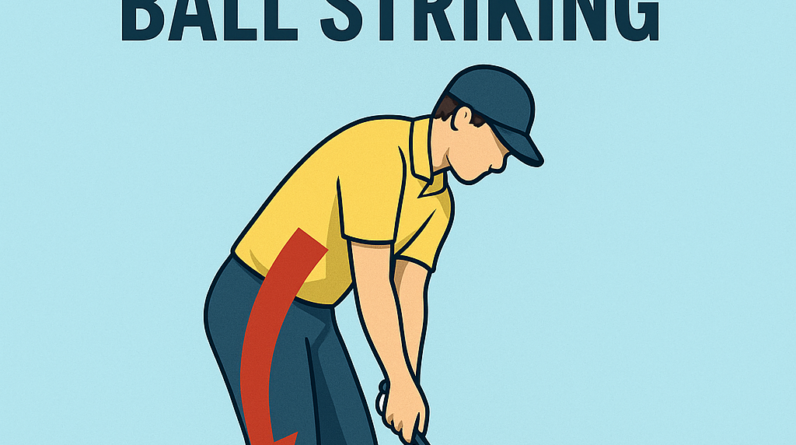
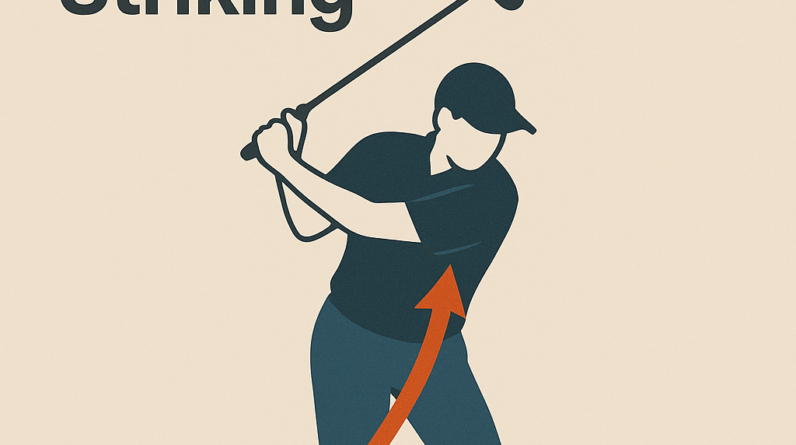
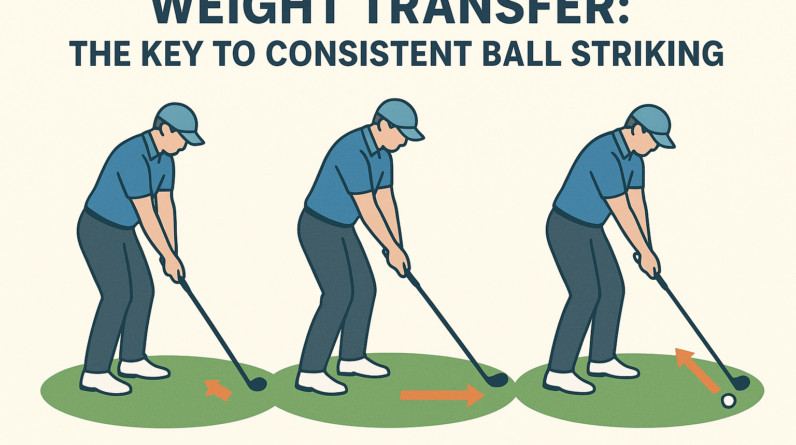
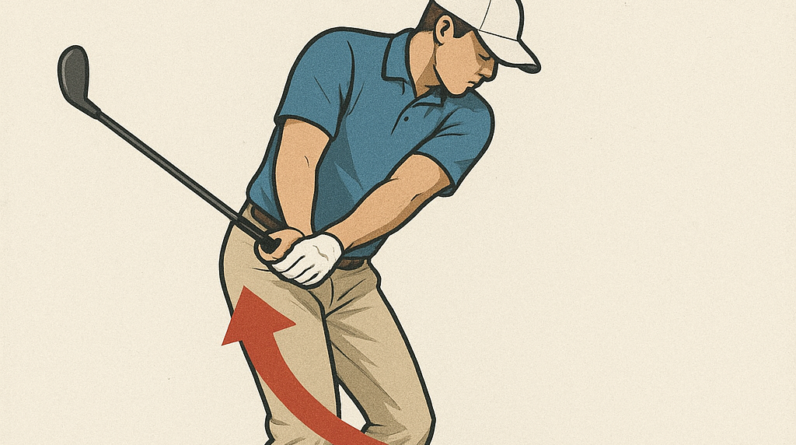
Weight transfer is the deliberate shifting of your body’s weight from the trail foot (the right foot for right-handed players) toward the lead foot (the left foot for right-handed players) as you move from takeaway, through impact, and into the follow-through. It isn’t a big dramatic shift; it’s a smooth, coordinated flow that uses your hips and legs to drive the club into the ball while maintaining your spine angle and balance.
Why it matters to the golf swing
- Solid contact: Proper transfer helps you deliver the clubhead consistently to the ball with the correct downward strike.
- Power with control: Ground forces enable you to generate speed without forcing the arms or hands to “hit” the ball.
- Clubface control: When weight moves correctly, your hands stay in a more natural path, helping the face square up at impact.
- Balance and sequencing: A good transfer keeps you from swaying or hanging back, which often leads to fat/thin shots or loss of accuracy.
What you should feel when doing it correctly
- In the backswing, you feel your weight settle a bit more on the trail (right) foot without losing posture.
- As you start down, you sense your hips rotating and the weight sliding toward the lead (left) foot.
- At impact, you feel the trail-side leg straightening slightly while your chest stays angled toward the target, with most of your weight on the lead foot.
- Through the finish, you end tall, balanced, and stacked over the lead leg, not falling away.
2–3 common mistakes and simple fixes
Mistake 1: Weight stays on the back foot too long into impact.
- Fix: Initiate the transfer with a slight hip turn toward the target and a subtle shift of weight onto the lead foot as you strike. Keep the trail knee flexed to maintain balance, and avoid forcing the hands to “hit” the ball.
Mistake 2: Weight shifts too early, before you contact the ball.
- Fix: Think of the movement as a controlled sequence. Allow the hips to unwind and the torso to rotate into the ball before you transfer most of your weight forward. Practicing with a paused drill (half-second pause at impact) can help you feel the right moment.
Mistake 3: Excessive lateral sway or sliding without rotation.
- Fix: Focus on rotating your hips rather than sliding your feet. Keep your spine angle steady and let the ground reaction forces do the work. Practicing with a locker-room cue like “hips rotate, feet stay beneath you” can remind you to avoid over-sway.
Actionable drill you can do at home or on the range
Drill: Step-Through Weight Transfer
- Set up with a comfortable golf club or a mid-iron as your training aid.
- Take your normal address position. Begin a half or three-quarter backswing, feeling more weight on the trail foot.
- As you start down, shift weight toward the lead foot and take a small step forward with the lead foot (about 6 inches) toward the target. The step should occur as you strike the ball, not before.
- Proceed through a short follow-through and finish tall and balanced. Return to address and repeat 6–8 times, keeping the tempo smooth.
Notes for the drill:
- Keep the step controlled; don’t rush or lurch. The goal is to feel the weight moving from trail to lead foot in a coordinated way.
- Start with a shorter swing to build balance, then progress to fuller swings as you feel more solid.
Focusing on weight transfer can transform how you strike the ball. Practice with patience, build a sense of the exact moment you shift forward, and your scores and confidence will follow. If you’d like, tell me your current swing speed and how your last few sessions felt, and I’ll tailor the cues to your tempo and experience level.
Weight Transfer: The Key to Consistent Ball striking
In any sport that hinges on striking a ball—golf, tennis, baseball, or even cricket—the way you move your body mass through the swing is frequently enough the difference between a miss and a solid contact. Weight transfer is the invisible but critical driver of consistency. When your weight shifts smoothly from the back foot to the front foot, your club or racket can accelerate through the ball with speed, control, and precision. In this article, you’ll discover why weight transfer matters, how to train it across different sports, practical drills, real-world case studies, and a concise checklist you can use on the field, court, or range.
Why Weight Transfer Matters
Weight transfer is the process of transferring your body’s center of gravity from one foot to the other during the stroke. It matters for several reasons:
- Power generation: Efficiently transferring weight helps convert leg and hip strength into club or racket speed, enabling higher ball velocity without forcing the arms.
- Contact quality: A well-timed weight shift helps you reach the optimal impact position, enhancing solid contact and reducing mishits.
- Balance and stability: Proper transfer maintains posture and reduces unwanted lateral or vertical wobble, which improves accuracy.
- Timing and sequencing: The kinetic chain—from ground reaction forces in the feet up through the torso and arms—relies on correct sequencing. Weight transfer is the critical cue that initiates that chain.
- Injury prevention: when mass moves efficiently through the swing, stress is better distributed, lowering the risk of overloading a single joint or muscle group.
Think of weight transfer as the bridge between the lower body and the upper body. If the bridge is unstable, power leaks away, timing tightens, and the ball sails off-line. If the bridge is solid,momentum flows smoothly,your swing is more repeatable,and you regain accuracy even under fatigue or pressure.
How Weight Transfer Affects Power, Contact, and Accuracy
Weight transfer influences three pillars of ball striking: power, contact quality, and accuracy. Here is how it plays out in practice:
- Power: A controlled forward shift from rear to lead foot during the downswing accelerates the ball. The faster and more synchronized this transfer, the more centrifugal force you can apply to the ball with less effort from the arms.
- Contact quality: With proper weight loading, you’re more likely to strike the ball with a stable center of gravity over the sweet spot. This reduces toe or heel mis-hits and creates more consistent ball flight.
- Accuracy: Predictable weight movement reduces side-to-side drift and compensations that otherwise destabilize the aim.Consistent transfer fosters repeatable swing paths.
Different sports emphasize weight transfer in unique ways, but the underlying principle remains the same: the ground generates the reaction forces, and your body channels those forces into the ball through a intentional sequence.
Core Principles of Effective Weight Transfer
Three core principles help you coach or coach yourself toward better weight transfer:
1) Ground Reaction Forces and the Kinetic Chain
Every swing begins with the feet. Ground reaction forces push back as you push against the ground with your legs. This energy travels up through the ankles, knees, hips, and core, finally driving the arms and the implement into the ball. The more you can coordinate this energy flow, the more efficient your strike becomes.
2) Sequencing and Timing
Timing is everything. The typical ideal sequence is:
- Load: Weight shifts toward the back foot during the backswing.
- Transition: Weight begins to shift toward the front foot as you start the downswing.
- Release: The weight is fully transferred onto the lead foot at impact, with hips and torso unwinding sequentially.
Variations exist across sports and individual styles, but the essential idea is to avoid a late or early weight drop that disrupts balance or timing.
3) Balance, Posture, and Habitual Cues
Efficient weight transfer requires a stable base and mindful cues that keep you on track.Common cues include feeling the pressure move from heel to toe on the front foot at impact, or sensing the trail knee tracking toward the target line as you rotate the hips. Consistent cues replace guesswork and foster repeatable results.
Weight transfer in Different Sports
Let’s break down how weight transfer looks in three common ball-striking disciplines. The principles are the same; the emphasis and cues differ slightly based on equipment, contact point, and typical stroke path.
Golf
In golf, the swing starts with a balanced setup. As you take the club back, your weight typically shifts toward the trail side (right side for right-handed players). On the downswing, weight builds toward the lead side and is often at or near fully transferred to the front foot at impact. A well-executed transfer helps you deliver the clubface into the ball with the correct angle of attack and on-plane swing path.
Common golf cues for weight transfer:
- Keep the trail knee flexed but avoid hanging onto it of over-rotation.
- Imagine pressing the inside of the back foot into the ground as you start the downswing.
- Feel the body “unwinding” from hips to arms as weight shifts forward.
Tennis
In tennis, weight transfer is highly dynamic due to swift directional changes. A typical rally involves transferring weight from the back foot to the front foot as you plant to strike the ball. On serves and forehands, you may feel a pronounced forward shift to generate pace and spin, while maintaining balance to recover quickly for the next shot.
Key tennis cues:
- Keep knees slightly bent and ready to push off the ground into the shot.
- Rotate the hips and torso in sequence, letting the weight flow forward as the racket meets the ball.
- Use the non-dominant arm as a counterbalance to stabilize the torso during the shift.
Baseball/Softball
Baseball and softball swings rely on a pronounced weight shift toward the front side as the bat makes contact. The hips lead the way, turning through the shot, while the back leg helps drive rotation and maintain balance. A well-timed transfer translates power from legs and core into the bat speed and contact point.
Coaching notes for baseball/softball:
- Start with a stable base and a slight knee bend. avoid leaning back into the stance.
- Emphasize a smooth, continuous transfer rather than a jarring lunge.
- practice with tee drills to focus on contact timing while transferring weight.
Practical Drills and Tips to Improve Weight Transfer
The following drills are actionable and scalable for players at any level. They focus on feel,sequencing,and feedback to help you own your weight transfer during the swing.
Drill 1: Golf – Slow Motion Weight Shift Drill
- Address position with a mid-stance and light knee bend.
- Take a slow backswing, focusing on loading weight onto the trail foot without flaring the hips.
- Begin the downswing, guiding the weight transfer toward the lead foot while maintaining spine angle.
- Pause at impact in a controlled, single-second hold to confirm pressure is on the lead foot and the trail leg is unwinding.
- Repeat 8–12 reps, gradually increasing speed while maintaining the feel of the transfer.
Drill 2: Tennis – Split-Step and Push-Off Progression
- Stand in a ready stance with feet shoulder-width apart.
- Perform a light split-step, then plant your lead foot as if pushing into the shot.
- Move laterally to the ball, focusing on transferring weight quickly from the back foot to the front foot after contact.
- Use shadow swings without a ball to ingrain the forward transfer cue, then progress to hitting a ball off the court.
Drill 3: Baseball/Softball - Hip Drive and Weight Transfer Drill
- Stand in a batting stance with a tee or soft toss.
- As you swing,imagine your hips initiating the move and transferring weight forward through the front foot to meet the ball.
- Keep the lead knee stable and allow the trunk to rotate smoothly,avoiding excessive early forward lean.
- Gradually increase swing speed as you maintain a consistent weight transfer pattern.
Benefits and Practical Tips
beyond immediate performance gains, focusing on weight transfer yields broader benefits for players of all levels:
- Consistency: Repetition of a sound transfer pattern makes outcomes more predictable across different balls and speeds.
- Versatility: A solid transfer framework adapts to various shot types, spins, and playing conditions.
- Coachability: Clear transfer cues provide tangible feedback for coaching and self-monitoring.
- Longevity: Balanced loading and unloading reduces overuse stress on the shoulders and lower back by distributing work more evenly across joints.
Practical tips to reinforce weight transfer in practice sessions:
- Use a mirror or video capture to visualize weight shifts from heel to toe and from back foot to lead foot.
- Integrate diaphragmatic breathing to sustain control during the transition,avoiding tense shoulders as you shift.
- Work with a coach to tailor cues that match your height, limb length, and preferred swing plane.
- Progress drills from static to dynamic: start with slow,controlled shifts,then gradually add speed and resistance (light resistance bands for core engagement can help).
First-Hand Experience: A Practical Case Study
Consider a mid-amateur golfer who struggled with inconsistent ball striking, frequently enough hitting off the toe and losing distance. After a four-week focus on weight transfer, the player reported a measurable enhancement in both accuracy and distance. The coach used a simple feedback loop: video analysis, cues to shift weight earlier in the downswing, and a set of progressive drills described above. By week three, the player demonstrated a clearer sequence: load onto the trail foot, transition weight toward the lead foot during downswing, and plant solidly on the lead foot at impact. The resulting data showed a tighter dispersion pattern and improved carry distance across a range of clubs. This case illustrates how reliable weight transfer, practiced with intention and feedback, translates into tangible on-course performance.
Quick Reference: Checklists for Coaches and Players
use these quick references to self-check or coach a player’s weight transfer during practice sessions. the table below is designed with WordPress styling in mind.
| Aspect | What to Look For | Coaching Cues |
|---|---|---|
| Setup | Balanced stance, slight knee bend, neutral spine | “Sink into both feet, prepare to push off the back leg” |
| backswing Load | Weight shifts toward the trailing foot; hips rotate | “feel the back foot loading; hips rotate before arms unleash” |
| Downswing Transition | Weight moves forward; hips initiate sequencing | “Move weight toward lead foot as hips unwind” |
| Impact | Pressure on lead foot; center of mass over front foot | “Drive through the ball with the lead leg, stay connected” |
| Recovery | Balanced finish; weight evenly distributed or slightly forward | “Finish tall; maintain posture and balance” |
Frequently Asked Questions (FAQ)
- What is the most important cue for improving weight transfer?
- Master a smooth transition of weight from the back foot to the front foot, starting the downswing with the hips and maintaining balance through impact.
- Can weight transfer fix all kinds of misses?
- Weight transfer is a major factor in consistency,but it’s part of a broader system that includes grip,stance,swing plane,tempo,and timing. it should be trained alongside other fundamentals.
- How long does it take to improve weight transfer?
- With deliberate practice and feedback, noticeable improvements can appear in several weeks. Patterned drills and video feedback speed up progress.
- Is it different for beginners and advanced players?
- The core concept is the same, but beginners often require more emphasis on building a stable base and basic sequencing, while advanced players focus on optimizing timing and precision within their preferred swing style.
Glossary of Terms
The deliberate shift of body mass from one foot to the other during a swing or stroke. The sequence by which energy travels from the ground through the body to the ball. The forces exerted by the ground back into the body during movement. The point around which the body’s mass is balanced; shifts with weight transfer.
Understanding weight transfer through these terms helps players communicate with coaches and apply drills more effectively. Peopel who connect the concept to personal feel—like “I feel my weight push off the back foot into the front foot” or “I sense the hips leading the action”—often learn faster and retain improvements longer.
Final Thoughts on mastering weight Transfer
Weight transfer is not a magic trick; it’s a biomechanical habit that, once integrated, elevates ball striking across sports. The key is consistent practice with clear feedback. Use the drills, cues, and checklists outlined here to build a repeatable transfer pattern. Over time, you’ll notice more solid contact, increased confidence under pressure, and a broader ability to adapt to different balls, surfaces, and competitive demands.
Bonus: Quick-Start Plan for Busy Athletes
- Week 1: Focus on setup and basic load–unload pattern. Use drills 1–3 in short 10-minute blocks 3–4 times this week.
- Week 2: Add video feedback to confirm weight transfer timing. Review once per session for cue refinement.
- Week 3: Increase tempo and incorporate on-ball drills for sport-specific feel. Maintain deliberate transfer with higher speed.
- Week 4: Test consistency with a live drill, comparing dispersion and contact quality across multiple shots or rallies.