
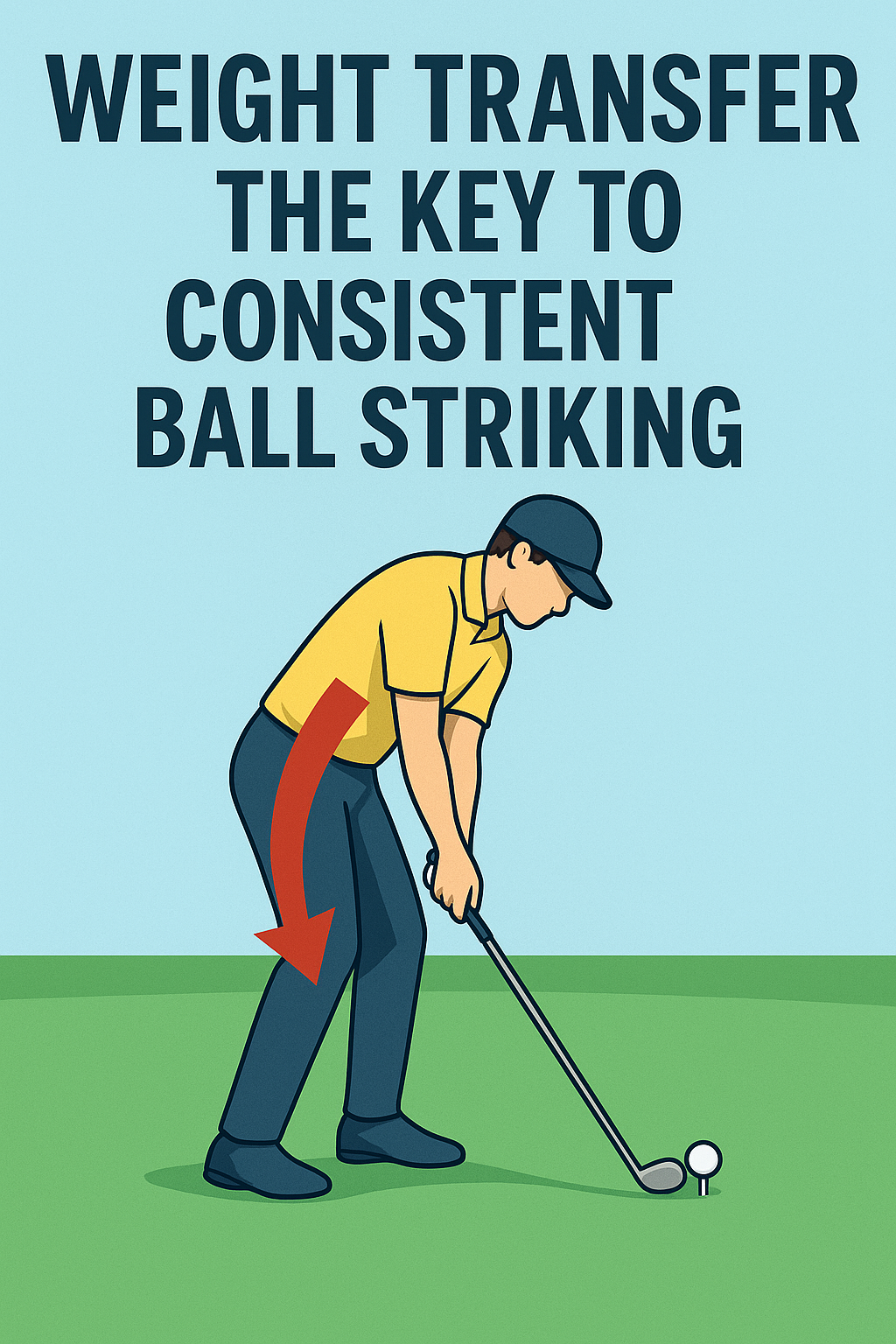
Weight Transfer: The Key to Consistent Ball Striking
Focusing on one core idea can unlock a lot of consistency. Here we zoom in on weight transfer—the deliberate movement of your body weight from the back foot to the front foot as you swing. Think of it as a smooth, connected sequence: load on the trail leg in the backswing, then shift and rotate through impact so the lead foot supports your finish.
What the concept is
Weight transfer is the process of moving your center of gravity from the right side (for right-handed golfers) toward the left side as you swing. It’s not about rushing forward; it’s about a coordinated arc that combines hip rotation, torso unwinding, and a gradual transfer of pressure from the trail foot to the lead foot. When done well, your body stays in balance and your hands can release freely into the ball.
Why it matters to the golf swing
- Improved contact: a proper move of weight helps you strike the ball first, then the ground, producing solid, straight shots.
- Consistency: a repeatable transfer creates the same impact pattern shot after shot.
- Power with control: efficient weight shift adds speed without over twisting or losing balance.
What the golfer should feel when doing it correctly
- Address: weight sits a bit toward the back foot, ready to load in the backswing.
- Backswing through impact: hips rotate, torso unwinds, and pressure moves from the trail foot toward the lead foot in a smooth arc.
- Finish: most weight is on the lead foot, with solid balance and your chest facing the target.
2–3 common mistakes and fixes
- Mistake 1: Weight stays on the back foot through impact, causing fat or thin shots.
Fix: Let the weight shift forward rather than trying to “hit” with the back leg. Imagine your lead-side hip pocket guiding the move toward the target as you finish. Use a slow tempo and a brief pause at the top to allow the transfer to begin naturally. - Mistake 2: Hips slide laterally without enough rotation, so the body sways instead of turning.
Fix: Emphasize hip rotation first. Visualize your belt buckle turning toward the target as you shift weight. This creates a circular, connected motion rather than a side-to-side sway. - Mistake 3: Weight shifts too early to the front foot, leaving you off-balance at contact.
Fix: Maintain balance by letting the torso unwind and the weight shift in a controlled arc, not a rush. Keep your head steady and let the sequence unfold in a plane toward the target.
One easy drill to practice
Step-Through Drill (home or range):
- Start in your normal grip and stance. Take a small backswing and pause briefly at the top.
- Initiate the downswing and step forward with your lead foot into a short stride. As you step, your weight should move from the back foot to the front foot along a smooth, controlled path toward the target.
- Finish with most of your weight on the lead foot, chest facing the target, and good balance. Do 6–8 repetitions, then gradually increase speed while keeping the same sequence.
Weight Transfer: the Key to Consistent Ball Striking
What is weight Transfer?
weight transfer refers to the deliberate movement of your body’s mass from one part of the stance to another during the execution of a swing or strike. In most ball-striking disciplines—whether golf, tennis, baseball, or cricket—the goal is to sequence your weight so that the body’s center of gravity flows smoothly from the back side toward the front, releasing energy thru the point of contact. Proper weight transfer not only adds power but also improves consistency by promoting solid contact, better timing, and reduced mis-hits.
At its core, weight transfer is about coordinating the kinetic chain—from the ground up: feet, ankles, knees, hips, core, torso, shoulders, arms, and finally the club or bat. When done correctly, each segment contributes to a stable, efficient strike. When it’s off, you’ll feel extra effort, inconsistent contact, and a sideways or slicey path that robs speed and accuracy.
Core concept across sports
- Golf: The swing load and unload require timing the shift from the trail foot (usually the right foot for right-handed players) toward the lead foot at impact.
- Tennis: Groundstrokes hinge on transferring weight from the back foot to the front foot to generate racquet head speed and depth.
- Baseball: The batter’s hips and torso rotate while weight moves forward through contact for line drives and power.
- Cricket: The transfer begins with a stable base and a controlled shift through the hips to maximize bat speed and control.
Quick takeaway: Weight transfer is not about moving as fast as possible; it’s about moving efficiently in a precise sequence that aligns the ground, body, and equipment with the target.
Why Weight Transfer Drives Consistency
Consistency in ball striking comes from repeatable movement patterns. When weight transfer follows a predictable path, you create a reliable impact position, which translates into more consistent contact, better ball flight control, and improved power generation without overloading any single joint.
Key benefits of proper weight transfer
- better contact quality: hitting the sweet spot more often.
- Increased power: efficient energy transfer from the ground up.
- Improved balance: reduce wobble and post-impact drift.
- Enhanced control: more consistent swing path and face-to-ball alignment.
- Lower injury risk: distributes load more evenly through the hips and spine.
Coaches emphasize that weight transfer should happen in harmony with the hips, torso, and arms.When one part overshafts the others, timing suffers and the stroke becomes reactive rather than proactive. By training the sequence,players create a stable platform from which speed and precision naturally emerge.
Phases of Weight Transfer in Golf
Address and Setup
Initial weight distribution typically favors a comfortable stance with the majority of weight balanced between the feet. A slight bias toward the back foot can help you coil properly, but excessive weight on the rear foot can hinder early forward motion. The setup should invite a smooth, tension-free backswing and a clear plan for how the weight will move forward through impact.
Backswing Load
During the backswing, a portion of your weight shifts toward the back foot as hips rotate and the torso coils. The goal is to load the swing without losing balance or stalling the torso. Efficient loading stores potential energy that will be released toward impact.
Transition and Unloading
The critical moment is the transition from backswing to downswing.Here, the hips initiate the movement and begin transferring weight toward the lead side. A well-timed transition reduces excess lateral drift and promotes an on-plane swing path. Think of the moment when the back foot starts to feel lighter while the front knee and hip drive toward the ball.
Impact and Through-contact
at impact, most of your weight should be loaded onto the lead foot, with the trail foot starting to lift as balance shifts forward. Maintaining a stable spine angle and releasing the wrists through impact help ensure the clubface meets the ball with a square or slightly forward-tilted stance.After contact, the weight continues its forward progression, accelerating the follow-through and ensuring a clean finish.
practical cues for golf-specific weight transfer
- Feel the trail heel lighten as you rotate hips toward the target.
- Push from the ground with the lead foot during impact to generate forward momentum.
- Keep the chest and hips square to the target through impact to maintain on-plane contact.
Weight Transfer and Contact Quality: Metrics to Watch
To know you’re transferring weight correctly, monitor these practical indicators during practice and on the course or range:
- Center of gravity moves from back foot to front foot by impact.
- Ball contact improves as the lead foot becomes the primary push-off point at impact.
- Face alignment remains square to the target at impact rather than leaning away.
- Follow-through shows forward momentum with a balanced finish rather than backward or sideways drift.
In a coaching session, you might use simple cue-based checks: “Feel the ground push you forward,” or “Shift weight early, then release.” These cues help convert abstract timing into tangible sensations on the swing.
Drills to Build Efficient Weight Transfer
try these progressive drills to ingrain the weight-transfer sequence. Each drill includes purpose, setup, steps, and cues. Use them on the range, with or without a ball, to focus on mechanics before adding speed.
| Drill | Purpose | Setup | Steps | Cues |
|---|---|---|---|---|
| Step-Through Swing | Chain weight transfer with a controlled step to front foot | Take your stance, no ball; practice with a gentle step toward target after contact] | 1. address, 2. Slight backswing, 3. Step forward with lead foot, 4. Finish tall | “Step into the strike,” “Drive through with the lead foot” |
| Tilt and Transfer (No Ball) | Feel the forward weight shift without worrying about contact | Address position, maintain comfortable spine angle | 1. Backswing to waist-high, 2.Shift weight toward lead foot while keeping balance, 3. Return to starting stance | “Stay balanced,” “Move weight first, then rotate” |
| Toe-Tap Drill | Promotes cadence and balance during weight shift | Stand relaxed, feet shoulder-width apart | 1. Tap left toe in during backswing, 2. Tap right toe on transition, 3. Finish ready | “Tap, shift, swing,” keep toes in contact with ground |
| Medicine Ball Push Drill | Engages core and lower-body connection to weight transfer | Stand with feet shoulder-width, light medicine ball held at chest | 1.Rotate hips slightly, 2. Push ball forward as you shift weight forward, 3. Return and reset | “Coil and push,” feel torso power into the lead side |
| Ground-Reaction Drill | Teach loading from the ground up | Lightly stand on balance pad or damp ground | 1. Load onto back foot with slight knee bend, 2. Explode weight into lead foot with contact cue | “Ground to target,” push into the ground with your lead foot |
Note: When practicing drills, start slowly to emphasize form. Gradually increase speed as your balance and timing improve. Always prioritize control over power during early stages of weight-transfer training.
Weight Transfer in Other Sports: Tennis, baseball, and Cricket
Tennis groundstrokes
In tennis, weight transfer from the back foot toward the front foot at contact generates depth and kick on groundstrokes. A stable transfer helps players maintain racket head speed through the ball and keep a consistent contact point, reducing mishits and inconsistent ball flight.
Baseball and softball swings
for batters, a synchronized transfer from trailing to leading side fuels bat speed and line-drive accuracy. Early pelvic rotation and leg drive seed the kinetic chain with the hips initiating power while the upper body follows in a coordinated arc.
Cricket batting
Cricket shots rely on a controlled weight transfer through the hips and torso, enabling a compact but powerful bat path. Practicing with front-foot pressures helps players produce solid contact on drives and cuts alike.
Case Studies
Case Study 1: Pro-level efficiency through a lighter front-heel cue
A tour-level golfer reduced inconsistent contact by adding a cue to press slightly into the lead foot at impact. The change encouraged a clean forward shift of weight without swaying off the ball. In practice sessions, the player reported hitting more fairways and a drop in mishits from off-center contact.
Case Study 2: Weekend warrior finds consistency with toe-tap rhythm
A weekend golfer struggled with late weight transfer that caused pushes and pushes-to-cut. After implementing a toe-tap drill to establish a cadence (tap back, tap front, swing), contact improved, and the player achieved a higher dispersion score on the range. The routine was quick to learn and easy to integrate during practice sessions.
First-Hand Experience
“When I started focusing on weight transfer, I felt my feet becoming the first thing that ‘talked’ in my swing. The ground felt like a springboard, and the club released through contact with much more control.” — Amateur golfer, 42
“I used to swing hard to hit the ball, but once I learned to let weight move through the strike, I found more distance without extra effort, and my accuracy improved.” — Tennis player, 28
These testimonials highlight a common theme: weight transfer is a sensory feedback system. The moment you sense a deliberate shift—from back to front—your output becomes more repeatable, which is the essence of consistent ball striking.
Benefits and practical Tips
- Benefits: More consistent contact, increased power efficiency, better balance, and reduced injury risk due to improved sequencing.
- Practical tips:
- Practice slowly first.Don’t rush the transfer; master the rhythm before adding speed.
- Use mirror or video feedback to verify your weight shift cues look and feel right.
- Incorporate ground-based cues (push into the ground with the lead foot) to reinforce proper sequencing.
- Balance is a predictor of success. If you’re off-balance at any point, reset and retry with added stability cues.
Frequently Asked Questions
What is the fastest way to improve weight transfer?
Start with low-speed drills that emphasize balance and sequencing (like the Step-Through Swing or Toe-Tap Drill). Gradually add ball contact as your awareness and control improve. Video feedback helps ensure your cues match your actual movement.
Is weight transfer different for beginners vs. advanced players?
Yes. Beginners often need to establish a reliable sequence and a stable base, while advanced players refine the timing and subtle shifts—especially during late-stage hip rotation and wrist release—to maximize speed without sacrificing control.
Can weight transfer prevent common mis-hits like slices or pulls?
Weight transfer, when paired with proper swing path and body rotation, helps stabilize the clubface through impact. While it isn’t a cure-all, it’s a foundational element for reducing directional errors and improving contact quality.