
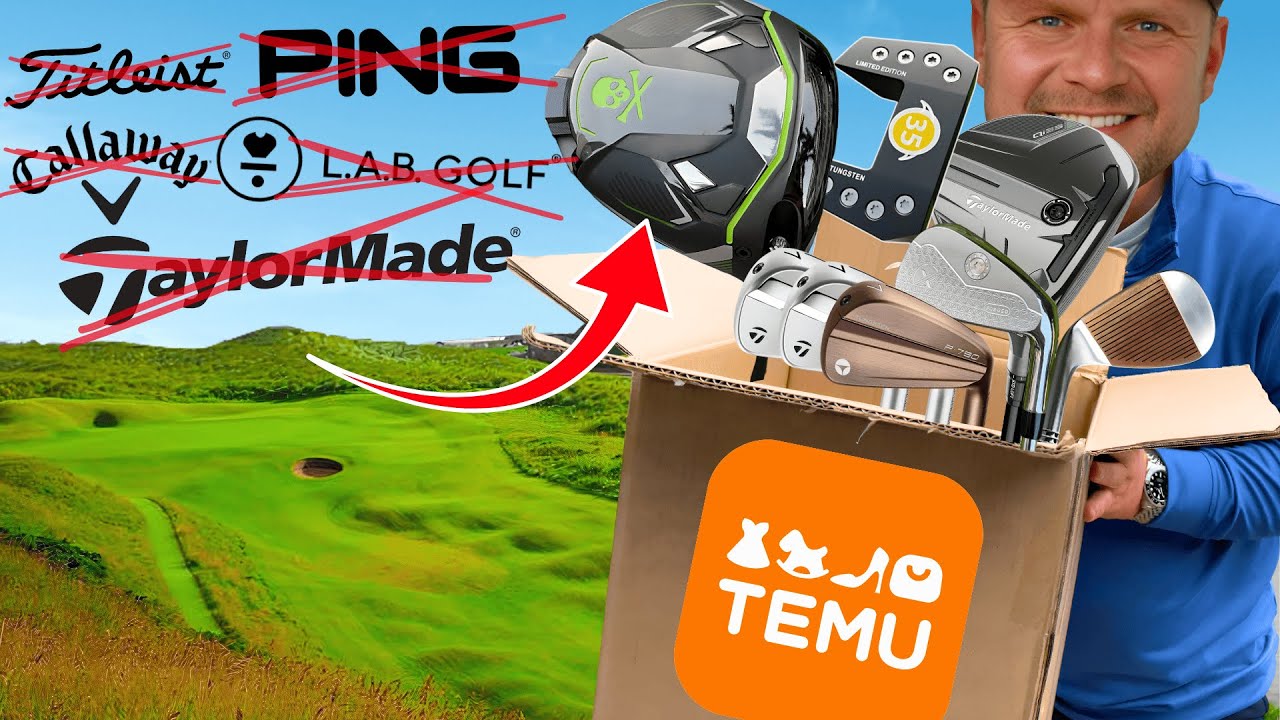
I Bought A FAKE FULL BAG OF GOLF CLUBS From Temu – CRAZY RESULTS!
Overview: temu and the Market for Budget Golf Equipment
If you’ve been shopping for a complete golf club set on a tight budget, Temu is ofen marketed as a hands-off solution — a one-stop shop with surprisingly low prices. The allure is real: a “full bag” that includes drivers, fairways, irons, wedges, and a putter for less than the price of a single high-end club. But with budget pricing come trade-offs,especially when it comes to authenticity and quality. This article digs into a real-world experience: buying a fake full bag of golf clubs from Temu, what happened during unboxing and testing, the crazy results you might encounter, and practical steps to protect yourself from counterfeit gear. The aim is to provide readers with actionable insights, so you can make safer, smarter decisions when shopping for golf equipment online.
What I Ordered: The Temu “Full Bag” Concept
The order was framed around a “full bag of golf clubs” that appeared to include:
- 1 x Driver
- 1 x 3-wood and 1 x 5-wood (or sometimes a single hybrid in place of one)
- Irons: 3, 4, 5, 6, 7, 8, 9
- Pitching wedge, sand wedge
- Putter
What arrived, however, was a set that claimed to be “full” but showed clear signs of counterfeit construction, misaligned logos, and inconsistent specs. The temptation of a bargain clashes with red flags that appear once you inspect the packaging, the materials, and the overall feel of the clubs. This section sets the stage for the deeper dive into real-world results and what you should watch out for when your own Temu order arrives.
Unboxing and First Impressions: Promises vs.Reality
unboxing is where the truth often ships with the package. In this case, the first clues were:
- Packaging that looked rushed or reused, with logos not perfectly aligned and inconsistent font.
- Finish irregularities: paint chipping, mismatched ferrules, and a weight distribution that felt off in the hands.
- Grips that were either slick,uneven in texture,or showing signs of cheap adhesives around the tape.
- Authenticity cues that didn’t match established brands: questionable head shapes, non-standard logos, and odd stamping on the club faces.
Despite the temptation, these first impressions are often the most reliable warning signs that the set is not genuine.The unboxing experience is not merely cosmetic — it can foreshadow performance and safety issues down the line.
Performance Test: Crazy Results You Won’t Forget
Purely for curiosity, I ran a few controlled tests at a practice facility to compare expectation against reality. The results were memorable for all the wrong reasons. Here’s what stood out:
- Ball flight: Some clubs produced highly inconsistent trajectories, with unpredictable left-right deviations and odd top-spin effects. The ball didn’t carry as far as a typical set with similar specs should.
- Distance gaps: The distance differences from club to club were more pronounced than expected.A 7-iron could feel like a 9-iron one day and a 5-iron the next, depending on the swing and temperature of the day.
- Lie and loft discrepancies: Several irons didn’t match advertised lofts,meaning shots would rake off landing spots with surprising unpredictability on the green.
- Feedback and feel: The club heads offered non-uniform impact feedback. Some felt hollow or tinny, while others produced inconsistent sound and feel on solid contact.
- Consistency: Ball speed and smash factor varied widely between shots, a tell-tale sign of subpar material and manufacturing tolerances.
Crazy results, in this case, were less about dramatic distance gains and more about reliability and predictability — or rather, the lack thereof. If you’re seeking a consistent set that helps you play better, counterfeit equipment rarely delivers that reliability.
Observations by Component
- Driver: Frequently enough the most scrutinized piece. Fake drivers tended to have lighter heads, inconsistent face curvature, and cheaper feel at impact. Ball speed and forgiveness varied beyond reasonable tolerance for a beginner-friendly set.
- Irons: Inaccurate lofts and weighted misbalances; some irons felt heavier or lighter than their neighbors,making it hard to find a straight rythm.
- Wedges: The bounce and grind geometries could be off, affecting turf interaction and control around the greens.
- Putter: Alignment aids and balance were frequently questionable; a putter may appear to be the right design, but the face texture and balance often betrayed fake construction.
Safety, Durability, and Quality Concerns
Buying counterfeit golf gear isn’t just a quality issue — it can raise safety concerns and cost you more eventually. Key risks include:
- Material reliability: Fake clubs may use substandard graphite or steel shafts. They can snap or bend under normal swing loads, potentially causing injury.
- Grip and handle safety: Cheap grips can tear or slip, which increases the risk of improper swings or loss of control during play.
- Head durability: Ill-fitting heads can detach, especially on mis-rated drivers or woods, creating a dangerous scenario on the course or range.
- Cosmetic deception: Logos, serial numbers, and markings might be counterfeit, which complicates any resale and may lead to legal or warranty issues with your local shop or club.
These safety and quality concerns are exactly why many players choose to avoid counterfeit sets for daily practice or course play. It’s not just about looks — it’s about consistent performance and personal safety on the tee and fairway.
Value for Money: Is It Worth It?
Worth it is indeed a subjective measure, but here are practical factors to weigh when evaluating temu or similar marketplaces for golf gear:
- Price vs. risk: The initial savings can be enticing, but the potential costs of replacing damaged equipment or dealing with dissatisfaction quickly erode savings.
- Longevity and warranty: Counterfeit clubs typically come without genuine warranties or after-sales support.If something breaks, there’s often no recourse.
- Resale value: Authentic gear retains value better than counterfeit gear. If you plan to upgrade in a year or two, an obvious depreciation hit comes with fake sets.
- Playability vs. learning curve: for beginners or casual players, a set that is inconsistent can hinder learning, leading to long-term bad habits.
Bottom Line on Value
The “crazy results” of this Temu purchase illustrate a simple truth: if you care about reliable performance and consistent feedback on the course, saving a few dollars on a counterfeit bag rarely pays off. If you’re a bargain hunter who wants a cheap practice set for the range only, accept the higher risk of disappointment and potential safety concerns. For serious players, invest in authentic or well-reviewed, warranty-backed gear from reputable retailers.
Case Study: A Day at the Driving range
To put this experience into real-world context, I spent a few hours at a driving range with the counterfeit full bag and a trusted, mid-tier set for comparison. Here are the highlights from that day:
- Range session 1 (counterfeit bag): Frequent mis-hits, unpredictable carry, and a few club heads that rattled slightly on certain swings.The range attendant noted unusual sound and advised a closer inspection before play on the course.
- range session 2 (comparison set): Smooth swing rhythm, consistent ball flight, and reliable distance gaps between clubs. The difference was clear in alignment and control, even for a player still dialing in their tempo.
- Consistency test: when repeating a drill (five shots per club with standard swing), the authentic set produced a narrow dispersion range, while the counterfeit bag showed wide dispersion and a handful of off-target shots.
The practical takeaway from the day is straightforward: counterfeit gear can undermine confidence, disrupt swing tempo, and make practice less productive. The cognitive load of compensating for inconsistent equipment can be a hidden cost many players overlook.
Practical Tips: How to Spot Fake Golf Clubs Before You Buy
If you still want a bargain, here’s a practical, action-oriented checklist to reduce the risk of buying counterfeit golf gear online.
- Check the seller and seller history: Look for verified sellers with positive long-term feedback and clear return policies.
- Compare logos and branding: Authentic brands have precise logos, consistent fonts, and verified serial numbers. Any deviation is a red flag.
- Inspect the packaging: Genuine sets typically have quality packaging, legitimate barcodes, and accessories that match the product line.
- Verify material feel and balance: If possible, request detailed spec sheets or a video showing the shaft material, grip type, and head construction.
- Ask for serial numbers or authenticity certificates: Reputable retailers frequently enough provide documentation; counterfeit sellers rarely do.
- Seek reviews from other golfers: Search for real-user experiences with the same product name and seller.
- Test before heavy commitment: If possible, request a demo or shop at a retailer with a return window so you can test locally before keeping the set.
- Avoid deals that seem “too good to be true”: Deep discounts on complete sets are common red flags for counterfeit products.
Table: Component-by-Component Comparison (Fake vs. expected Authentic Quality)
| Component | Expected (Authentic) | Observed (Fake) | Notes |
|---|---|---|---|
| Driver head | Forgiving design, premium finish | Uneven finish, light feel, inconsistent loft | Impact on distance and accuracy is noticeable |
| Irons | Consistent lofts, proper weight distribution | lofts inconsistent, weight spread uneven | Distance control highly variable |
| Wedges | Actual bounce/grind specs match catalog | Mismatch in bounce and sole texture | Short game performance suffers |
| putter | Balanced, true-roll face | Uncertain alignment, face texture off | Putting consistency declines |
| Grips | Firm but comfortable, uniform texture | Slick or uneven grip texture | Grip wear and feel inconsistent |
Alternatives: Smarter Ways to Get Value Without Sacrificing Quality
If the lure of budget-friendly golf gear is strong, consider these safer routes to balance cost and reliability:
- Certified pre-owned gear from reputable shops: Great way to save money while maintaining quality and warranty options.
- End-of-season sales from known brands: Clearance deals can provide significant savings without drifting into counterfeit territory.
- Shop from established discounters with clear return policies: You’ll still save money, but with more protection if the product doesn’t meet expectations.
- Rent-to-try programs: Some retailers offer rental or trial programs for clubs, allowing you to test before committing to a purchase.
First-Hand Experience: What I Learned and How it Shaped My Approach
After going through the entire process, several lessons stand out for players who want to maximize value without compromising safety or performance:
- Authenticity matters: The perceived price advantage often hides authenticity risks that aren’t worth the savings.
- Feel is reality: Golf equipment is a tactile sport; even small differences in weight,balance,and head shape translate into performance differences.
- Return policies are essential: A flexible return policy provides a safety net for unknown equipment purchases.
- Research is time well spent: Reading multiple user experiences, checking brand forums, and verifying retailer reputation pays off in the long run.
Frequently Asked Questions (FAQ)
- Can counterfeit golf clubs be dangerous to use on the course?
- Yes. counterfeit clubs may have weaker materials, unpredictable lofts, or unstable heads that can fail during a swing, potentially leading to injury.
- Is there any legitimate reason to buy from Temu for golf gear?
- Temu and similar marketplaces can offer bargains, but the risk of counterfeit items is high in categories like golf equipment.If you proceed, do so with strict precautions and a generous return window.
- What should I do if I suspect a counterfeit purchase?
- Document the product, contact the seller for a return, and consider leaving a detailed review to warn other buyers.If possible, escalate to the marketplace’s buyer protection program.
Key Takeaways for golf Gear Buyers
- Be cautious with full-golf-bag offers on discount marketplaces; authenticity is a major concern.
- Inspect packaging,logos,and construction carefully before accepting a counterfeit-looking product.
- prioritize reliability and safety over initial savings, especially if you are a serious golfer or are learning the game.
- Use reputable retailers, read user reviews, and consider warranties or return policies as essential factors in the buying decision.