
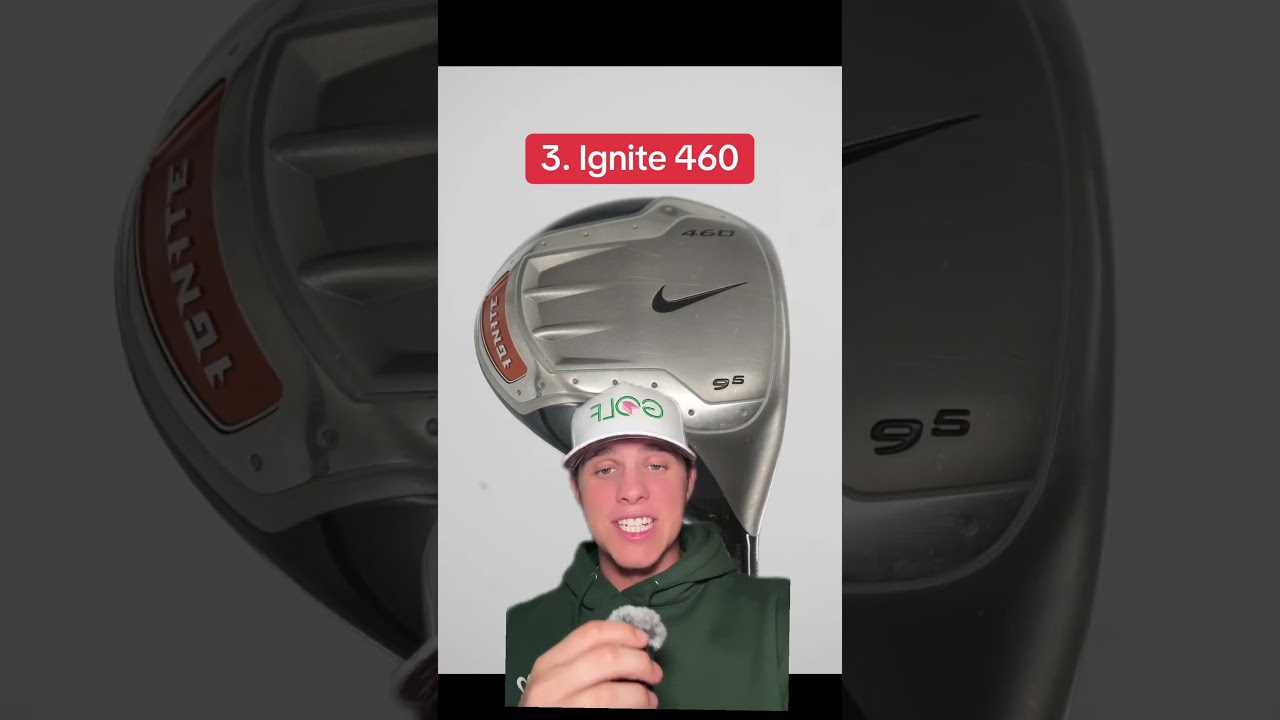
Top 5 Nike Drivers #golf #golfswing #golfgear #golfer #fyp
Top Nike Drivers in golf history
Note: Nike Golf stopped producing clubs in 2016, but the brand’s driver lineup is still celebrated by gear enthusiasts and collectors.Below is a detailed look at five Nike drivers that left a lasting impression on the golf world, with practical notes for the modern golfer who may encounter these clubs on the second-hand market.
Nike VR Pro Driver (2008–2012 era)
The Nike VR Pro Driver was the brand’s flagship model during it’s peak years, designed to deliver distance with a higher level of control.The head shape was a conventional pear/rounded profile that appealed to players who wanted a confident look at address and a stable feel on off-center hits. Built for speed and forgiveness, the VR Pro incorporated a strong aerodynamic profile to reduce drag and promote faster swing-throughs. It also offered adjustable loft and face angle to help golfers tune launch, spin, and trajectory to their swing. For many players, this model was a bridge between classic feel and modern golf tech, making it a favorite on the driving range and on tour in certain years.
- Key traits: 460cc engine room, forgiving face, adjustable loft/face angle options
- Who it suited: Players seeking a premium feel with reliable distance and reliable accuracy on mis-hits
- Pros: Solid feedback at impact, strong forgiveness for a premium driver, good on-center and near-center hits
- Cons: Some players preferred newer materials later in nike’s lineup; availability is primarily on the used market
Tips for fans and collectors: When testing a VR Pro on the range, focus on the impact feel and how the face responds on high toe and low heel strikes. The club rewards a smooth tempo and a steady head speed, and it tends to respond well to mid-to-slightly-strong swing paths. If you’re chasing a classic Nike feel with a touch of vintage tech, the VR Pro is a strong reference point in any Nike driver collection.
Nike SQ SUMO Driver
The SQ SUMO line was notorious for its oversized footprint and forgiving profile. The SUMO family emphasized stability and a large sweet spot, making it a popular choice for players who prioritized forgiveness and consistency over a more compact look. The big head size helped lower the center of gravity and promote a high launch with moderately low spin, which can benefit golfers who want maximum distance off mis-hits without sacrificing total playability. Despite changes in technology,many players still recall the SUMO models for their confident address and the feeling of “just put it on the ball.”
- Key traits: Oversized, forgiving profile; emphasis on ease of launch
- Who it suited: Beginners to mid-handicappers who want a confidence-inspiring driver
- Pros: Large, forgiving sweet spot; easy to square up at impact
- Cons: Some players perceived it as bulky at address; not ideal for players seeking ultra-compact looks
Practical note: when shopping for a SUMO driver, check for wear on the face and the crown to gauge how well the sweet spot has been preserved.For those who value forgiveness and a simple,repeatable swing,the SQ SUMO remains a compelling historical option in the Nike catalog.
Nike VR_S driver
The VR_S was part of Nike’s reformulated lineup that leaned into optimized speed and better aerodynamics. The VR_S family generally featured a more streamlined silhouette compared to the earliest VR Pro models and aimed to deliver a balanced blend of distance and control. Many golfers who found a good fit with the VR_S reported confidence in mid-to-high ball flights with stable spin characteristics.The driver was frequently praised for its feel on center hits and its consistency across a range of swing speeds. It remains a common find on the resale market for golfers curious about Nike’s mid-cycle performance innovations.
- key traits: Sleeker shape than the earlier VR generations; emphasis on speed stability
- Who it suited: Players who want a modern-feeling Nike driver without stepping into the latest designs
- Pros: Predictable launch, reliable depth of impact, good distance from center hits
- Cons: Fewer new-era adjustability options compared to the later models
Buying tip: Look for VR_S drivers with intact grips and smooth shaft transitions. The stock shafts are varied, so match a shaft profile to your swing tempo for best results. If you enjoy classic Nike design with dependable performance,the VR_S is a solid choice.
Nike Covert Driver
The Covert line marked a new era for Nike, introducing design language that emphasized stability and a broader sweet spot with improved feel. The Covert models were praised for their feel at impact and their ability to produce workable ball flights for a range of players who like to shape shots. They also offered adjustable loft and face angle options, helping golfers dial in launch characteristics for different courses or conditions. For many players, the Covert was a gateway model that blended forgiveness with the ability to punch the ball both left and right when needed.
- Key traits: Modern, stable profile; improved feel and playability; adjustability options
- Who it suited: Players who want a reliable driver with room to tune shot shape
- Pros: balanced flight, strong on mis-hits, easy to draw or fade as desired
- Cons: Availability may be limited; some players prefer newer designs for added adjustability
Practical note: If you’re considering a covert on a resale basis, inspect the crown and sole for any face wear and ensure the weight ports function smoothly. The Covert’s legacy lives on in the minds of golfers who appreciate a stable, forgiving drive with the flexibility to fine-tune distance and trajectory.
nike Vapor driver
The vapor line is associated with Nike’s push toward speed and lightweight design, aiming to maximize ball speed and forgiveness through a modern aesthetic and streamlined profile. The Vapor driver family offered a balance of distance and playability,with some models featuring lighter materials and a responsive face designed to translate faster swing speeds into consistent ball speeds. Players who had success with the Vapor family often cited a lively feel,a confident address,and a broad sweet spot that helped maintain accuracy even when strikes weren’t perfect. As a collectible or second-hand option, Vapor drivers can be a flavorful addition to a golf gear collection or a practical tool for a player seeking a bridge between classic Nike tech and more contemporary shaft options.
- Key traits: Lightweight feel, speed-oriented design, broad forgiveness
- Who it suited: Players chasing speed and easy launch with a friendly face
- Pros: Good ball speed potential, forgiving across a wide area of the face
- cons: Availability varies by era; may require shaft changes to optimize performance
Usage note: For modern players evaluating older Nike drivers, the Vapor models can be a practical choice if you pair them with a shaft that complements your swing. Testing in a fitting environment can help you understand whether the club’s feel and launch align with your current tempo and ball flight goals.
Benefits and practical tips for Nike drivers (historic models)
- Forgiveness-forward design: Each of these Nike drivers aimed to help golfers find the fairway more frequently enough, especially on mishits. If you struggle with distance consistency or face angle control, a Nike driver with a larger head and more forgiving face could help you stabilize your swing.
- Adjustability considerations: Earlier Nike drivers typically offered loft and face-angle adjustments. If you’re buying used, confirm the adjustability features work and the weights are intact. A well-tuned setup can shave strokes off your score and improve ball flight consistency.
- Feel and feedback: Nike’s drivers are frequently enough praised for a confident sound and feel at impact. if you test on the range, pay attention to feedback on off-center hits and how the club responds to toe or heel hits.
- Head size and alignment: The larger head configurations popular in the SUMO era can help with alignment and visual confidence, especially for high-handicap players. For players who prefer a smaller, traditional look, the VR Pro or VR_S styles might feel more familiar.
- Second-hand market reality: Since Nike stopped producing clubs in 2016, most of these drivers exist on the used market. check the crown for dents, the face for wear patterns, the sole for future performance, and confirm that the shaft and grip are in good condition before buying.
First-hand experiences and case notes
Real-world impressions from golfers who tested Nike drivers during their prime years emphasize several common themes. These notes reflect a mix of casual players and enthusiasts who appreciated nike’s design language and how the clubs performed on the course:
- Case study A — The confident draw-lover: A mid-handicap player reported that the VR Pro gave a strong, repeatable draw with a steady feel. He highlighted the loft adjustability as a key factor in dialing in a high-launch, low-spin trajectory suitable for a long course layout.
- Case study B — The forgiveness seeker: A high-handicap golfer found the SQ SUMO’s oversized footprint and forgiving sweet spot to be a game-changer on mis-hits. Even when contact wasn’t perfect, the ball still tracked toward the target, reducing dispersion on the range and the course.
- Case study C — The control-focused player: A player who liked shaping shots praised the Covert for offering workable control with the ability to shape draws or fades as needed.The adjustable setup helped tailor launch for different rounds and conditions.
Swift reference table: Nike drivers at a glance
| Model | Year Introduced | notable Tech | Best For | Typical Used price |
|---|---|---|---|---|
| Nike VR Pro Driver | 2008 | Adjustable loft, face-angle options, premium construction | Distance with control; players seeking a premium feel | $60–$180 |
| Nike SQ SUMO Driver | 2006–2009 era | Oversized head; forgiveness-first design | Beginners to mid-handicappers seeking high forgiveness | $40–$120 |
| Nike VR_S Driver | 2011–2013 era | Streamlined profile; speed-focused aerodynamics | Players wanting a modern feel with reliable ball flights | $50–$150 |
| Nike Covert Driver | 2013–2015 era | Adjustability; stable feel; workable shot-shaping | Those who value forgiveness plus shot-shaping options | $60–$170 |
| Nike Vapor Driver | 2013–2016 era | Speed-oriented design; lighter feel | Speed seekers; players replacing a worn-out club with a classic model | $70–$200 |
Buying guide and maintenance tips for Nike drivers
- Inspect for face wear: Nike drivers from these eras can show face wear if they’ve seen many rounds. Check for dents in the crown and around the face area before buying.
- Verify shaft compatibility: Many Nike drivers came with a range of stock shafts. If you’re replacing or upgrading, confirm the shaft is in good condition and consider matching it to your tempo and swing speed.
- Test fit matters: if possible, test the club on a range or in a fitting studio. The feel and launch can vary considerably from model to model, even among used units.
- Consider resale value: Vintage Nike drivers can hold value well for collectors. If you’re buying as an investment, opt for models with minimal sole wear and intact grips.
- match with modern shafts: Some players prefer to pair classic nike drivers with modern lightweight shafts to optimize swing speed gains and forgiveness while keeping the original aesthetic.
Closing notes for readers and gear enthusiasts
While Nike no longer produces golf clubs, the brand’s drivers continue to attract attention for their design, contribution to golf technology, and nostalgic value. For golfers exploring the used gear market, these five drivers offer a mix of tradition and performance perspectives that can complement a modern bag or serve as a collector’s set. Whether you’re chasing a classic look, exploring shot-shaping potential, or simply enjoying the story that comes with a historic Nike driver, these models carry a legacy that extends beyond the course.