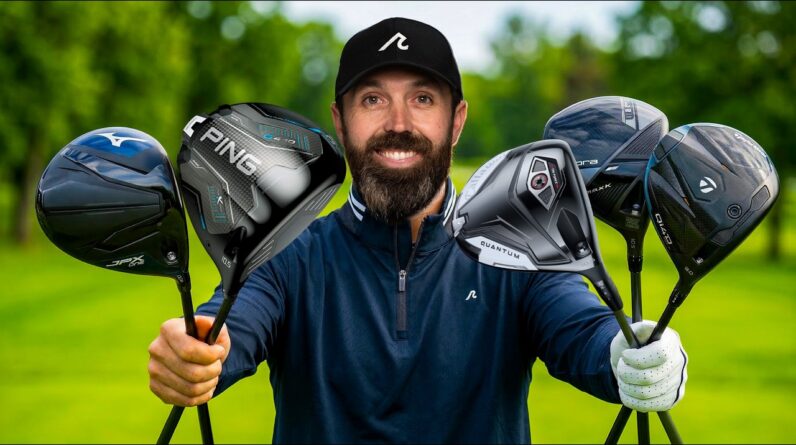

Hybrid vs 5 Wood vs Utility Wood | which golf Club Wins in 2025?
Note: This guide compares hybrids, 5 woods, adn utility woods in terms of distance, forgiveness, versatility, and modern fitting. Distances are approximate and vary with shaft, swing, and course conditions. Always consider a professional club fitting for your game.
Why Players Consider These Clubs in 2025
Golf equipment trends continue to evolve,but one constant remains: golfers wont clubs that simplify the long game without sacrificing control. Hybrids, 5 woods, and utility woods fill gaps between irons and standard fairway woods. In 2025, advances in materials, face technology, and adjustability have increased the usefulness of each club type across skill levels.Understanding where each club excels helps you optimize your set makeup, improve your score, and enjoy more confident swings from the fairway, rough, or off the tee.
hybrids: the Easy-to-Launch Option
Hybrids blend the forgiveness of a fairway wood with the trajectory of an iron. They excel at replacing long irons (2–4 irons) and cover a critical set gap for many players. In 2025, hybrids with low-friction coatings, stronger face-plate geometry, and strategic center of gravity placement help high-handicap players get the ball airborne more consistently.
Key benefits
- high launch with forgiving ball flight
- softer landing with control around greenside bunkers and rough
- Versatile from fairway, rough, or light off-the-tee shots
Ideal scenarios
- Replacing 2–4 irons for more consistent approach shots
- Approaching greens from the rough where precision is needed
- When you want a dependable, straight-to-landing shot without excessive work
5 Wood: Distance with Higher Trajectory
The 5 wood is a longer-metalwood option that tends to deliver more distance than a hybrid on full swings and a higher, softer peak than lower-numbered woods. In 2025, 5 woods have improved face technology and adjustable hosels, making it possible to tweak loft and lie for better gapping and fit.
Key benefits
- Greater distance off the fairway and from the tee for many players
- Higher launch and softer landings, aiding approach shots
- Better options for players who struggle hitting mid and long irons
Ideal scenarios
- Long par-4 and short par-5 approach shots where distance is paramount
- Players who prefer a wood-like setup over irons for consistent contact
- When you need a reliable go-to club for elevated tee shots on tight fairways
utility Wood: The Modern Multi-Tool
Utility woods (sometimes called low-profile fairway woods or modern “utility” woods) sit between hybrids and traditional fairway woods.they’re designed to offer more versatile options: easier high-launch from difficult lies, lower spinning shots for wind control, and a compact shape for better turf interaction.In 2025, many models use lightweight materials and multi-material heads to improve feel and launch characteristics.
Key benefits
- Great for players seeking a compact fairway-wood experience with added control
- Typically better turf interaction than a standard long iron
- Low-to-mid spin with penetrating ball flight for windy days
Ideal scenarios
- When you need a reliable shot from the fairway with a controlled trajectory
- From light rough or hard ground where a traditional fairway wood might get snagged
- As a strategic option to balance a set that includes longer irons
Key Differences: loft, Design, Forgiveness, and Ball Flight
Loft and design overview
Loft is the most obvious differentiator. In general, hybrids populate the mid-to-short-loft range (roughly 16–28 degrees depending on model), 5 woods sit around 26–28 degrees, and utility woods typically fall between 18–22 degrees. These ranges create distinct trajectories and distances that influence how you fit them into your bag.
Forgiveness and turf interaction
hybrids emphasize forgiveness and a high center of gravity that helps get the ball airborne with less mis-hit penalty. Utility woods offer excellent turf interaction with a compact head, which helps on tight lies. 5 woods prioritize distance with a more traditional fairway-wood look and feel, which some players prefer for on-course consistency.
Ball flight and versatility
Hybrids deliver higher, more forgiving trajectories that land softly. 5 woods provide a strong, penetrating draw or fade depending on setup and swing. Utility woods can offer a balance—lower spin and a controlled mid-to-high launch that’s useful for wind, windward shots, or tighter fairways.
Who Should Use Each Club? By Skill Level and Game Style
beginners and high-handicappers
- Hybrids often outperform long irons, offering easier launch and more forgiveness
- Consider a 5 wood for additional distance if a hybrid isn’t giving you the desired carry
- Utility woods can be an option if turf interaction and wind control are priorities
Mid to advanced players
- Hybrids provide consistent gap coverage between mid irons and long irons
- 5 woods can be a trustworthy option for long approaches when you want a higher trajectory
- Utility woods are valuable for specific lies, wind, or course layouts that favor a low-spin, controlled shot
Golfers optimizing set makeup and gapping
- Fitting helps determine whether a hybrid, 5 wood, or utility wood best fills a distance gap
- Consider shaft options, loft adjustments, and lie settings to balance your bag
- Practice to understand which club produces the most consistent results for your swing
2025 Trends in Hybrid, 5 Wood, and Utility Wood
Adjustable hosels and loft-sleeves
Adjustability allows players to fine-tune loft, lie, and face angle to improve distance pacing and shot shape. In 2025, more models enable precise loft adjustments without compromising stability or weight distribution.
Multi-material heads
Using combinations of titanium, steel, and composite materials helps optimize feel, launch, and forgiveness. These materials can lower the center of gravity for higher launch or move it forward for improved stability on off-center hits.
Shaft innovations
Graphite shafts with optimized weight distribution,stiffness profiles,and kick-point technologies help players tailor launch and spin to their swing speed. The right shaft can shift how a hybrid, 5 wood, or utility wood behaves off the face, affecting distance consistency and contact quality.
Practical Tips for Choosing the Right Club
Fitting steps you can take
- Get a professional fitting to measure launch angle, spin rate, and carry distance for each club
- Test multiple loft options and shaft flexes to find the best combination for your swing speed
- Compare a hybrid, a 5 wood, and a utility wood with similar lofts to understand which gives you the best consistency
On-course testing scenarios
- From fairway lies with clean turf: test distance and ball flight with a hybrid and a 5 wood
- From light rough or ground under repair: try utility wood for improved turf interaction
- In windy conditions: assess spin and trajectory control across all options
Maintenance and longevity
- Keep clubfaces clean to preserve spin characteristics and ball contact
- Inspect shaft tips and hosels for wear after winter play
- Use headcovers for woods or hybrids to protect finishes and resale value
Quick Comparison Table: Hybrid vs 5 Wood vs utility Wood
| Club Type | Typical Loft Range | Common Distance (approx.) | Best For | Tradeoffs |
|---|---|---|---|---|
| Hybrid | 16–28° | 150–230 yards (varies with speed and model) | Replacing mid-to-long irons, easy launch | May not reach the same raw distance as fairway woods on full swings |
| 5 Wood | 26–28° | 170–240 yards (depends on speed and shaft) | Long approaches, high launch with distance | Can be tougher to hit consistently from tight lies for some players |
| Utility Wood | 18–22° | 180–260 yards (varies by model and speed) | Versatile option for wind, lies, and controlled long shots | May require a different feel than traditional irons or fairway woods |
Case Studies and Real-World Scenarios
Case Study 1: The Club-Fitting Turnaround for a Beginner
A beginner with a history of pulling long irons found that swapping from a 4-iron to a hybrid improved both confidence and dispersion. In practice rounds, the hybrid delivered higher launch and more consistent carry, reducing three-putts on mid-range approach attempts. The player added a 5 wood for longer par-4 setups, balancing distance and accuracy while maintaining a reasonable club count in the bag.
Case study 2: Mid-Handicap Player Optimizes Gapping
A mid-handicap golfer struggled to fill a 210–240 yard gap between a 5 hybrid and a 3-wood. Incorporating a utility wood provided tighter gaps,enabling more predictable approach shots while preserving a workable swing tempo. The combined set reduced awkward yardage misses and boosted green-first rounds.
Case Study 3: Windy Courses and Low-Spin Control
On a windy coastal course, a player benefited from using a low-spin utility wood for wind-affected shots, achieving a penetrating ball flight that held greens better than a higher-spin hybrid on certain days. The choice underscored how course conditions can influence club selection beyond raw distance numbers.
Frequently Asked Questions (FAQ)
Are hybrids always better than 5 woods?
No. Hybrids are usually more forgiving and easier to hit from a variety of lies,while 5 woods can offer more distance for players with consistent contact and a higher swing speed. The best choice depends on your swing, gaps, and course conditions.
When should I consider a utility wood over a hybrid or 5 wood?
Utility woods are worth considering when you need a compact,controllable long-wood option with good turf interaction. They can fill specific gaps and be advantageous in windy conditions or tight lies where you want a precise, predictable flight.
How vital is loft in choosing between these clubs?
Loft influences launch angle and spin; small adjustments can shift your total distance, ball flight, and landing behavior.A proper fitting ensures your lofts align with your swing speed and desired trajectories.
Should beginners get adjustable vs non-adjustable models?
Adjustable models offer future-proofing as your swing evolves, but non-adjustable options can be simpler and more consistent if you prefer a fixed setup.The key is to test both during a fitting.
How do these clubs affect my overall bag setup?
Choosing between hybrids, 5 woods, and utility woods typically affects your long-game strategy, your mid-to-long iron replacements, and your overall gapping. A well-fitted set considers your common shot shapes, preferred trajectories, and course conditions.
Resources and Further Reading
For deeper study, look into: golf club fitting guides, manufacturer tech sheets on face geometry, and player reviews comparing hybrids, 5 woods, and utility woods across different shaft configurations and loft options. When exploring 2025 models, pay attention to data from reputable fitters and professional testers.