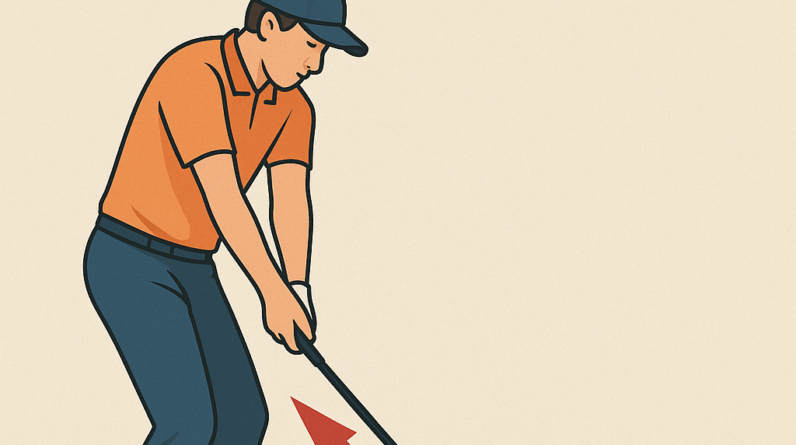

Clubface Control for Consistent Ball Striking
Today we focus on a single, critical topic: clubface control at impact. For most golfers, the difference between a straight shot and a curving one comes down to how square the face is at the moment of contact. This post stays tightly on that concept and gives you clear, practical steps to improve.
What the concept is
Clubface control means keeping the clubface square to your target through impact. It’s about the face’s position as you strike the ball, how it opens or closes, and how consistently it returns to a square position on each swing. While path and contact matter, a predictable, square face at impact is the most reliable driver of consistent starts and minimizing unwanted curvature.
Why it matters
- Small face changes create big direction changes. A few degrees of open or closed can push shots offline significantly.
- Consistent face control helps you recover from imperfect paths. If the face is predictably square, your misses cluster around the target line.
- Better control builds confidence and lowers scores over time.
What you should feel when doing it correctly
- Soft, steady hands with wrists relatively quiet at impact.
- The clubface appears square to the target at impact when you glance down briefly after contact.
- Minimal wrist flip through impact; the release is a natural roll rather than a forced snap.
- Lead forearm stays stable and supports the club, rather than trying to “manipulate” the face.
2–3 common mistakes and fixes
- Mistake 1: Face opens at impact
Slices or pushes to the right (for right-handed players) become more common.
Fix: Keep your wrists and forearms quiet through impact. Maintain a neutral grip pressure—neither grip-tight nor limp. Think of guiding the club with a calm, steady hand rather than forcing the face open. Drill cue: practice with a focus on a square face at finish; don’t release aggressively.
- Mistake 2: Face closes too quickly (hook)
Shots start left of target and curve hard left.
Fix: Pause the release slightly and allow the face to stay square a moment into impact, then release smoothly. Avoid a quick flip of the wrists just before or after impact. Drill cue: hold the finish and imagine the face staying toward square as you finish.
- Mistake 3: Inconsistency from grip/alignment
Direction varies shot-to-shot because face position isn’t repeating.
Fix: Recheck grip pressure and alignment at setup. Use a mirror or video to confirm you aren’t twisting the face or letting it drift open/closed. Return to a neutral position and rehearse with a square-face focus before hitting balls.
One easy practice drill
Gate Drill for a square face — set up two alignment sticks (or clubs) on the ground to form a narrow gate just outside the ball, wide enough for your clubhead to pass through square. Place the ball inside the gate. On each swing, aim to let the clubface pass squarely through the gate without touching the sticks. Start with half-swings, then progress to full swings as you feel the face staying square at impact. Key cues: “face square,” “soft wrists,” and “finish neutral.”
Do this drill at the range or at home with a soft object. The goal is to engrain a square face at impact, which translates to more predictable starts and straighter shots on the course.
Golf Technique and Instruction
Clubface Control for Consistent Ball striking
Why Clubface Control Matters
in golf, you don’t just want a club that reaches the target—you want one that consistently reaches the target with the desired trajectory. Clubface control refers to how the face of the club is angled at impact relative to the target line. When players optimize face angle in relation to their swing path,they improve contact quality,reduce dispersion,and gain reliable distance control. The result is more consistent ball striking across different clubs and shot types.
key concepts to understand include face angle, swing path, and impact position. Together, these elements determine the initial direction of the ball, the curvature of its flight, and how much control you have over shaping shots. A solid foundation in clubface control also helps you interpret feedback from range sessions and adjust your technique with confidence.
Core Concepts: Face Angle, Path, and Impact
- Face angle: The angle of the clubface relative to the target line at impact. A square face means the face is perpendicular to the target line.A closed face is angled slightly toward the body line; an open face leans away from the body line.
- swing path: The direction the clubhead travels through the hitting area. Path is often described as inside-out, outside-in, or straight along the target line.The interaction between path and face angle largely determines the ball’s initial direction and spin.
- Impact position: Where the clubface makes contact with the ball, including center, toward heel, or toward toe.A high-quality impact position frequently enough corresponds with more consistent ball striking and better distance control.
How these pieces fit together: a square face at impact with an inside-out path is a common setup for a draw, while an open face with an outside-in path tends to produce a fade or slice. The goal for most players seeking consistency is to minimize large swings in face angle while maintaining a repeatable path and stable spine angle.
Benefits of Clubface Control for Consistent Ball Striking
- Improved accuracy and dispersion control across irons and woods.
- Greater distance consistency as face angle aligns more reliably with intended target line.
- Better ability to shape shots on command (draws and fades) without sacrificing contact quality.
- Faster feedback loops during practice sessions, helping you make purposeful micro-adjustments.
- Enhanced mental confidence on the course, reducing hesitation at address and impact.
how to Measure Clubface Control: Feedback Tools and Cues
- Impact tape or marker spray: Apply a small dot or stripe on the clubface to observe where the ball struck the face and adjust accordingly.
- TrackMan or FlightScope data (when available): Review face angle, path, dynamic loft, and spin to quantify changes.
- Video analysis: Record a down-the-line and face-on view to assess face angle relative to the path and target on impact.
- Alignment and setup cues: A consistent setup routine helps you maintain repeatable face orientation from takeaway to impact.
Tip: start with one cue at a time. For many players, dialing in a neutral grip and a square takeaway is the first step before refining face angle at impact.
Drills to Improve Clubface Control
Incorporate these drills into a focused practice routine. Each drill targets a specific element of face control and path awareness. Do 2–3 sets of 8–12 reps per drill, with a short pause to assess impact feedback.
- Square Face Drill — Use impact tape. on each swing, try to keep the contact sticker in the center of the clubface. If you see off-center hits, adjust your grip or stance width, then retry.
- Face-Target Drill — place a clubface alignment aid (or a small towel) under the grip to encourage a square face at impact. Make half-swings, focusing on keeping the face square to the target line through impact.
- Inside-Out path Drill — Place two alignment sticks or clubs on the ground: one pointing along the target line and another creating an inside-out path guide. Focus on swinging along the inside-out path while keeping a square face at impact.This reinforces how face angle interacts with path.
- Impact Position Drill — Use alignment sticks or a light-weight impact bag. Practice striking rails or foam targets with a centered,neutral impact.Visualize the ball leaving the clubface with minimal toe or heel bias.
- On-Down-The-Line Viewpoint — Record trackman-style data or use a camera to verify that the face remains stable and square relative to your target line during the downswing into impact.
Practical Tips for Everyday Practice
- Start with grip and posture. A stable grip and cozy spine angle easier translates to a consistent clubface through impact.
- Keep hands passive through impact. Excessive hand action can rotate the clubface unexpectedly, causing inconsistent results.
- Check your alignment. Align your feet, hips, and shoulders with the target line to prevent compensations that skew face orientation.
- Build a repeatable takeaway. A consistent takeaway sets up the clubface for a more predictable contact point and less face rotation during the downswing.
- Use a mirror or video feedback. Visual cues help you correlate body position with face angle at impact.
- Mix players’ cues with practice variety. Use different cue words (e.g., “square at impact,” “inside-out path”) to avoid overloading your mental approach.
Case Studies: Real-Life Improvements in Clubface control
Case studies illustrate how small adjustments in face control lead to meaningful gains in consistency and scoring potential. Here are two concise examples:
: Struggled with a sliced driver and inconsistent iron contact. After 6 weeks of drills emphasizing a square face at impact and a more inside-out path,driving accuracy improved by 20% and iron distance dispersion reduced by 15% on average. - Player B: Constantly fought pulls with long irons. By focusing on impact position and refining the grip, he achieved more centered contact and a stable face angle, enabling reliable shape control and better stopping power on approach shots.
First-Hand Experience: A Perspective from the Practice Tee
From a coach’s desk to the practice range, players who prioritize clubface control often report a noticeable shift in confidence. By isolating one variable at a time—starting with face angle at impact and then refining swing path—golfers gain actionable feedback that translates directly to the course. In my coaching sessions, I’ve seen players who previously chased distance suddenly gain consistency, reducing the guessing game on half a dozen shots per round.
Fast Reference: Face Angle and Ball Flight
| Face angle at impact | Typical ball flight (with a standard path) | Coaching cue |
|---|---|---|
| Square (0°) | Neutral to straight, minor shapes depending on path | Focus on maintaining alignment and centered contact |
| Slightly open (+2° to +5°) | Fade or slice tendency with neutral to outside-to-in path | Stabilize face at impact; verify path alignment |
| slightly closed (−2° to −5°) | Draw or hook tendency with inside-out path | calibrate inside-out path while keeping face square |
| Moderately open (> +5°) | Heavy slice with pronounced spin | Revisit grip, setup, and takeaway to reduce face opening |
Frequently Asked Questions
- Is it more crucial to fix the swing path or the clubface angle?
- Both are critically important, but for consistent ball striking, start with the face angle at impact and ensure your path supports the desired result.A square face with a repeatable path is a reliable baseline.
- Can you fix clubface control without changing your grip?
- Yes. Many players benefit from minor grip adjustments, posture checks, and a repeatable practice routine that emphasizes slow, controlled swings to train muscle memory before adding speed.
- How long does it take to see betterment?
- Initial improvements can appear in a few practice sessions when you focus on a single cue. More substantial, lasting changes typically require 4–8 weeks of consistent practice with feedback.
Key Takeaways for Clubface control and Consistent Ball Striking
- Establish a repeatable setup to support predictable clubface orientation at impact.
- Use impact feedback (tape, spray, or video) to observe where you strike the face and adjust accordingly.
- Coordinate face angle with a stable path; avoid compensations that disrupt timing and contact.
- Implement targeted drills that reinforce a square face through impact and an inside-out or aligned path when shaping shots.
- Track progress with simple metrics: centered contact,dispersion on the range,and confidence under pressure on the course.