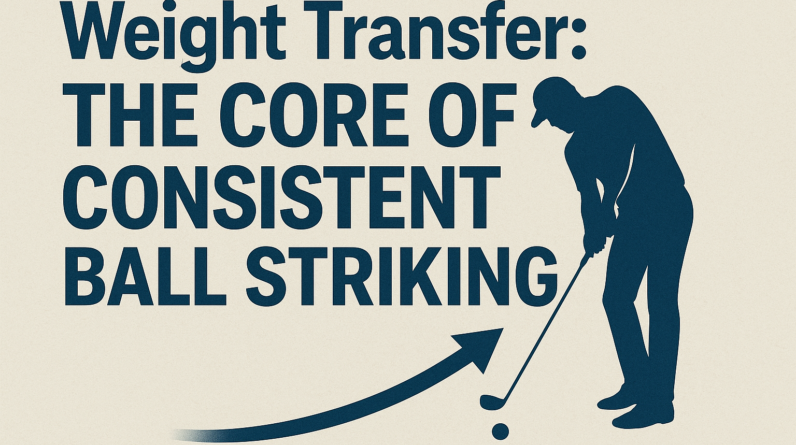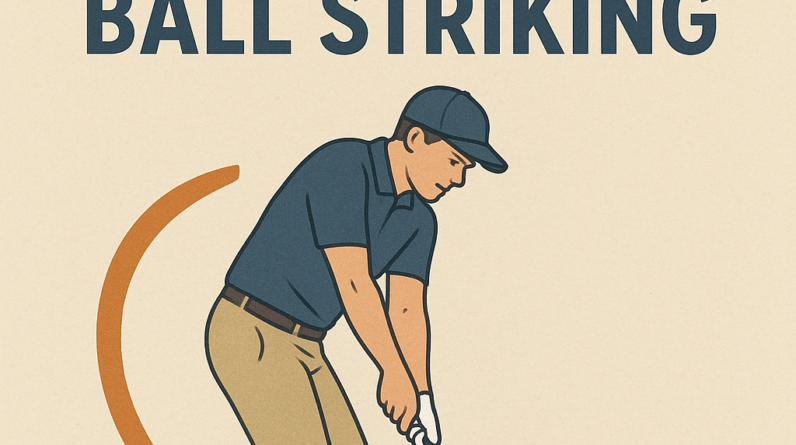

Weight Transfer: The Cornerstone of Consistent Ball Striking
When we talk about a reliable golf ball, the body’s movement matters as much as the swing itself. One simple, powerful idea to master is weight transfer: moving your center of gravity from the trail foot to the lead foot smoothly through the downswing. This keeps you balanced, helps you compress the ball, and makes contact more repeatable.
What the concept is
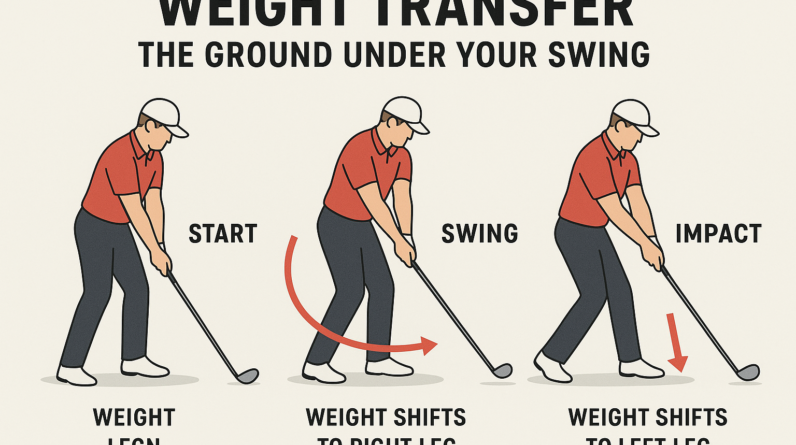
- Weight transfer means shifting your weight from the right leg (for right-handed players) toward the left leg as you swing through the ball.
- It’s a sequence, not a shove: your hips rotate toward the target, your torso stays connected, and your lead foot accepts the brunt of the load at impact.
- Think “ground up” power: the legs and hips generate force first, and the arms and club release that energy at the ball.
Why it matters to the golf swing
- Promotes consistent contact. When you load onto the lead side at impact, you’re more likely to strike the ball before the hosel or heel gets the better of you.
- Improves swing path and face control. A proper weight shift helps the club return on a circle rather than “collapsing” into the ball, which reduces slices and pulls.
- Enhances distance and accuracy. Efficient transfer creates solid, grounded contact and steadier swing tempo, even on off-center hits.
What the golfer should feel when doing it correctly
- At impact, you should feel your weight pressing into the lead (front) foot, with the trail foot beginning to lift.
- Your hips should rotate toward the target, and your torso stays connected without flipping the wrists late in the swing.
- Balance should remain, not a wobble or a fall toward the target. You want a quiet, controlled finish with most of your weight on the lead side.
2–3 common mistakes (with fixes)
- Mistake 1: No weight transfer – the weight stays on the trail foot at impact.
Fix: Practice with a “step into the lead foot” feel. Do slow half-swings focusing on shifting weight to the lead foot and holding the finish. A simple cue: “hips turn, weight moves left” (for right-handers). - Mistake 2: Weight shifts too early or too aggressively without rotation.
Fix: Initiate the downswing with a hip rotation first, then allow the weight to move toward the lead foot. Keep trail knee flexed and avoid collapsing forward. Use a 1-count pause at the top of the backswing to feel when the hips start the motion. - Mistake 3: Over-rotation or sliding without maintaining posture.
Fix: Maintain your spine angle and let the hips rotate toward the target while your upper body stays connected. Imagine keeping a slight tilt and letting the belt buckle point toward the target as you release into impact.
One easy practice drill you can do at home or on the range
- Weight-Shift Half-Swings Drill (range or turf at home):
- Set up as you would for a normal shot, but take very small, half-swings (about 25–40% of full swing).
- Focus on loading your weight onto the lead foot during the downswing and finishing with most of your weight there.
- Pause briefly in the finish to feel balanced, with the lead foot firm and the trail foot relaxed.
- Rehearse 10–15 reps, then gradually increase to full swings while maintaining the same feeling.
Tip: use a simple cue you can remember—“hips turn, weight moves left, stay balanced.” This helps keep your sequencing aligned with weight transfer, rather than letting the arms take over or the body collapse toward the ball.
Weight Transfer: The Cornerstone of Consistent Ball Striking
Understanding the core concept: what is weight transfer and why it matters
Weight transfer is the purposeful, timed shift of your body’s center of mass from one part of the stance to another during the swing or strike.In any sport that involves contacting a ball—golf, tennis, baseball, soccer, or even cricket—the way you move your weight influences how cleanly the club, racket, bat, or foot meets the ball. When weight transfer is executed with proper sequencing, it creates a stable base, loads the correct muscles, and delivers power without sacrificing control.
Key ideas to keep in mind:
- Center of mass and ground reaction: your body exchanges weight with the ground through your feet. Proper transfer maximizes propulsion while preserving balance.
- Kinetic chain: power starts from the ground up—feet, ankles, knees, hips, torso, arms, and the instrument you’re using. Any breakdown in this chain weakens contact.
- Timing and sequencing: transferring weight too early or too late can cause mishits,off-center contact,or loss of distance control.
Biomechanics behind weight transfer: key terms explained
the average location of mass in your body. During a strike,you want the COM to travel efficiently through the ground and toward the point of impact. the force your feet apply to the ground, which propels your body forward. Effective weight transfer converts GRF into productive movement rather than wasted energy. hips, torso, and shoulders rotate in a coordinated sequence. This sequencing stores elastic energy and releases it at impact. pre-loading weight prepares your muscles for rapid acceleration; post-load helps decelerate components safely after contact.
Weight transfer in practice: how it impacts ball contact and distance
When weight transfer is dialed in, you’ll notice two broad improvements: cleaner contact and more consistent power delivery. In golf, such as, a smooth transfer from the back foot to the front foot during the downswing leads to a solid strike and improved flight. In tennis, shifting weight forward through the core allows the racket to stay on plane longer, resulting in more pace and depth. Across sports, the underlying principle is the same: you must establish a stable base, build energy through lower-body action, and release it through coordinated upper-body movement at the moment of impact.
Common symptoms of poor weight transfer
- Mishits or off-center contact
- loss of distance or pace fluctuations
- Excessive head movement or swaying
- Pushing or pulling the shot rather than driving through it
Weight transfer across sports: sport-specific insights
Golf: the art of turning stacked energy into clubhead speed
in golf, weight transfer begins with a slight knee flex and a deliberate set-up that aligns the spine to promote a small, pre-impact shift. As you start the downswing, the weight moves from the trail foot (right foot for right-handed players) toward the lead foot, while the hips rotate and the torso unwinds. A well-timed transfer reduces the chance of an over-the-top swing and promotes solid contact, even on off-center hits.
- Pre-swing: light load on the trail foot,hips coiled,core engaged.
- Downswing: rapid transfer to the lead foot; hips lead, torso follows, hands release through impact.
- Impact: weight centered over the lead foot, compression on the lead side, and a stable spine angle.
Tennis: weight transfer for power and control
In tennis, the weight shift from the back foot to the front foot during groundstrokes and serves helps maximize racket head speed while maintaining balance. A linear transfer, aided by hip rotation and trunk flexion, allows players to drive through the ball with consistent timing.
- Forehand: back foot initiates the motion; weight shifts forward as the racket makes contact.
- Backhand: similar transfer with a slightly different rotation pattern depending on grip and stance.
- Serve: dramatic weight transfer from the back leg to the front leg to produce high acceleration and kick.
Baseball/softball: transferring momentum into the barrel
Baseball and softball rely on a coordinated chain of weight shifts from back foot through the front foot at contact. The stride helps create a stable base, while hip rotation and trunk torque store and release energy into the swing. Early weight shift can cause flat swings, while late transfer can lead to direction issues.
- Load: knee flex and heel-to-toe pressure distribution on the back foot.
- Swing: weight climbs to the front side as hips rotate toward the pitcher or pitcher release point.
- Impact: strong front-side contact with consistent line drive or power trajectory.
Soccer/Football: kicking with efficient transfer for distance and accuracy
In powerful kicks, weight transfer turns the hip into a lever that drives the leg through impact. The approach and plant foot set up a stable base while the non-kicking leg stabilizes the torso and directs the strike line. Proper transfer minimizes overreaching and maintains balance after contact.
- Approach: slight lateral shift and knee flex on the planting leg.
- Contact: trunk remains quiet as the kicking leg accelerates through the ball.
- Follow-through: weight shifts to the plant leg, absorbing momentum while keeping posture.
Practical drills to improve weight transfer
Incorporate these drills into your routine to build reliable weight transfer, reinforce proper sequencing, and transfer that knowledge to game-like situations. Aim for deliberate, slow practice first, then gradually increase speed as your body learns the pattern.
- Split-stance drill: Stand with feet wide apart and shift weight from the back foot to the front foot while keeping hips square. Practice slow, controlled rotations and then apply to your sport-specific swing or strike.
- Toe-heel transfer drill: Begin on your back foot’s toe (heel up) and smoothly roll to the front foot’s heel. This teaches the feel of shifting pressure across the footbed without overstraining the ankle.
- Medicine-ball rotation: Stand in a staggered stance, hold a light medicine ball, rotate hips and torso, and then extend through the ball with a controlled transfer of weight. This builds dynamic balance and power sequencing.
- Slow-motion practice: Perform slow, deliberate swings or strikes focusing solely on the moment of impact and the exact moment weight shifts forward.Use a mirror or video to verify alignment.
- ground-force awareness: Drill barefoot on a smooth surface, feel the pressure shift from the heel to the forefoot and from lateral to medial edges as you rotate and drive through.
- Shadow swings: Without equipment, perform shadow swings focusing on hip pivot, trunk rotation, and weight transfer timing.Add cues like “load-rotate-drive” to reinforce sequencing.
Common mistakes and how to fix them
- Early front-side weight shift: Results in early release and loss of power. Fix: cue yourself to maintain a stable back-side brace until late downswing or impact, then shift weight progressively.
- swaying rather than rotating: Sway compromises balance and timing. fix: practice with a casual coaching cue like “hips rotate first,then step” to ensure rotation precedes large lateral movement.
- Pushing through contact: leads to offsets and misalignment. Fix: visualize stepping through the ball rather than pushing; focus on finishing with a quiet upper body.
- Inadequate hip engagement: Without hip rotation, energy gets stuck in the legs. Fix: add hip-bridge exercises and wall-tow kicks to encourage proper pelvic rotation during swings.
technology and measurement: assessing weight transfer
How to measure progress
Progress can be tracked through a combination of video analysis, simple force-point checks, and mindful practice. Look for consistent contact, a smooth weight shift arc, and less lateral head movement during impact.
Record swings or hits from multiple angles to visualize weight transfer timing, hip rotation, and torso sequence. If you have access to basic force plates or smart insoles, monitor shifts in plantar pressure during the swing cadence. Accelerometers or wearables can quantify peak speeds and sequence timing to fine-tune your transfer pattern.
case studies and firsthand experiences
Case Study A: Golf learner with inconsistent contact
A novice golfer struggled with balance and inconsistent ball striking. After focusing on a deliberate weight transfer from the trail foot to the lead foot, plus hip rotation sequencing, contact improved from frequent toe hits to solid center strikes. Within six weeks, average carry distance increased by 8% and dispersion narrowed.
Case Study B: Tennis player seeking more pace on groundstrokes
A club-level player noticed pace variability. Introducing a split-stance drill and slow-motion practice helped coordinate weight transfer with racket acceleration. The player reported more consistent pace and improved shot accuracy across longer rallies.
Benefits of proper weight transfer beyond distance
- Improved balance under pressure and in dynamic movements
- Better contact quality leading to more predictable ball flight
- Reduced risk of overuse injuries due to optimized load distribution
- Enhanced rotational mobility and core engagement for all-round athletic performance
Quick-reference: weight transfer drill table
| drill | Focus | How to Do | Benefits |
|---|---|---|---|
| Split-stance drill | Back-to-front weight shift | Stand wide, shift weight forward, rotate hips; simulate impact path | Improved sequencing and balance |
| Toe-heel transfer | Foot pressure feel | Roll from back toe to front heel during practice swings | Enhanced proprioception of weight movement |
| Medicine-ball rotation | core torque and transfer timing | Rotate hips with a light ball; extend through impact zone | Power buildup and rotational control |
| Slow-motion practice | Timing and contact quality | Perform swings slowly, focusing on impact moment | Clear feedback on sequencing and contact |
Key tips for coaching yourself or others
- Prioritize base stability. A solid, slightly flexed posture provides the foundation for effective weight transfer.
- Use cue words that promote sequencing: “load → rotate → drive.”
- Progress from slow to fast. Quality of weight transfer at slow speeds translates to consistency at full speed.
- Integrate breath control. Inhale to prepare, exhale through impact for stable timing.
- Incorporate sport-specific adjustments. Golfers may emphasize club path; tennis players focus on racket acceleration through contact.
Advanced considerations: tailoring weight transfer to individual morphology
Body type, flexibility, and prior training influence optimal weight transfer patterns. Taller athletes with longer limbs might generate more torque through hip rotation, while players with limited ankle dorsiflexion may rely more on trunk rotation. A coach or trainer can customize cues and drills to match mobility, strength, and experience levels.
Practical takeaway: building a simple routine for daily enhancement
To integrate weight transfer into your daily routine,consider the following routine order:
- Warm-up with dynamic hip and ankle mobility exercises.
- Do 5 minutes of split-stance drills to reinforce forward weight shift.
- Include 5–10 slow-motion practice reps focusing on the impact moment.
- Finish with 5 minutes of video analysis or mirror feedback to confirm proper sequencing.
Frequently asked questions (FAQs)
Why is weight transfer crucial for accuracy?
Weight transfer aligns the body’s energy with the point of impact. A well-timed shift ensures the body’s momentum is directed through the ball, resulting in cleaner contact and reduced mis-hits.
Can weight transfer help me hit harder without losing control?
Yes. Proper transfer stores energy in a kinetic chain and releases it through the strike. This allows you to generate power efficiently while maintaining control and balance.
What if I have limited ankle mobility?
Focus on hip-rotation sequencing and torso engagement to compensate, while gradually improving ankle mobility with targeted stretches and mobility drills.
How long does it take to see improvements?
Most athletes notice improvements within 4–6 weeks of consistent practice, with continued gains as they refine tempo, sequencing, and flexibility.
Bottom line: turning weight transfer into a reliable performance lever
Weight transfer is more than a technical term—it’s the cornerstone of consistent ball striking. By understanding the biomechanics, applying sport-specific transfer patterns, and practicing structured drills, you can develop a repeatable, powerful, and controlled strike that translates into better performance, fewer errors, and greater confidence on the field, court, or course.
Key takeaways
- Stable base and coordinated sequencing are essential for effective weight transfer.
- Practice across sports to understand universal principles while adapting to sport-specific demands.
- Use a mix of drills, video analysis, and mindful feedback to optimize timing and contact quality.
- Develop a simple, repeatable routine to reinforce transfer during practice and competition.