
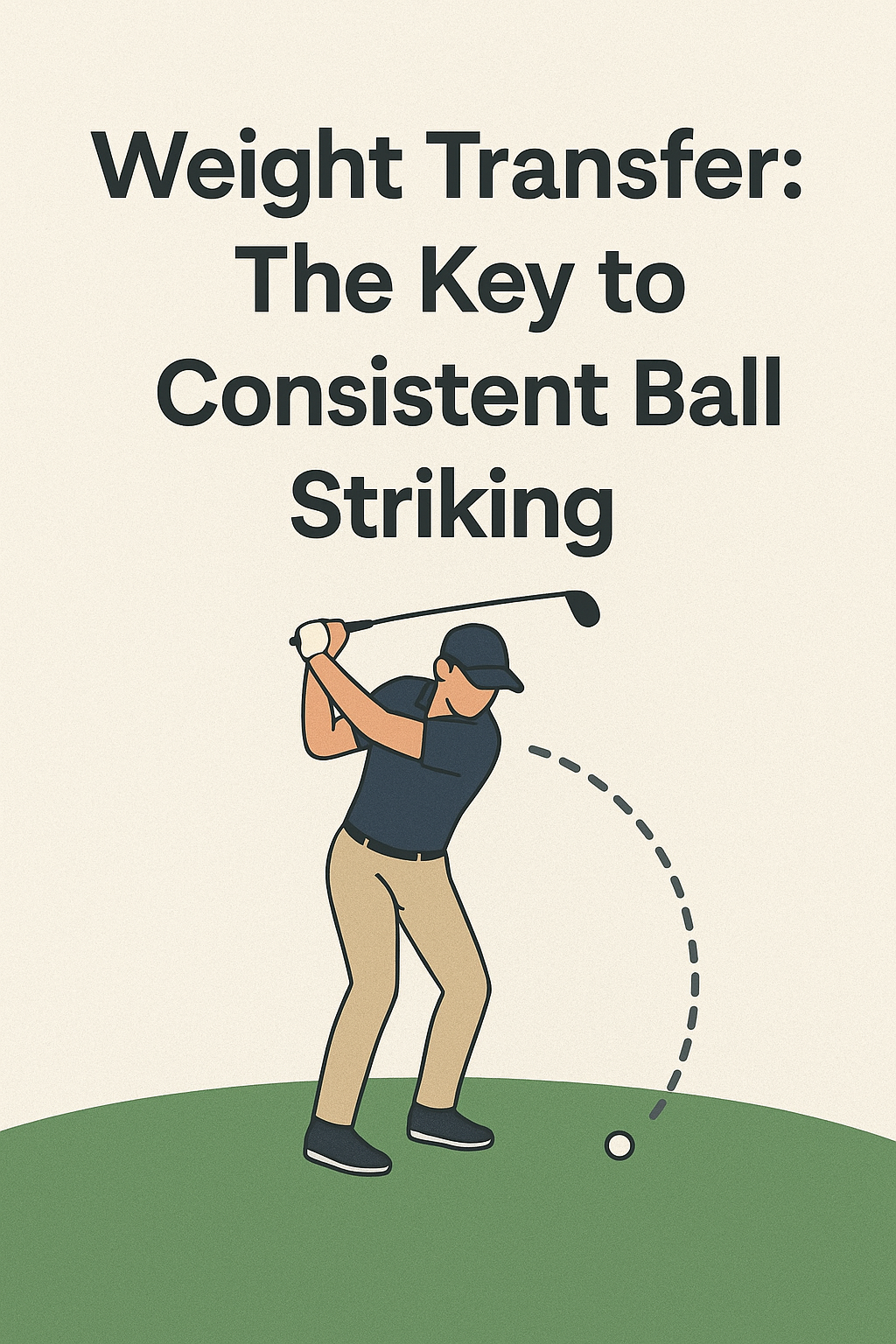
Weight Transfer: The Key to Consistent Ball Striking
Today we’ll focus on one essential idea that makes a big difference in every shot: how you transfer your weight from the back foot to the front foot during the swing. When you do this correctly, you’ll notice better contact, more consistent distance, and straighter shots.
What the concept is
Weight transfer means moving your center of gravity smoothly from the trailing side during the backswing to the lead side through impact and into your follow-through. Think of it as a controlled shift of your body mass, not a slide or sway. For most right-handed players, the goal is to feel the weight shift from the right foot (trail foot) to the left foot (lead foot) as you strike the ball, and then stay buoyant on the lead side after impact.
Why it matters to the golf swing
- Solid contact: When weight is on the lead side at impact, the clubface strikes the ball cleanly, reducing fat or thin shots.
- Consistent timing: A natural weight transfer helps the lower body “underpin” the upper body, producing smoother sequencing and more reliable ball flight.
- Power with control: Ground reaction forces at impact translate to ball speed without sacrificing direction when weight moves correctly.
What the golfer should feel when doing it correctly
- Top of the backswing: a clear load onto the trail foot (the right foot for most players).
- Downswing to impact: a purposeful shift toward the lead foot, with the hips rotating toward the target and the chest following.
- Through impact: the weight sits solidly on the lead foot, with the trail foot light or just beginning to lift as you finish.
- Balance remains: your head stays fairly still over the center of gravity, and your spine angle is maintained—not wildly changing.
2–3 common mistakes golfers make with this concept
- Staying back on the trail foot at impact. The body fails to transfer weight forward, causing fat shots or weak feel in the hands.
- Swaying or sliding laterally instead of rotating. A lateral move kills sequencing and robs lag and speed.
- Rushing the transfer or rushing through impact. Haste disrupts timing and often leads to off-center strikes.
Simple, actionable fixes for each mistake
- Staying back: Feel your lead foot taking the majority of your weight by impact. Practice with a towel under your trail foot to remind you not to press it too hard into the ground. Drill: pause at the top, then feel the weight shift into the lead foot as you swing through, finishing with the belt buckle facing the target.
- Swaying/poor sequencing: Focus on rotating your hips toward the target while you shift. Keep your spine angle steady and let the hips lead the transfer. Drill: place a chair or alignment stick behind you (no contact). As you swing, imagine brushing the stick with your lead hip rather than moving your upper body forward.
- Rushing the transition: Slow the tempo slightly and consciously “load” the trail side before moving to the lead side. Drill: perform half-swings or three-quarter swings at a quiet tempo, pausing briefly at the top before initiating the downswing to feel a deliberate transfer.
Easy practice drill you can do at home or at the range
Step-Through Weight Transfer Drill
- Take your normal stance and make a full backswing to about 7/10. Do not swing hard—focus on feeling the move.
- As you start the downswing, plant your lead foot (the front foot) a small step forward along your target line. Aim for a 6–12 inch step rather than a big lunge.
- Finish with your chest facing the target and your weight clearly on the lead foot. Return to address and repeat 6–8 times.
- Progression: add a half-shot with a ball on the range, maintaining the same step-through feeling for balance and control.
Key takeaway: think of weight transfer as a controlled, rotating movement that moves your center of gravity from back foot to lead foot through impact. When you master this, you’ll hit more solid shots with better distance control and direction. Keep the drills steady, and trust the feeling of the weight shifting as your swing sequence unfolds.
Weight Transfer: The Key to Consistent Ball Striking
Understanding Weight transfer in Ball Striking
Weight transfer is the dynamic process of moving your body’s center of gravity from one part of the kinetic chain to another during a shot. In both golf and tennis, the way you shift your weight affects contact quality, power, accuracy, and repeatability. When done correctly, weight transfer helps you unite your legs, hips, core, and upper body so that energy flows from ground to ball in a smooth, controlled sequence. Mismanaging weight transfer often leads to off-center hits, push slices or pulls, and inconsistent ball speed.
What is weight transfer?
- Weight transfer is the purposeful movement of weight from the back foot to the front foot (or from the rear side to the lead side) in the moment of impact or contact.
- In golf, it typically means loading into the back leg during the backswing and unloading into the lead leg through impact and beyond.
- In tennis, it involves shifting weight from the back foot to the front foot during the forward swing, enabling faster racquet head speeds without sacrificing control.
- Optimal weight transfer aligns with the body’s kinetic chain: feet, ankles, knees, hips, core, shoulders, and arms all coordinate to produce clean and repeatable contact.
Why weight transfer is critical for consistency
- Improved contact point: Proper weight shift helps you consistently strike the ball at the optimal location on the racket or clubface.
- Increased power without extra effort: When energy is passed efficiently from ground to ball,you can generate pace with better timing rather then brute force.
- Better balance and stability: A controlled weight transfer maintains balance through swing or stroke,reducing compensatory moves that degrade accuracy.
- Enhanced trajectory control: The sequencing of weight shift influences launch angle, spin, and shot shape.
- Injury prevention: Proper loading and unloading patterns reduce undue stress on the lower back and knees by distributing forces more evenly.
Weight Transfer in Golf: How to Load and Unload Hips
Golf is a sport where the ground is your engine. The way you load your legs and shift your hips during the swing determines how the clubhead meets the ball. Below is a practical phase-by-phase guide to optimize weight transfer in golf.
Phase-by-phase breakdown
- Setup: Stand with a stable base. Feet shoulder-width apart, flex a bit in the knees, and position the ball relative to your stance. Keep the weight evenly distributed,with subtle,natural pressure into the arches.
- Backswing: Your weight gradually shifts toward the inside of the back foot. The trail hip starts to turn, but avoid lifting the front heel excessively. Maintain spine angle while loading into the back side.
- Downswing: Initiate from the ground up. As you rotate hips toward the target, the weight begins to move toward the lead foot, creating a solid connection to the ground at impact.
- Impact: Moast efficient strikes occur when a large portion of weight has loaded onto the lead leg, with the hips opening toward the target and the torso square to the ball.
- Follow-through: Transfer energy forward, finishing with the weight on the lead foot and the trail knee flexed. The body finishes balanced, allowing a smooth, controlled deceleration.
Practical cues for golfers
- “Feel the coil” from the hips during the backswing and release into the downswing.
- Keep the head steady and avoid excessive lateral movement; balance is a cue for good weight transfer.
- Press slightly into the inside of the back foot at address, then pivot through the shot to shift weight naturally toward the lead foot.
- Imagine your weight moving along a diagonal line from back-right to front-left (for right-handed golfers).
- Use tempo: a smooth, consistent tempo helps prevent over-rotation and ensures the weight transfer is timed with the club’s path.
Weight Transfer in Tennis: From Stance to Shot Pace
Tennis demands rapid weight transfer to generate speed while preserving control. The same principles apply: move your weight efficiently from the back foot into the front foot, coordinating with hip rotation and core engagement to maximize racket head speed at contact.
Forehand, backhand, and serve: differing transfer patterns
- Start with the weight on the back foot. As you swing, shift weight forward through the ball, allowing the lead leg to drive the shot and the hips to rotate toward the target.
- Backhand: For one-handed backhands, emphasize a strong stretch and a later weight transfer that accelerates through contact. For two-handed backhands, the weight transfer is more integrated with the arm path, but hips still lead the transfer.
- Serve: The serve uses a distinct sequence: leg drive, torso rotation, and arm acceleration. Weight shifts from the back foot into the front foot as you accelerate the racket upward and forward, maximizing racket head speed at contact.
key tennis cues for effective weight transfer
- Keep a wide, stable base with a slight knee bend to accommodate fast shifts of weight.
- Lead with the hips and torso; let the arms follow,generating efficient transfer rather than brute arm speed.
- Maintain a consistent stride length and balance; avoid overstriding, which can disrupt weight transfer timing.
- Synchronize breath with the swing: exhale through contact to help relax the torso and maintain fluid transfer.
- Visualize energy pathways: from the ground up through the hips, torso, and shoulder line into the racquet.
Common Mistakes and How to Fix Them
- Mistake: Over-rotation without weight transfer leading to bottom-out timing errors.
- fix: Practice with a training aid that requires you to transfer weight before the hands move—use two cones or markers to represent back and lead foot positions.
- Mistake: Staying back on the heels at impact, causing fat or thin shots.
- Fix: Shift your weight onto the lead foot earlier in the downswing and feel the trail foot push into the ground as balance is maintained.
- Mistake: Jerky or rushed weight transfer, resulting in a loss of control.
- Fix: Slow down the transition, rehearse with slow-motion swings and a metronome to lock in timing.
- Mistake: Mis-timed hip rotation, which disrupts energy flow.
- Fix: Drill hip-rotation sequences separately (without a ball) to feel the lead with the hips first, then let the arms follow.
Benefits and Practical Tips
- Consistency: Regular weight transfer builds reliable contact point and ball flight, contributing to lower dispersion.
- Power without strain: Efficient energy transfer reduces the need for excessive effort, decreasing fatigue and the risk of overuse injuries.
- Versatility across sports: The same principles apply in golf, tennis, and other ball-striking activities, making fitness and practice transferable.
- Injury prevention: Balanced loading protects the spine and joints by distributing forces more evenly across the body.
- Adaptability to conditions: Weight transfer helps adjust to elements like wind, uneven lies, or fast serves, aiding shot stability.
Drills and Training Techniques
Below are practical, sport-specific drills designed to reinforce proper weight transfer. Use them during practice sessions to build automaticity into your movement patterns.
Golf drills
- Step-Through Drill: Take your normal stance, place a step forward with your lead foot on the downswing, and focus on transferring weight cleanly into the lead leg at impact. Repeat 10–15 swings.
- Trail-hip Rotation Drill: Without a ball, swing only to the top and then rotate hips toward the target while feeling weight shift to the lead foot. Do 2 sets of 12 reps.
- One-Plane Weight Transfer Drill: Use a towel under your back foot to feel the edge of the weight shift toward the lead side. Emphasize balance and tempo for 20 swings.
- Impact Bag Practice: Hit a soft impact bag, thinking about transferring weight from back foot to lead foot through the moment of contact. Perform 3 sets of 8 shots.
- Balance Board feedback: Stand on a balance board and hit half-swings, focusing on a smooth weight shift without wobble. 5–7 minutes per session.
Tennis drills
- Shadow Swing with Weight Shift: Practice forehands and backhands without a ball, emphasizing the transition of weight from back foot to front foot as you swing.
- Split-Step to Forward Step Drill: After a split-step, move weight forward into the front foot as you initiate the rally shot. Do 20 reps per side.
- Low-Bounce Toss Drill: Have a partner toss low balls while you absorb force with knee bend, then transfer weight forward to drive through contact.
- Serve Plyo-Weight Transfer: Practice serves with a light resistance band around the hips to reinforce hip drive and weight transfer through contact.
- Two-Step Finish drill: After a forehand, take a small step forward with the lead foot and finish with weight fully on the front foot, maintaining balance. 12 repetitions per side.
Case Studies: Real-World examples
To illustrate how weight transfer affects ball striking, here are concise, representative cases showing typical issues and the fixes that improved performance.
| Scenario | Issue | Intervention | Outcome |
|---|---|---|---|
| Amateur golfer | Inconsistent contact; mostly hits toward the toe of the club | Drills emphasizing weight shift to lead foot at impact; slower tempo to ensure sequencing | Improved center hits and dispersion reduced by 25% |
| Club-level tennis player | Harsh early pace; balls dive into the net | Focused on hip rotation and forward weight transfer through contact | More consistent depth and rhythm; fewer net errors |
| Intermediate player with slices | Weight staying on back foot; face closed at impact | Back foot weight release cue with torso rotation | Reduced slices; straighter ball flight |
First-Hand Experiences: Lessons from Coaches and Players
Coaches across golf and tennis emphasize the same central idea: the body’s weight must move in a predictable sequence to deliver a repeatable shot. Here are a few concise insights from practitioners who work with players of all levels:
- Coach A (Golf): “When players feel the weight moving forward into the lead foot, the clubhead meets the ball on a more stable plane. The shot becomes more controllable, especially under pressure.”
- Coach B (Tennis): “Weight transfer is the unsung hero of speed. Players who master the transition tend to generate higher racquet speeds with less effort.”
- Player Testimony: “I used to hit all my shots with my weight on my back foot. After focusing on a forward transfer through impact, my consistency and confidence improved dramatically.”
Quick Reference: Checklists for On-Course Practice and Court Practice
Use these checklists before practice sessions or matches to ensure weight transfer mechanics stay sharp.
| Area | Checklist |
|---|---|
| Setup | Stable base, slight knee flex, neutral spine, light pressure into arches |
| Backswing/Backswing Phase | Weight shift into the back foot, hip turn initiates energy storage |
| Downswing/Forward shift | Lead foot pressure increases, hips rotate toward target, torso coiling aligns |
| Impact | Major weight on lead leg, contact point centered, body facing the target |
| Follow-Through | Balanced finish with weight on lead foot, relaxed shoulders, controlled deceleration |
Integrating Weight Transfer into a Practice plan
To make weight transfer a natural part of your game, structure your practice around the following plan:
- Warm-up (5–10 minutes): Light dynamic movements focusing on hip hinge, knee flexion, and ankle stability.
- Technique Drill Block (20–30 minutes): Alternate golf and tennis drills emphasizing weight transfer cues; use slow-motion reps and tempo control.
- Game-Scenario Block (15–20 minutes): Practice under pressure with target zones,adjusting weight transfer to varying ball speeds and directions.
- Cool-Down (5–10 minutes): Mobility work for hips, lower back, and shoulders to maintain healthy range of motion.
Science and Biomechanics Behind Weight Transfer
Beyond coaching anecdotes, biomechanics researchers show that an efficient weight transfer path improves ground reaction forces and energy transfer. The kinetic chain concept explains how the ground initiates energy, which travels through the legs and hips to the core and finally to the upper limbs. When any link in this chain is weak or mis-timed,energy leaks,resulting in inconsistency. Practitioners emphasize maintaining posture, sequencing, and timing, while allowing the hips to lead the movement in a coordinated fashion.
Frequently Asked Questions
- Is weight transfer the same in golf and tennis?
- While the essential principle—efficient energy transfer from ground to ball—remains constant, the timing, direction, and body sequencing differ due to sport-specific mechanics and contact points.
- How can I tell if I’m transferring weight correctly?
- Look for a smooth progression of weight from the back foot to the front foot, a stable balance at contact, and improved accuracy and distance without added effort.
- Can weight transfer help with both power and control?
- Yes. Proper weight transfer increases power via efficient energy transfer while boosting control by stabilizing the contact point and sequence.
- What are quick cues to practice at home?
- Drills that emphasize hip rotation,foot pressure shift,and stepping through the shot can be done with no equipment—just focus on timing and balance.
Closing Thoughts on Weight Transfer as the Key to Consistent Ball Striking
Weight transfer is not a single move but a continuous, coordinated sequence that connects the ground, hips, torso, and limbs. By emphasizing a deliberate load into the back side, then a controlled, forward shift into the lead side, athletes can achieve more consistent ball striking across golf and tennis. Combine biomechanical understanding with practical drills, and you’ll notice improvements in contact quality, shot speed, and overall confidence on the course or court. Remember: great ball striking is built on a solid foundation of balance, timing, and the disciplined transfer of weight through the shot.