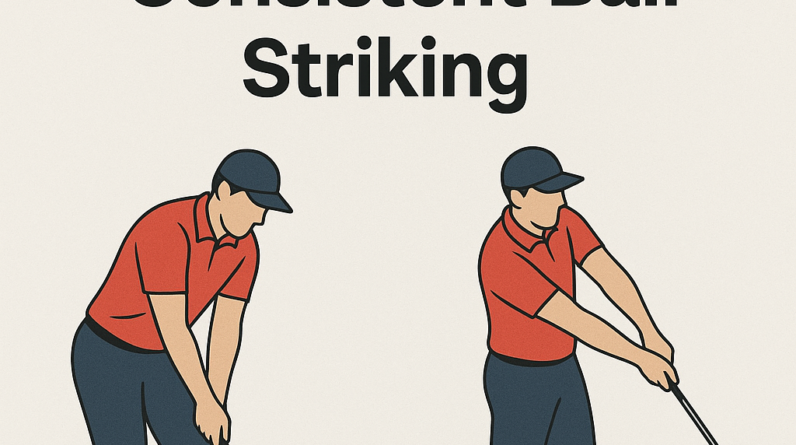

Weight Transfer and Balance: The Secret to Consistent Ball Striking
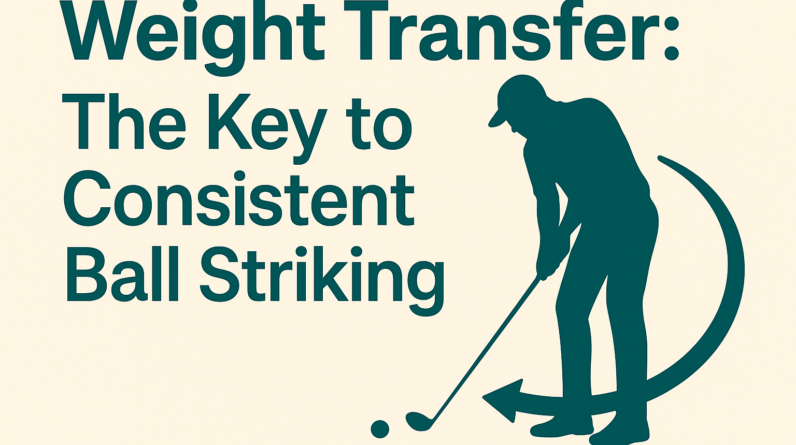
Today we focus on one core concept that drives solid contact club after club: weight transfer and balance through the swing. Moving your weight smoothly from the trail foot toward the lead foot during the downswing and into impact helps you compress the ball consistently and maintain control across clubs.
What the concept is
- Shifting your center of gravity from your back foot to your front foot as you swing down and through the ball.
- Maintaining your spine angle so you don’t stand up early or lose posture at impact.
- Coordinating the lower body with the arms and hands so the clubface meets the ball in a stable position.
Why it matters to the golf swing
- Balanced, centered contact leads to solid compression and consistent distance.
- Proper transfer reduces early/late timing errors that cause fat or thin shots.
- Good weight transfer supports better ball flight control, feel, and shot-to-shot repeatability.
What you should feel when doing it correctly
- On the backswing, feel more weight on the trail foot without collapsing your posture.
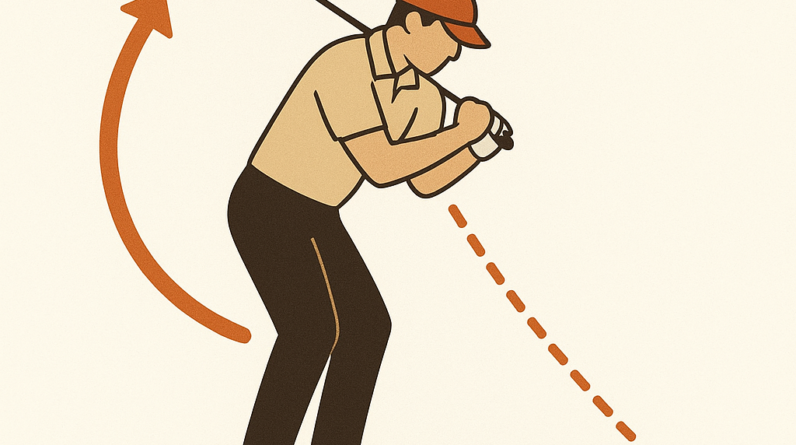
- At the transition, your hips start to rotate, and your weight begins to move toward the lead foot.
- Impact feels like your lead-side glute and lead knee are firm, with the chest square to the target and the body slightly forward from the ball.
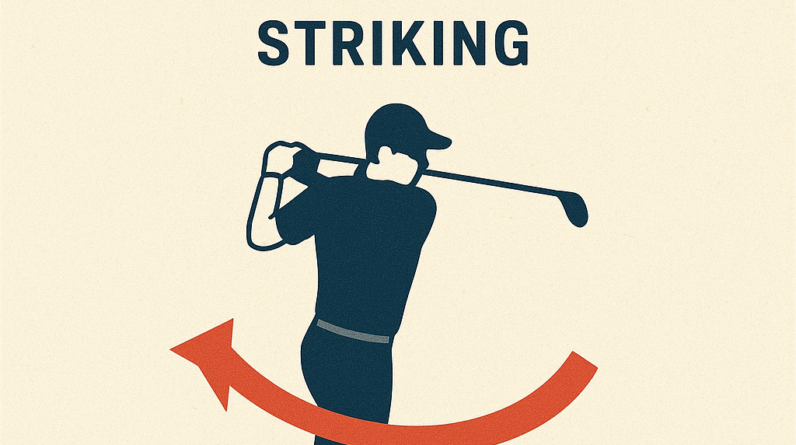
- Finish with most of your weight on the lead foot and your chest facing the target, not hanging back on the trail side.
2–3 common mistakes and simple fixes
- Mistake 1: Swaying or sliding toward the target instead of rotating the hips
- Fix 1: Focus on rotating the hips toward the target rather than sliding the hips forward. Think “rotate, don’t glide.”
- Fix 2: Use a towel drill to limit lateral movement—place a towel or small mat under your armpits and keep it in place as you swing to encourage rotation over slide.
- Mistake 2: Hanging back on the trail foot and not transferring enough weight to the lead foot at impact
- Fix 1: At impact, consciously feel pressure on the lead heel/arch and a slight knee flex in the lead leg.
- Fix 2: Pause for a fraction of a second at impact to confirm your weight has shifted forward, then complete the finish with full balance on the lead foot.
- Mistake 3: Timing the weight transfer poorly (too early or too late), causing inconsistent contact
- Fix 1: Practice with a deliberate tempo: start the downswing a beat after you start the downswing with your hips, then shift weight smoothly through impact.
- Fix 2: Use slow-motion reps to feel the sequence—backward weight shift, hip rotation, then forward transfer—before adding speed.
One easy practice drill you can do at home or on the range
The Step-Through Drill: Start with your feet shoulder-width apart. Take a small backswing, then step forward with your lead foot toward the target as you swing through. Finish with your chest facing the target and most of your weight on the lead leg. This drill trains the body to transfer weight correctly and to finish balanced.
Cues to use during the drill:
- Feel the weight shift from the trail foot to the lead foot as you step through.
- Keep your spine angled and your head steady while rotating your hips toward the target.
- End tall and balanced, with your chest facing the target and the lead knee flexed slightly.
Weight Transfer and Balance: The Secret to Consistent Ball Striking
Why Weight Transfer and Balance Matter
In any sport where you strike a ball—golf, tennis, baseball, cricket, or even certain martial arts—your ability to transfer weight smoothly and maintain balance under load is the single biggest predictor of consistent contact and shot quality.When the body’s centre of gravity shifts in a controlled, coordinated way, your limbs can deliver the club, racket, or bat with the right timing and magnitude. Poor weight transfer often shows up as off-center contact, slices or pulls, inconsistent power, and loss of control at higher speeds. The good news: with the right awareness and practice, weight transfer and balance can be trained like any other essential skill.
this section explores the core reasons why weight transfer and balance matter so much for ball-striking tasks. You’ll learn how the body moves from stance to impact,how ground reaction forces drive club head speed,and how balance acts as a stabilizing force that minimizes energy leaks during the swing or stroke.
Key Concepts: Weight Transfer Stages
Setup and Initial Positioning
- establish a solid base: feet shoulder-width apart, slight knee flex, and a relaxed spine. A balanced setup reduces wasted energy during the move.
- Position the weight evenly or slightly favoring the middle to allow a natural transition during load.
- Keep the eyes on the ball and the torso stacked over the hips to avoid excessive lateral tilt.
Load Phase (Back-side Loading)
- During the backswing or readiness, allow the weight to shift toward the back foot in a controlled manner. This coiling stores potential energy for the downswing or forward strike.
- Engage the hips and torso to build coil while maintaining posture. A sudden, jerky load reduces accuracy and timing.
- Maintain shoulder alignment and balance so the trail leg remains ready to support later movement.
Unload phase (Transition to Front Side)
- Initiate the forward movement by gradually transferring weight from the back foot to the front foot.
- Peak energy should be concentrated through the base of support—your feet and ankles—to maintain control while producing club head or bat speed.
- Breath and rythm play a key role: a smooth exhale can definitely help sync the body’s transition with the swing’s timing.
Release and Follow-Through
- As weight fully shifts to the lead side, the body unwinds, transferring rotational energy efficiently through the arms and instrument (club, racquet, etc.).
- Finish with a balanced pose that mirrors the setup, reinforcing stability for the next reps or shot.
Drills and Practice Routines to Improve Weight Transfer and Balance
Below are practical drills designed to train the brain and body to coordinate weight transfer with balance. Aim for clarity of cueing, smooth tempo, and consistent contact rather than brute speed at first.
1) Wall Tap Drill (Balance and Timing)
- Stand a comfortable distance from a wall with your feet shoulder-width apart. Maintain a slight knee bend and upright posture.
- Tap a stationary wall with your lead hand or swing instrument at waist height, focusing on a controlled weight shift to the lead side and a quiet, balanced finish.
- Cues: “Roots through the feet,” “soft knee,” “smooth load, quiet finish.”
- Common mistakes: twisting the torso excessively or rushing the load.
- Reps: 2–3 sets of 10 taps per side.
2) Step-In Drill (Coordinated Load and Unload)
- Place a line or tape on the ground. Start with the back foot on the line, lead foot off the line. Step into the line while maintaining posture and balance.
- During the step, initiate weight transfer from back to front and feel the front foot become the primary base of support as you complete the movement.
- Cues: “Step, load, rotate, settle.”
- Common mistakes: stepping too wide, losing balance, or swapping weight too late.
- Reps: 3 sets of 8 reps per side.
3) Balance Board Drills (Multi-Planar Stability)
- Use a balance board or a stable cushion to practice holding a balanced stance while slowly rotating the torso and swinging a light object.
- Goal: maintain a level head, steady hips, and even weight distribution across both feet as you rotate.
- Cues: “Stable spine,quiet calves,even weight.”
- Common mistakes: ankles collapsing inward or head dipping during rotation.
- Reps: 2–3 sets of 12–15 seconds on, 30 seconds off.
4) Dowel Rotation Drill (Sequencing and Timing)
- Hold a lightweight dowel or club along the lead forearm and trail forearm. Practice turning the hips and torso while keeping the dowel aligned and the weight balanced.
- Focus on a smooth sequence: hips rotate first, torso follows, arms release with the dowel traveling through impact line.
- Cues: “Turn, keep the dowel in line, finish tall.”
- Common mistakes: early arm release, disconnect between hips and arms.
- Reps: 4 sets of 6 repetitions.
5) Shadow Swing with continuous Weight Shift
- Without hitting a ball, perform a full swing while maintaining a continuous sense of weight progression from the back foot, through the middle, to the lead foot.
- Use a mirror or video to verify balance at the top and through impact.
- Cues: “Load, slide, deliver, finish balanced.”
- Common mistakes: stopping weight shift mid-swing or over-rotating without plateaus in balance.
- reps: 3–5 sets of 8–12 swings.
Drills at a Glance: Swift Reference Table
| Drill | Focus | Setup | Duration |
|---|---|---|---|
| Wall Tap Drill | Balance and timing | Back foot near wall, lead arm ready | 2–3 sets of 10 reps |
| Step-In Drill | Load-to-unload sequencing | Line on ground, both feet | 3 sets of 8 reps |
| Balance Board Drill | Stability in multiple planes | balance board or cushion | 2–3 x 15 seconds |
| Dowel Rotation Drill | Rotational sequencing | Light dowel or club | 4 sets of 6 reps |
| Shadow swing | Continuous weight transfer | Mirror or video setup | 3–5 sets of 8–12 swings |
Benefits and Practical Tips for Everyday Ball Striking
- Improved contact quality: Proper weight transfer aligns the strike with the center of the clubface or bat, reducing mishits.
- Increased consistency: A stable base under load minimizes wobble in the swing path and timing variations.
- Power efficiency: Ground reaction forces become the driver of speed rather than isolated arm strength, resulting in better efficiency and endurance across rounds or matches.
- Injury prevention: Balanced loading reduces compensatory movements that can stress the lower back, knees, and hips.
- Transfer of skills across sports: The same principles apply whether you’re driving a golf ball, forehanding a tennis ball, or swinging a baseball bat.
Case Studies: Real-Life Wins with Better Weight Transfer
Case Study A: Golf—From Push Slices to Consistent Draws
A mid-amateur golfer reported frequent pushes and loss of distance. After 6 weeks of focused drills emphasizing weight transfer from the trail foot to the lead foot, including Wall Tap and Step-in routines, her average drive distance increased by 12 yards, and her dispersion narrowed by 35%.The key change was a smoother unload phase that allowed the club to square at contact with minimal compensations in the wrists.
Case Study B: Tennis—Forehand Penetration and Control
A club-level tennis player struggled with a high-topspin forehand that lacked stability, especially on cross-court shots. incorporating Balance Board drills alongside Shadow Swings helped the player feel the weight shift toward the front foot during contact.After 8 training weeks, forehand winners increased, and errors reduced when moving laterally and hitting through the ball. The improved balance reduced late sways that caused off-center contact.
First-Hand Experience: coaches and Players Speak
Coaches consistently note that athletes who learn to sense weight transfer early report more confidence at high speeds. One player described the sensation as “charging through the ball with the floor as my anchor.” In practice rooms, we often measure progress with simple cues: the lead ankle remains firm, the trail knee stays flexed but stable, and the torso rotates in a clean, continuous arc. These cues help athletes avoid “trying to hit harder” with arm strength alone and rather harness the body’s natural timing and leverage.
Equipment Considerations and Measurements
While not every player needs fancy gear, a few tools can accelerate mastery of weight transfer and balance:
- Foot-pressure mats or insoles to visualize how weight shifts between the back and lead foot.
- A mirror or video setup to analyze posture, head position, and hip rotation through the swing.
- A light training aid (such as a training club or dowel) to maintain alignment while focusing on sequencing.
- Grip change or stance width adjustments,tested progressively to maintain natural balance while loading).
Tip: Start with simple cues and add external feedback, such as a mirror or audio cue, to reinforce correct weight transfer. As you refine the feel, you can reduce reliance on external feedback and trust your improved kinesthetic sense.
Frequently Asked Questions (FAQ)
- What is the quickest cue for better weight transfer? Start with “Load into the back foot, then shift smoothly to the lead foot through impact.” This reinforces the sequence without overcomplicating timing.
- Does weight transfer apply to all ball-striking sports? Yes. The principles of stacking, loading, and unloading apply whether you strike with a golf club, tennis racquet, or baseball bat.
- How long does it take to see improvements? You can notice improvements in 3–6 weeks with consistent practice,especially when drills are integrated into regular training or playing sessions.
- Can weight transfer help with injury prevention? Proper loading and balance reduce compensatory movements that often lead to overuse injuries. However, consult a coach or clinician if you have pre-existing conditions.
- Should I prioritize speed or balance first? Balance and controlled weight transfer should come first. Once you feel steady, you can gradually increase speed with controlled progression.
Putting It All Together: A Simple Weekly Plan
- Day 1: 15 minutes of Wall Tap Drill + Shadow Swing,focusing on cues and posture.
- Day 2: 20 minutes of Step-In Drill + Balance Board Drill to build sequencing and stability.
- Day 3: 15 minutes of Dowel rotation drill + 10 minutes of video review to reinforce form.
- Day 4: Light practice on the course or court with real shots, prioritizing balance and contact quality.
- Day 5: Rest or light mobility work; reflect on what cues felt most natural and adjust if needed.
Key Takeaways for Consistent Ball Striking
- Weight transfer is a intentional sequence: load on the back side, shift toward the front, and release with balance.
- Balance acts as the foundation that allows efficient energy transfer and precise contact.
- Drills that combine load, unload, and stability produce the most transferable skill gains across sports.
- Use a mix of cues, feedback tools, and gradual progression to internalize the mechanics.
Glossary of Terms
– Weight transfer: The controlled movement of body weight from one base of support to another during a strike.
– Balance: The ability to maintain stability in the face of changing forces during the swing or stroke.
– Ground reaction forces: The forces exerted by the ground back into the body as you push off or plant, which drive speed.
– Center of gravity: The point where the body’s mass is concentrated and balanced.
Closing Notes on Practice Principles
While the science behind weight transfer and balance is rooted in biomechanics, the practical takeaway is simple: train the body to move as a connected unit, from the ground up, with a clear sequence and steady base of support. The more you practice with real-time feedback and simple cues, the more natural this coordinated movement becomes—leading to consistently solid ball striking, improved control, and greater confidence in competitive situations.