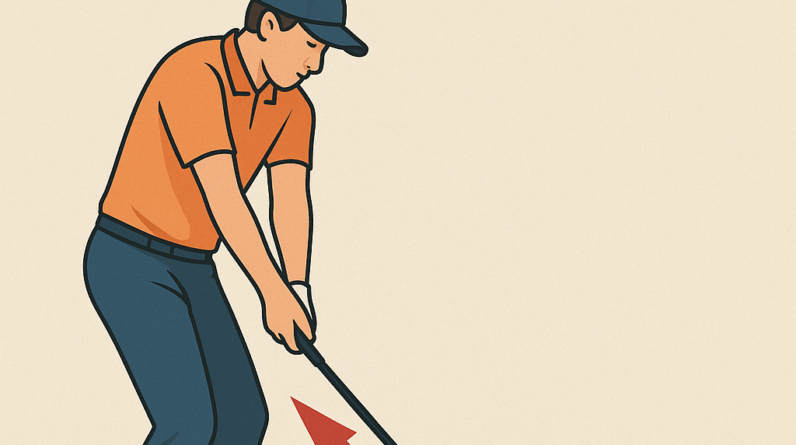

Tempo: A Simple Path to Consistent Ball Striking
As a PGA Professional, I often see players struggle not because they don’t understand mechanics, but because their swing rhythm isn’t repeatable. The single focus I want to share here is swing tempo—the rhythm and timing from take-away through impact. When you lock in a steady tempo, your timing improves, and your contact becomes more solid, leading to more consistent results.
What the concept is
Tempo is the feel of the swing’s pace and flow. It’s the amount of time you give the backswing versus the downswing and how smoothly you accelerate through the ball. For most players, a simple, repeatable rhythm is best: the backswing earns two “beats,” and the downswing earns one. In other words, a 2:1 backswing-to-downswing ratio that stays smooth and pressure-free.
Why it matters to the golf swing
- Consistency: A steady tempo reduces drastic changes from shot to shot, helping you hit more center faces.
- Timing: Proper tempo helps the clubface square at impact and promotes solid contact.
- Distance control: A smooth acceleration through the ball translates to more predictable ball flight and distance.
What you should feel when doing it correctly
- Relaxed arms and grip pressure—no gripping the club so tightly you feel tension in your shoulders.
- A smooth, easy takeaway with the clubhead tracing a natural arc.
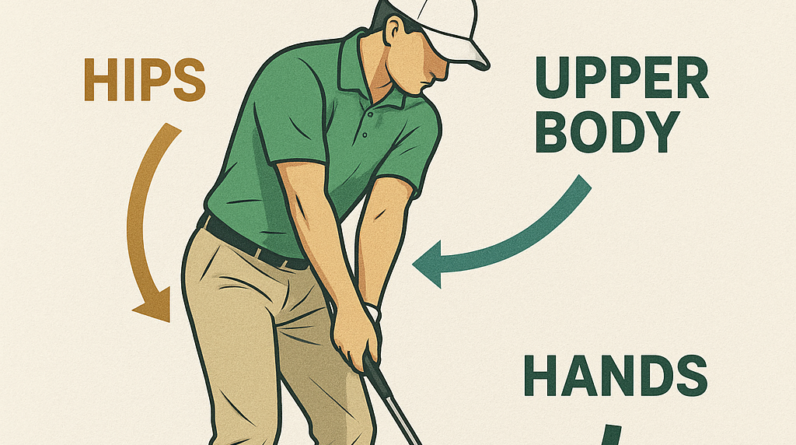
- A deliberate but not jerky transition from backswing to downswing, with a steady acceleration through impact.
2–3 common mistakes and fixes
- Mistake 1: Backswing is too fast and aggressive, causing a rushed transition.
Fix: Use a tempo cue. Practice with a metronome or rhythm count (see drill). Make the backswing feel like it sits on beats 1–2, with the downswing arriving on beat 3. Soften your grip and let your shoulders and torso unwind gradually rather than “snapping” the club into action. - Mistake 2: The transition is abrupt or “jumpy,” leading to off-center contact.
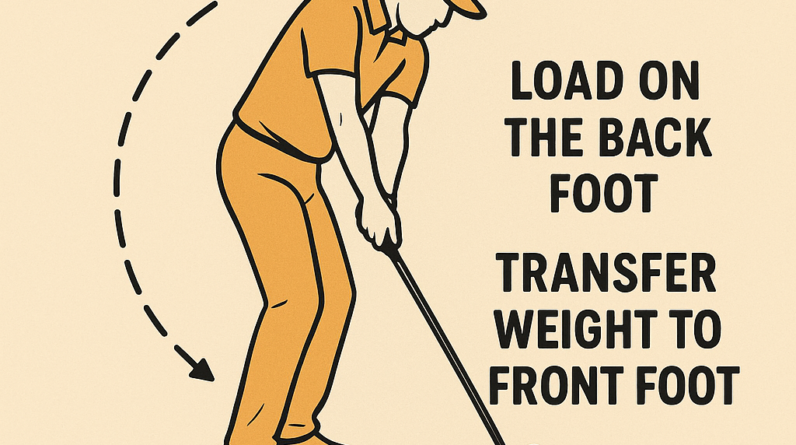
Fix: Add a micro pause at the top (0.1–0.3 seconds) to feel the weight shift and the hips initiating the downswing. Then accelerate smoothly through the ball. Don’t stall, but avoid a rushed, forced move. - Mistake 3: Tempo changes shot to shot (inconsistent rhythm).
Fix: Lock in a single tempo for all shots. Use the 2:1 backswing-to-downswing ratio as your baseline and rehearse with a rhythm cue (metronome or counts). Progress to full swings only after you can reproduce the same tempo on repeatable half-swings.
One easy practice drill you can do at home or on the range
- Metronome Rhythm Drill:
- Set a metronome to a comfortable pace (60–70 BPM works well for beginners; you can move up as you improve).
- Walk yourself through a 2:1 tempo: take the backswing during beats 1–2, then swing down and through on beat 3.
- Keep your grip pressure light and your shoulders relaxed. Imagine the swing as a pendulum that smoothly accelerates through impact.
- Start with half-swings to feel the rhythm, then gradually add a full swing while maintaining the same tempo.
Tip: as you practise, periodically pause briefly at the top and check your feel. If you’re tense or rushing, reset to the same tempo before swinging again. The goal is a repeatable, natural rhythm that you can trust under pressure.
Sticking to a single, friendly tempo will not only improve your contact but also build confidence across all clubs in your bag. Keep it simple, stay relaxed, and let the rhythm do the work.
Tempo: A Simple Path to consistent Ball Striking
What tempo is and why it matters
Tempo is the rhythm that guides your body from the moment you visualize making contact with the ball to the instant after impact. It isn’t simply about speed or rigidity; it’s about a controlled, repeatable flow that aligns your body, your posture, and your swing plane with the moment of contact. When tempo is well-tuned, timing becomes predictable, and ball striking tends to improve—delivering cleaner contact, better direction, and more power with less effort.
Two essential ideas help players understand tempo:
- Tempo vs. tempo consistency: Tempo refers to the rhythm of the movement, while consistency means repeating that rhythm under varying conditions—different lies, different balls, or different weather. The goal is a reliable pattern you can trust when you’re under pressure.
- Movement efficiency: A well-tuned tempo reduces wasted motion. by aligning the backswing with the downswing in a predictable ratio, you minimize timing errors and maximize energy transfer to the ball.
Why tempo affects ball striking? Because good contact depends on precise timing and alignment. If your backswing is too fast or too slow relative to your downswing, your clubface or bat angle may adjust too late or too early. That often shows up as mishits, slices, hooks, or misdirected drives. Tempo gives your body a clear, repeatable path to follow, turning a potentially chaotic motion into a dance with predictable outcomes.
Tempo across ball-striking sports
Tempo doesn’t belong to one sport alone. Across golf, tennis, and baseball—and even cricket—the same principles apply: establish a rhythm, maintain it, and use it to time the moment of impact. Here are the core ideas by sport:
- Golf: A longer, smooth backswing paired with a controlled, decisive downswing helps maintain a consistent swing plane and reliable contact.The ratio between backswing and downswing is a common coaching target, with many players benefiting from a deliberate, measured tempo.
- Tennis: A moderate backswing and a compact, through-driven swing typically yield cleaner contact and steadier groundstrokes. Tempo cues focus on staying relaxed through the ball and avoiding last-second rushing of the swing arc.
- Baseball: The batter frequently enough uses a shorter, direct path to the ball with a quick, crisp extension through contact. Tempo helps synchronize hip rotation,torso angle,and hand path,producing a consistent line drive or power stroke.
While the mechanics vary by sport,the throughline is the same: a repeatable tempo reduces timing variability and improves the consistency of ball striking. When players adopt a clear tempo framework, they can adapt to different surfaces, environmental conditions, and fatigues without sacrificing feel or accuracy.
The tempo framework: Pre-shot tempo, swing tempo, post-impact tempo
A practical way to think about tempo is to separate it into three broad phases: pre-shot tempo, swing tempo, and post-impact tempo.Each phase plays a distinct role in preparing, delivering, and finishing the motion with consistency.
Pre-shot tempo
- Establish your stance, posture, and alignment in a calm, repeatable routine.
- Take a deliberate breath to reduce tension, then set a target or visualization cue.
- Set a mental checklist: grip pressure, foot balance, and line to the ball.
Swing tempo
- The swing tempo is the core rhythm: the duration of the backswing relative to the downswing and the moment of impact.
- common cues include counting, breath patterns, or a consistent “three-count” feel on the backswing followed by an intentional, through-the-ball action.
- The goal is a smooth transition from backswing to downswing,with no rushing or stalling at any point.
Post-impact tempo
- Finish with balance and alignment, maintaining awareness of where your shoulders and hips face after impact.
- Use a quiet exhale and a controlled deceleration to help your body settle into the next shot.
- Post-impact tempo reinforces the overall rhythm and makes your next pre-shot routine more reliable.
Practical drills to develop tempo
Tempo is a skill you train.The following drills build awareness,reinforce the rhythm,and translate into more consistent ball striking. Start with slow,deliberate practice,then gradually increase speed while maintaining the same cadence.
Metronome-based tempo drills
- Three-beat back, one-beat through: set a metronome to a comfortable tempo (e.g., 60–72 BPM). On beats 1–3, rehearse the backswing; on beat 4, execute the downswing and make contact. Repeat for 5–10 minutes with attention to smooth transitions.
- Tempo ladder: Use a metronome to practice a 1:1 ratio (backswing equals downswing) first, then move to 2:1 (backswing longer), and finally to 3:1 (backswing extended, downswing quick). Don’t rush to the faster tempo until you can hit cleanly at the slower tempo.
Breath-and-cue drills
- Breath cue: Inhale to prepare, exhale a controlled release during the transition into the downswing. This keeps the body relaxed and reduces the tendency to grip too tightly or swing too aggressively.
- Index-card cues: Write short phrases such as “setup, steady, through” or “relax, rotate, deliver.” Read the cue aloud just before you begin your swing to reinforce the tempo cue in real time.
Rhythm ladders and progressive speed
- Rhythm ladder: Practice a ladder of speeds: slow, medium, fast, while keeping the same cadence. Pause briefly at the top of the backswing to ensure the transition is deliberate.
- From drill to live ball: Start with half-speed swings without a ball, then add half-speed contact with the ball, and finally full-speed shots while maintaining tempo.
Slow-motion to full-speed progression
- Begin in slow motion to engrain the path,then progressively increase speed while preserving the same tempo. Use video feedback to confirm that the backswing remains proportional to the downswing.
Benefits of consistent tempo
- Improved contact quality: Cleaner strikes with a higher rate of solid impact.
- Enhanced accuracy: More predictable ball flight as timing aligns with the intended path.
- Greater power with less effort: Efficient energy transfer through a stable rhythm reduces wasted movement.
- Reduced tension and fatigue: Relaxed breathing and controlled cadences minimize gripping and stiffness, especially when fatigued.
- Better consistency under pressure: A repeatable cadence helps you stay calm and execute the shot when it matters most.
case studies: first-hand experiences with tempo
Case Study 1 — Golf: From unpredictable mishits to reliable contact
Sam,a 12-handicap golfer,struggled with mishits on mid-range irons. By implementing a 3:1 backswing-to-downswing tempo and using a metronome at 66 BPM, he was able to train a repeatable rhythm. Within six weeks, Sam reported fewer off-center hits and a noticeable betterment in on-center strike frequency, particularly on uphill lies where timing tends to shift. The cue “one-two-three, through” became a mental anchor between all practice sessions and rounds, translating into steadier distances and better direction control.
Case Study 2 — Tennis: Consistency on all groundstrokes
Maria, a club-level tennis player, found her groundstrokes inconsistent and reactive to pace. She adopted a tempo ladder drill and a breath-based cue: inhale on setup, exhale through contact. By focusing on a compact backswing and decisive through-swing, she reduced late timing on faster serves and improved rally consistency. After eight weeks, her strokes displayed more balance, and her confidence grew as she could maintain rhythm even when opponents varied pace.
Tempo in your practice routine: a weekly plan
Consistency comes from structured practice. The following weekly plan blends tempo-focused work with sport-specific drills and mobility work to support repeatable mechanics.Adjust the days to fit your schedule.
- Day 1 — Baseline tempo and body awareness: Light, slow-motion swings (or shadow strokes) focusing on the backswing to downswing ratio. Use a metronome or counting cues to lock in the rhythm.
- Day 2 — Metronome drills and breath cues: 15–20 minutes with metronome-based swings,alternating 1:1 and 3:1 ratios. Add breath cues to reduce tension.
- Day 3 — Mobility and balance: Dynamic warm-ups and hip/torso rotation drills to support efficient sequencing. Finish with 10 minutes of rhythm ladder practice.
- Day 4 — Short-to-mid range specificity: Practice shots that require precision (e.g., targeted irons or controlled groundstrokes) while maintaining tempo.Use short pauses at the top of the backswing if needed.
- Day 5 — Live drills with feedback: Hit real balls or use ball machines with a focus on maintaining tempo under pressure. Record a video for self-review.
- Day 6 — Rest or light mobility work: Let the body recover; you can do light stretches and breathing exercises to reinforce a relaxed rhythm.
- Day 7 — Review and reflect: Analyze progress, adjust tempo targets, and plan the next two weeks of drills based on the results.
Common mistakes and how to fix them
- Mistake: Rushing the downswing or collapsing on impact. Fix: Slow down the transition with a deliberate pause at the top of the backswing or a counted cue (e.g., “1-2-3”).
- Mistake: Gripping the club or racket too tightly during the swing. Fix: Practice with lighter grip pressure and incorporate breathing routines to stay relaxed.
- mistake: Inconsistent breath or no breath control. Fix: Use a consistent inhale-exhale pattern throughout the swing cycle to maintain tempo.
- Mistake: Over-coaching or overthinking during the shot. Fix: Rely on a simple cue or a single rhythm instead of multiple instructions at once.
- Mistake: Not adapting tempo to changing shot demands (distance,wind,lie). Fix: Develop a few tempo templates per shot type and stay consistent with the one that matches the situation.
Quick-reference tempo templates by sport
-table class=”wp-block-table”>
FAQ about tempo and ball striking
- Q: Can tempo fix poor fundamentals? A: Tempo can optimize how you apply your fundamentals, but a solid grip, posture, and alignment are still essential. Tempo enhances repetition and timing, not substitutes poor technique.
- Q: How long does it take to see results from tempo training? A: Most players begin noticing improvements within 3–6 weeks of consistent practice, especially in contact quality and consistency.
- Q: Is tempo the same for all shots? A: Not exactly. You can use a few tempo templates (e.g.,full swing,half-swing,and contact-only) to adapt to different shot demands while preserving a core rhythm.
- Q: Should I use a metronome for all sports? A: Metronomes are particularly helpful for timing-based sports like golf and tennis. In baseball or cricket, you can combine metronome cues with timing drills and soft-tath to reinforce rhythm.
Incorporating tempo into coaching and self-coaching
For coaches, tempo acts as a concrete coaching cue that can be taught, reinforced, and tracked. A simple framework is to set a tempo target for each shot type, introduce a cue or breath pattern, and use video feedback to confirm the rhythm is maintained. For players and self-coaching, tempo is a private, repeatable routine you can perform anywhere: a park, practice range, or training room. The key is consistency: repeat the same cadence, repeat the same cue, repeat the same focus on the moment of contact.
Implementation tips for long-term success
- Start with a clear, simple tempo model. Avoid overloading with multiple tempo targets at once.
- Use cues that feel natural. The best cues are those you can recall in a pressure moment without second-guessing.
- Combine tempo training with mobility work. A flexible, mobile body supports a smoother cadence and more consistent impact positions.
- Track progress with simple metrics: contact quality, dispersion, and distance consistency across the practice block.
- Periodize tempo training. Phase in more advanced tempo targets once your foundations feel reliable for the majority of shots.
Final thoughts: tempo as a compass for consistent ball striking
Tempo serves as a practical compass guiding you toward reliable ball striking. By establishing a repeatable rhythm—supported by deliberate practice, evidence-based cues, and structured drills—you can improve timing, contact quality, and confidence across sports. The beauty of tempo is its adaptability: you can tailor it to your sport, to your current level, and to your individual biomechanics, all while maintaining a simple, memorable framework. With patience and consistent effort, tempo becomes less of a mysterious “feel” and more of a measurable, coachable skill that elevates your game across the board.