
Weight Transfer: The Secret to Consistent Ball Striking
When you swing, it’s not just your arms and the club that do the work. Your legs and your ability to move your weight from the back foot to the front foot through impact are what consistently put the ball on the target. Focusing on weight transfer helps you strike the ball first, then worry about distance and direction.
What the concept is
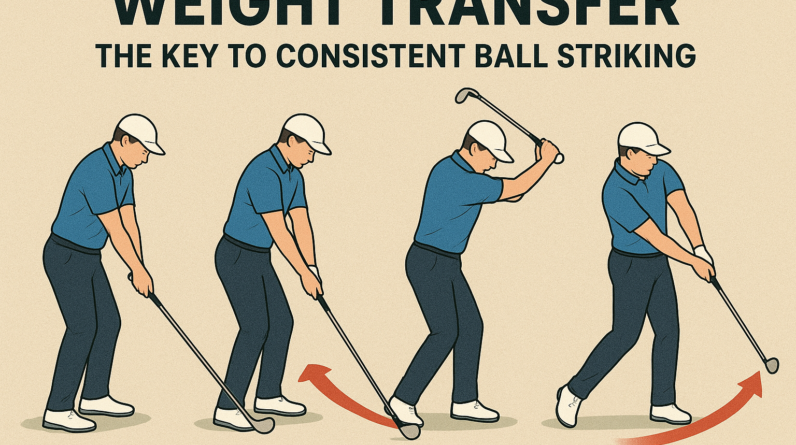
Weight transfer means shifting your body’s weight from the trail (back) foot toward the lead (front) foot as you swing. In a proper motion, your weight starts slightly toward the back foot in the backswing, then moves toward the lead foot during the downswing and through impact, finishing with most weight on the lead foot. Think of your legs acting like a built‑in engine that drives the hands and club into the ball.
Why it matters to the golf swing
- Promotes solid contact. A forward weight shift helps you bottom the club on the ball rather than behind it or on the toe.
- Improves ball flight consistency. With the correct sequence, you’ll see more predictable trajectories and less fat/thin strikes.
- Enhances power and control. Efficient weight transfer uses ground reaction forces, boosting speed without sacrificing accuracy.
What the golfer should feel when doing it correctly
- In the backswing, you should feel pressure building in the trail foot, with your weight slightly toward the back side.
- In the downswing, your hips and legs initiate the move, and your weight gradually shifts toward the lead foot as you approach impact.
- At and after impact, most of your weight ends up on the lead foot, finishing with a balanced, athletic finish facing the target.
2–3 common mistakes and simple fixes
-
Mistake: Hanging back on the trail foot and catching the ball with the hands.
Fix: Start the downswing by turning your hips toward the target and feeling your trail knee release toward the target line. Practise with a focus on transferring weight to the lead foot before your hands accelerate through the ball.
Tip: Place a small, soft object (like a towel roll) under the inside of your trail foot at address. As you swing, keep that object in contact with the ground longer—this helps you feel the weight moving forward instead of staying back. -
Mistake: Early extension – your hips slide forward and your spine angle changes too soon.
Fix: Keep your spine angle intact by rotating your hips toward the target rather than moving your hips straight forward. Think “rotate, then shift,” not “push forward.”
Tip: Practice with a drill cone or stick placed just outside your lead hip. Don’t cross the stick with your hips on the downswing; feel the turn first, then shift weight. -
Mistake: Weight finishing on the trail foot after impact, leading to push‑fixture or loss of balance.
Fix: Finish with the belt buckle pointing toward the target and your weight solidly on the lead foot. Slow the downswing slightly to let gravity and the body’s rotation complete the transfer.
Tip: Do a dry‑hit drill (no ball) focusing on a smooth, full finish with most weight on the lead foot. If you wobble, pause and reset before the next rep.
One easy practice drill you can do at home or on the range
- Step-Through Drill:
- Address the ball with your normal stance.
- Make a small backswing, then plant your lead foot and step forward toward the target as you swing through, finishing with your weight clearly on the lead foot.
- Repeat with a few rehearsal swings, then a full swing with a ball.
Quick checklist
- Feel weight move from trail to lead foot through impact
- Initiate the downswing with the hips, not the hands
- Finish balanced on the lead foot
Focus on the sequence, not just speed. When weight transfers properly, your strike becomes cleaner, your direction more reliable, and your distance more consistent.
weight Transfer Mastery: The Complete Guide to Consistent Ball Striking
Weight Transfer: The Secret to Consistent Ball Striking
If you’ve ever chased the perfect strike but kept stubbing the target, you’re not alone. A lot of players focus on speed, angle, or visibility of the ball, but the real secret behind consistent ball striking lies in the way you move your weight through the swing or shot. Weight transfer is the systematic shift of your body’s weight from your back foot (or rear side) to your front foot (or lead side) during the moment of contact and through the follow-through. Mastering this transfer unlocks cleaner contact, more power, and greater control across sports that rely on precise contact with a ball.
Why Weight Transfer Matters
- Consistency: Proper weight transfer reduces mishits by aligning your center of gravity with the point of contact. When you transfer weight smoothly, you’re less likely to “hit behind” or “hit in front” of the ball due to timing errors.
- Power with control: The energy you generate in the legs and hips translates into club, racket, or bat speed as it moves through the strike. A well-timed transfer helps you convert raw leg drive into forward momentum without losing balance.
- Injury prevention: by coordinating weight flow with your limbs, you reduce the strain of compensations—like over-rotating the upper body or collapsing the knee—on your joints and connective tissue.
- versatility: whether you play golf, tennis, baseball, or even soccer strikes (like shooting or long passes), good weight transfer improves contact quality and shot outcomes.
Core Principles of Weight Transfer
- Posture and balance: Start with a stable base. Feet shoulder-width apart (or slightly wider for certain sports), knees softly bent, spine angle maintained. A solid base makes weight transfer predictable rather than reactive.
- Kinetic chain activation: The transfer starts from the ground up—ankle, knee, hip, core, and then to the upper body. Efficient kinetic chaining converts leg drive into shoulder and arm motion.
- Sequential timing: The transfer should happen in a sequence—load on the trail foot, rotate the hips and torso, and then release weight onto the lead side as you strike.
- lead with intent, finish with balance: Focus on finishing with your chest facing your target and your weight largely on the lead foot. A balanced finish is a sign of clean transfer.
Key concepts to Internalize
- Center of gravity: The aim is to move your center of gravity from the back foot toward the front foot through impact while keeping the head steady and eyes on the ball (or target).
- Ground reaction forces: Your interaction with the ground produces forces that drive the swing. A controlled,forward-directed weight shift harnesses these forces for speed and accuracy.
- Footwork as a driver: Subtle footwork changes, such as a slight step or hip-hip sequencing, can optimize weight transfer without sacrificing balance.
- Angular momentum: Efficient weight transfer helps convert linear momentum (forward drive) into clean linear contact, rather than losing energy through wobble or over-rotation.
Practical Drills and Drilled Routines
These drills are designed to be approachable for beginners while still challenging skilled players. Practice them slowly at frist, then build tempo as your body learns the correct sequence.
Drill 1: The Load-Shift-Strike Drill
- Setup: Stand in your normal stance with ball position appropriate to your sport. Keep your weight evenly distributed at address.
- Load: Shift weight onto the trail (back) foot while maintaining spine angle. Feel the knee bend slightly on the trail side.
- Shift: Initiate the downswing or forward motion by rotating the hips toward the target while your trail foot starts to unload.
- Strike: As contact occurs,transfer weight onto the lead (front) foot and hold the finish with balance.
- Tip: Use a slow tempo to feel the sequencing before increasing pace.
drill 2: The Step-Through Progression
- Setup: Start with feet close together, then take a small step toward your target as you transition from back-side loading to front-side contact.
- Action: Focus on letting the step help you transfer weight naturally, not forcing a big step that disrupts balance.
- Progression: Increase step length gradually as your transfer timing becomes more consistent.
Drill 3: The Wall-Assist Drill
- Setup: Stand with your back to a wall, about an arm’s length away, to prevent excessive backward movement.
- Action: Perform the backswing or swing-like motion while keeping your spine and head lightly in contact with the wall.this constraint helps you feel a forward-leaning weight transfer through impact.
- benefit: Improves torso rotation sequencing and reduces swaying that disrupts weight flow.
Drill 4: The Pump Drill
- Setup: Address position, then pause at the top of the backswing (or take a controlled pause in the shot setup for other sports).
- Action: In a series of micro-swings, gently “pump” the weight forward, focusing on transferring energy through the hips and into the lead side.
- Tip: Don’t rush; the goal is a controlled transfer that becomes automatic with repetition.
Sports-Specific Guidance
Golf
In golf,the weight transfer sequence is typically from the right heel (for right-handed players) or right foot back at address,through the downswing where the weight moves to the lead foot,and finally into the follow-through with solid balance. Key cues include “loading the back leg,” “hips release,” and “drive into the lead foot.” Keep your spine angle consistent and avoid over-rotating the head or lifting up during impact.
Tennis
For groundstrokes, many players benefit from a weight transfer pattern that begins with a slight knee bend on the back leg and a hip bump toward the target. The swing then shifts weight onto the front foot as the racket makes contact. The faster the ball, the more you’ll rely on the seamless, rapid transfer to generate pace while maintaining control and spin. Return to a balanced finish with your hips square and chest facing forward.
Baseball
In baseball, the weight transfer is dramatic as of the arc of the swing. Start with weight on the back leg, hips coiled, and hands back. On contact, the hips rotate aggressively, transferring weight through the front side and into the stride past the plate.A strong finish mirrors the direction of the swing and helps ensure consistency across pitches and at-bats.
Other Ball-Striking Contexts
Soccer players executing long passes or strikes can apply the same principles: load on the back foot,rotate the hips to drive through,and finish with weight balanced over the lead leg. Even non-athletes performing a practice volley can benefit from a deliberate weight transfer pattern to improve accuracy and control.
Benefits of Proper Weight Transfer
- Increased consistency in contact timing across different ball speeds and trajectories.
- Improved power without sacrificing control or balance.
- Better shot-to-shot repeatability, especially under fatigue or pressure.
- Enhanced proprioception—your body knows where it is indeed in space, enabling quicker, more accurate adjustments.
- Broader transferability across multiple sports, enabling cross-training benefits.
case Studies and Firsthand Experience
Case Study A: amateur Golfer Elevates Consistency
An amateur golfer who struggled with consistency found that focusing on weight transfer reduced toe hits and improved solid contact. Over six weeks, the player incorporated the Load-Shift-Strike Drill into three 20-minute sessions per week. The result: a noticeable advancement in fairway hits, with feedback noting better seat on the ball and more predictable dispersion. The player reported a 15–20% increase in greens-in-regulation after four weeks and a continued gain through the sixth week.
Case Study B: Tennis Player Gains Rhythm and Depth
A recreational tennis player who tended to flip the racket early found value in the step-Through Progression drill. By emphasizing the step that accompanies the weight transfer, the player achieved more consistent ball contact and heavier topspin on groundstrokes. the coaching notes highlighted a more stable rhythm and reduced incidence of off-center hits, especially under pressure in rallies.
Common Mistakes and How to Fix Them
- Mistake: Staying on the back foot for too long, resulting in late contact and loss of control.
- Fix: Practice the Load-Shift-Strike sequence with deliberate, shorter swings to ensure the weight shifts before contact.
- Mistake: Over-rotating the hips or standing up during the swing.
- Fix: Maintain spine angle by keeping the head steady and the chest down toward the target through impact.
- Mistake: Rushing the transfer and hitting with the arms instead of the whole body.
- Fix: Emphasize a coordinated sequence from legs to hips to torso,avoiding arm-dominant strikes.
- mistake: Inconsistent weight distribution on uneven ground or fatigue.
- Fix: Build a stable stance and incorporate conditioning exercises to sustain balance and support the transfer under fatigue.
Rapid-Reference Checklist for Coaches and Players
- Establish a stable base with a slight knee flex in the lead leg.
- feel weight flow from back foot to front foot during impact.
- Maintain spine angle and head position throughout the strike.
- Sequence: load (back) → rotate hips/torso → transfer → strike → finish with balance.
- Use drills consistently for 4–6 weeks to engrain the pattern.
Table: Weight Transfer Sequence at a Glance
| Stage | Action | Key Cue |
|---|---|---|
| Setup / Address | Feet shoulder-width apart, neutral weight | “Balanced base, spine tall” |
| Load | Shift weight to the trail/back foot | “Feel the knee flex on the back side” |
| Transition | Hip rotation and torso coil toward the target | “hips lead the way” |
| Impact | Weight shifts to lead/front foot; contact occurs | “Drive into the lead foot” |
| Finish | Balanced finish with chest facing target | “Stable, controlled follow-through” |
Frequently Asked Questions (FAQ)
What sports benefit the most from weight transfer?
All ball-striking sports benefit, including golf, tennis, baseball, and soccer. The principles apply broadly: load, rotate, and transfer energy through the reach to contact with balance.
How long does it take to see improvements?
Most players notice improvements in 4–6 weeks with consistent drill practice (3–4 sessions per week). Variables include prior technique, body awareness, and practice quality.
Can I practice weight transfer without hitting a ball?
Yes.Mirror drills, shadow swings, and wall-press drills help you feel the transfer sequence without external feedback from a ball, building consistent timing and balance.
Putting It All Together: A Practical Weekly Plan
Use the following plan to build a habit of consistent weight transfer across disciplines. Each week adds a new layer of control while reinforcing the basics.
- Weeks 1–2: Master the Load-Shift-Strike drill with slow tempo. Perform 3–4 sets of 8–12 repetitions per session, focusing on balance and sequencing.
- Weeks 3–4: Introduce the Step-Through drill. Add one-ball or one-shot sessions to practice under controlled pace; emphasize cadence and contact timing.
- Weeks 5–6: Integrate Wall-Assist and Pump drills into a 20–25 minute practice, combining them with metric feedback like ball flight or target accuracy.
- Weeks 7–8: Apply to live-play or match scenarios. Focus on maintaining transfer under pressure, with video feedback if possible.
Final Notes for Readers and Practitioners
Weight transfer is not a single move but a series of coordinated actions that involve your feet, legs, hips, trunk, and arms. The goal is to create a predictable,repeatable sequence that you can apply across different ball speeds and strike types. Start with basic, controlled practice and gradually add tempo as your body learns the appropriate sequence. If you’re working with a coach or trainer, use the drills and table as a shared reference to build a diagnostic checklist for each session.
As you improve, you’ll notice more consistent contact, better control of direction, and a stronger, more pleasant swing or shot. The secret to consistent ball striking isn’t pressure-filled hustle; it’s a well-timed, well-sequenced weight transfer that your body can reproduce with confidence, even when the game gets intense.