
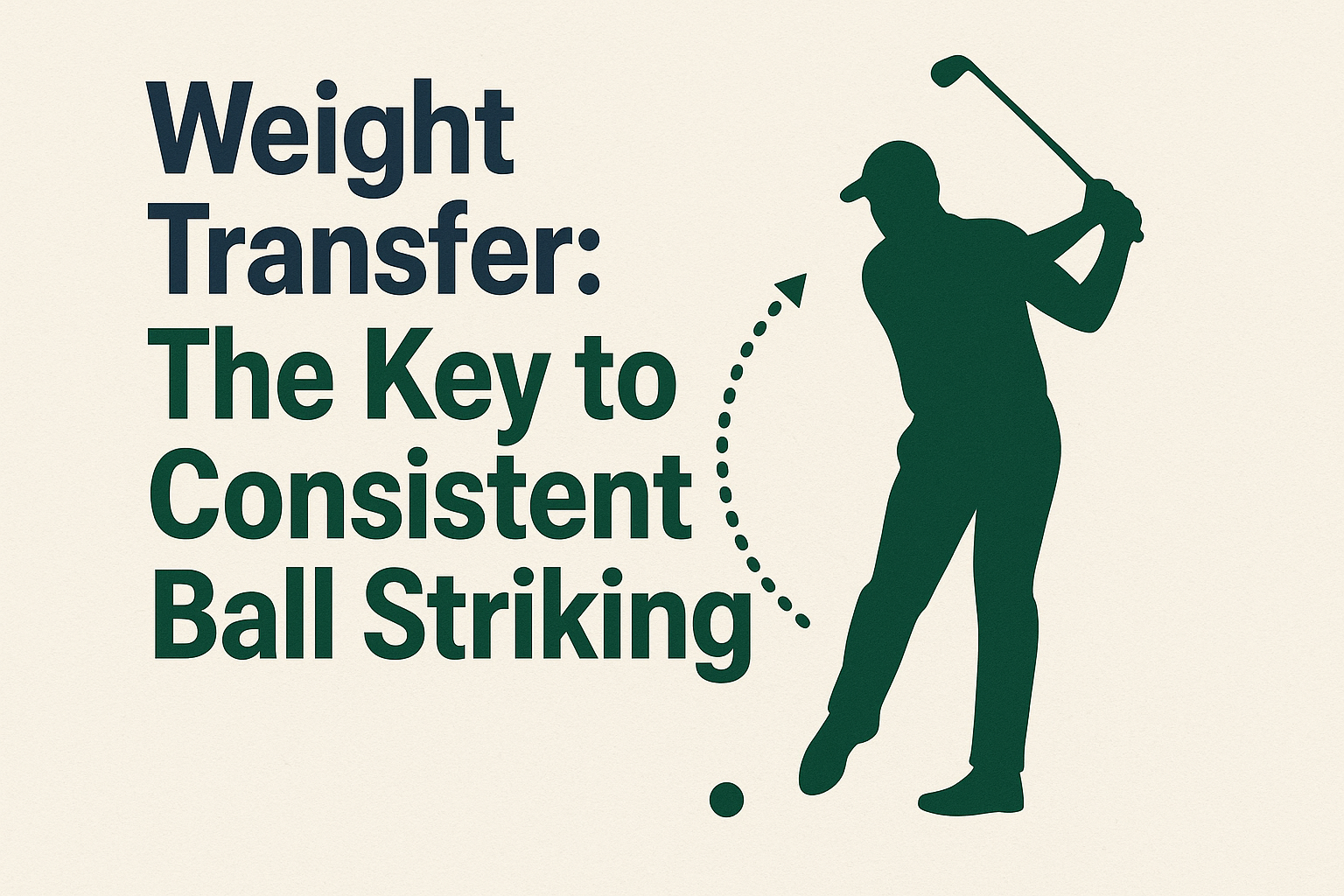
Weight Transfer: The Key to Consistent Ball Striking
In this focused post, we’ll lock in on one essential concept that consistently affects your results: weight transfer. When you move your weight correctly from the trail foot to the lead foot through impact, you’ll feel more solid contact, better ball flight, and improved control of your swing path.
What the concept is
- Weight transfer is the deliberate shifting of your body mass from the trailing leg toward the lead leg during the downswing and through impact.
- It’s a sequencing cue: hips rotate first, then the torso, and your weight follows that rotation onto the lead foot at impact.
- Good transfer helps you maintain spine angle and meet the ball with a square face and solid center contact.
Why it matters to the golf swing
Proper weight transfer supports a consistent arc and helps you strike the ball more solidly. When the weight moves smoothly to the lead foot, you generate cleaner contact, better compression, and more consistent direction. It also reduces common issues like those fat shots, thin shots, or shots that drift to the right or left.
What you should feel when doing it correctly
- Address: roughly 50/50 weight, comfortable pressure on the balls of your feet.
- Downswing: you should feel the right hip loading as you begin the downswing, followed by your weight shifting toward the left foot as your hips rotate and you rotate toward target.
- Impact: most of your weight is on the lead foot (about 60–70%), with the trail knee still flexible and your spine angle intact.
- Finish: your chest faces the target and your weight remains clearly on the lead foot as you complete the swing.
2–3 common mistakes and fixes
- Mistake 1: Weight stays on the back foot too long, hurting contact.
Fix: Initiate the downswing with a hip turn that shifts weight forward. Think “push and rotate” with the hips, not “pull with the arms.” Practice feeling about 60–70% of your weight on the lead foot at impact by lightly pressing the lead foot into the ground during impact.
- Mistake 2: Weight shifts too early to the front foot before contact.
Fix: Maintain some trail-knee flex and allow the hips to rotate into the shot. Delay the full weight transfer until after contact; your momentum should carry you toward target after impact.
- Mistake 3: Sway or slide rather than rotate, losing spine angle.
Fix: Focus on turning the hips and torso toward the target instead of sliding sideways. A practical cue: keep your belt buckle pointing toward the target as you swing, not down at the ground.
One easy drill you can do at home or the range
The Step-Through Drill – This drill teaches you to finish with weight on the lead foot and to rotate into impact.
- Set up in a normal stance and take a light, controlled swing (half to three-quarters speed).
- At impact, step forward with your lead foot toward the target (for a right-handed golfer, step with the left foot).
- Finish with your chest facing the target and most of your weight on the lead foot. Reset and repeat 8–12 times, focusing on a smooth, coordinated transfer rather than power.
Tip: Start without a ball to feel the sequence. Once you’re comfortable, add a ball and gradually increase speed while maintaining the same weight-transfer feel.
Weight Transfer: The Key to Consistent Ball Striking
What is Weight Transfer?
Weight transfer is the deliberate shifting of your body’s mass from one supporting surface to another during the moment you strike a ball. In most racquet and club sports, this means moving power from the back foot toward the front foot in a controlled sequence. When done correctly, weight transfer creates a stable base for contact, optimizes energy transfer through the kinetic chain, and helps generate repeatable, powerful ball striking.
Think of weight transfer as the timing mechanism that coordinates the lower body, core, and upper body. The goal is not simply to push harder with the arms, but to coordinate how the hips, torso, and legs load, rotate, and release energy into the object you’re hitting. Proper weight transfer improves balance, increases club or racquet head speed, and reduces the likelihood of mishits.
Why Weight Transfer Is essential for Consistent Ball Striking
- Stability under pressure: A well-timed transfer keeps your body centered over the base, even when the ball is moving fast or the surroundings is challenging (wind, uneven turf, or a fast serve).
- Power through efficient energy flow: The energy you generate in the legs and hips is funneled through the torso to the arms and then to the ball. If you short-circuit that flow, power is lost early or dissipated as unwanted movements.
- Consistency across shots: Repeating the same transfer pattern reduces dispersion and improves shot-to-shot predictability.
- Injury prevention: Proper sequencing reduces excessive strain on the lower back and shoulders by distributing load through the legs and core.
- Sport versatility: Whether you’re swinging a golf club, racket, or bat, the same principles of loading and unloading your weight apply for better timing and contact.
The Biomechanics of Weight Transfer
Weight transfer is a biomechanical process that involves the entire kinetic chain: feet, ankles, knees, hips, spine, shoulders, arms, and the distal limb (hands or racket/club). The essential phases are loading, transition, and release. Each phase has specific cues and muscular actions that produce the desired contact point and ball speed.
- The back foot initially accepts load as you prepare to swing. The knee flexes, the hip shifts, and the torso begins to coil. This sets up stored elastic energy in the hips and thorax.
- Transition (move through the base): The weight moves toward the front foot while the hips begin to rotate toward the target. The torso unwinds in sequence, and visualizing a lever helps—lower body initiates, upper body follows, and the arms deliver the strike.
- Release (impact and follow-through): The weight fully shifts onto the front foot, the hips rotate through, and the arms accelerate the club or racquet through the contact zone. The body then stabilizes with a controlled finish.
Pro tip: A smooth transfer is often more productive than raw speed. Speed emerges from optimized sequencing and timing, not brute force.
Key Components of effective Weight Transfer
- A solid, balanced base with feet shoulder-width apart allows efficient transfer without losing balance.
- Use the ground to generate power by pushing off the back foot into the front foot. ground reaction forces drive the energy transfer up the chain.
- Hip and trunk rotation: Pelvis leads the way. Controlled hip rotation creates torque that drives the torso and arms in sequence.
- The path of the club, racquet, or bat should stay connected to the torso’s movement. Arms are a conduit for energy, not the primary source of power.
- Center of gravity and balance: Maintaining a slightly forward lean and keeping the head steady helps you stay on plane through contact.
Sport-Specific Weight Transfer
Golf
In golf, weight transfer peaks during transition from the backswing to the downswing. The sequence typically starts with a load onto the trail leg, followed by a rapid shift toward the lead leg as the hips rotate. This transfer helps square the face at impact and drives the clubhead into the ball with maximal speed while maintaining control.
- Back foot loads, then front foot pushes toward target.
- Hips rotate ahead of the arms to produce lag release into impact.
- Excessive slide or sway can disrupt transfer and reduce accuracy.
Tennis
In tennis, weight transfer is critical for returning pace and directing the ball. Properly transferring weight from the back foot through the front foot during forehands and backhands stabilizes contact and increases ball speed with accuracy.
- Coil and uncoil sequence similar to golf but with quicker tempo due to shorter swing arc.
- Racket head speed is amplified when the lower body drives through contact.
- Poor transfer often shows up as early racquet head lag or late contact.
baseball
Baseball hitters rely on a dynamic weight shift to maximize bat speed and to maintain balance through the hitting zone. The batter loads the back leg, rotates the hips, and then transfers weight forward as the swing accelerates toward the ball.
- Weight shift accelerates the barrel through the zone.
- Early weight transfer can cause pop-ups; late transfer can reduce power.
- Coordinated sequencing between legs, core, and arms is key for consistency.
Practical Tips to Master Weight Transfer
- Ensure a solid base and even weight distribution at setup. A stable foundation makes transfer smoother.
- Allow the hips to initiate rotation before the arms. Think hips → torso → arms.
- Avoid lifting the head or standing tall during impact. A slight forward tilt helps keep the swing path on plane.
- A controlled exhale through impact can help relax the shoulders and maintain smooth transfer.
- Use slow-motion video to verify that the weight moves smoothly from back to front without excessive swaying or slipping.
Tip for coaches: Use cue phrases like “hips lead, hands follow” or “weight in the front foot at contact” to reinforce correct sequencing.
Drills and Training Programs
The following drills are designed to reinforce the sequence of loading, transitioning, and releasing weight. Perform each drill in short sets with a focus on form before speed.
| Drill | Setup | Action | Focus | Common Faults |
|---|---|---|---|---|
| Slow-MMotion Half-Swing | Take stance as in performance swing. Hold the club lightly. | Perform a slow backswing to mid-stance, pause briefly, then swing to contact at 50% speed. | Emphasize smooth weight shift from back to front foot and controlled hip rotation. | Swaying, early arm push, lurching to front foot. |
| Step-Through Drill | Back foot slightly behind or beside front foot; maintain balance. | Step forward with the front foot into contact, then continue into a full follow-through. | Commitment of weight to front foot during contact; hip rotation sequencing. | stuttering steps, no clear weight transfer, over-rotation. |
| wall Drill with Torque | Stand close to a wall, hips and shoulders square to the wall. | Swing while visualizing the wall resisting lateral movement; transfer weight forward on contact. | Forward weight shift and torso rotation without collapsing posture. | Pressing into the wall or losing balance. |
| Pause-and-Release Drill | Set up as usual; pause at top of backswing or early downswing. | Unpause and release weight into the target during contact. | Timing and rhythm of transfer; consistent contact timing. | Rushed transition or late contact. |
Pro tip: Combine drills for a compound effect. Practice with and without a ball to feel the transfer, then add live ball work as your confidence grows.
Benefits and Practical Tips
- Increased ball speed and accuracy: Proper transfer optimizes energy transfer, leading to more consistent distance control.
- Enhanced balance under pressure: A solid transfer reduces wobble after impact, helping you recover quickly to the ready position.
- Better consistency across shot types: Whether you’re hitting a drive, a drop shot, or a line drive, the same transfer concept applies.
- Adaptability across conditions: Wind, slope, or turf variations demand reliable weight transfer for repeatable results.
case Studies
Case Study A: The Pro Golfer with Steady Downswing
A touring golfer struggled with inconsistent iron play in windy conditions. By focusing on a deliberate weight transfer from the back foot to the front foot during the downswing, the golfer reduced contact mishits and improved center-face strikes.Post-adjustment metrics showed a tighter dispersion pattern and higher greens-in-regulation percentage in windy rounds.
Case Study B: Tennis Player Improves Groundstrokes
A competitive tennis player noticed variation in ball placement on forehands. The coaching team implemented a cue-based approach to initiate weight transfer with the hips, followed by trunk rotation and then arm extension. Feedback during practice demonstrated more consistent contact depth and improved margin for error on fast serves.
First-Hand Experience
In coaching sessions, athletes who focus on the “hips first” concept frequently enough report faster improvements in consistency. One player described how small adjustments in weight transfer eliminated a recurring ball-into-the-net pattern. By feeling the back foot loading, then pushing into the front foot just before impact, they gained a repeatable rhythm that translated across drills and live play.
The key takeaway is that weight transfer isn’t about overpowering the ball with the legs alone. It’s about aligning the body’s momentum with the ball’s contact point so energy flows efficiently through the chain. When players experience smoother transitions, they often notice fewer off-center hits and improved control in pressure situations.
Common Questions
- Q: How do I know if my weight transfer is too aggressive? A: If you feel heavy loading on the front foot before contact or you leap off the ground, you’re likely overloading. Aim for a smooth, connected transfer rather than a fast, abrupt shift.
- Q: Can weight transfer be trained without a ball? A: Yes. Slow-motion drills, wall drills, and balance work can reinforce sequencing before adding live contact.
- Q: Does weight transfer differ between sports? A: The core principle is consistent, but tempo, range of motion, and contact timing vary. Adjust cues to fit the sport’s typical swing or stroke.
Putting It All Together
Weight transfer is a foundational element of repeatable ball striking. By training the loading, transition, and release phases, you can achieve improved balance, power, and accuracy across golf, tennis, baseball, and other ball-striking activities. Start with a solid stance, cue the hips to initiate motion, and practice gradual, controlled transfers. Combine drills,video feedback,and mindful practice to build a robust,repeatable swing dynamic that remains reliable under pressure.
If you’re looking for a fast starting point, begin with the Slow-Motion Half-swing drill and the Step-Through Drill to build a feel for the weight transfer sequence before progressing to live-ball sessions.