
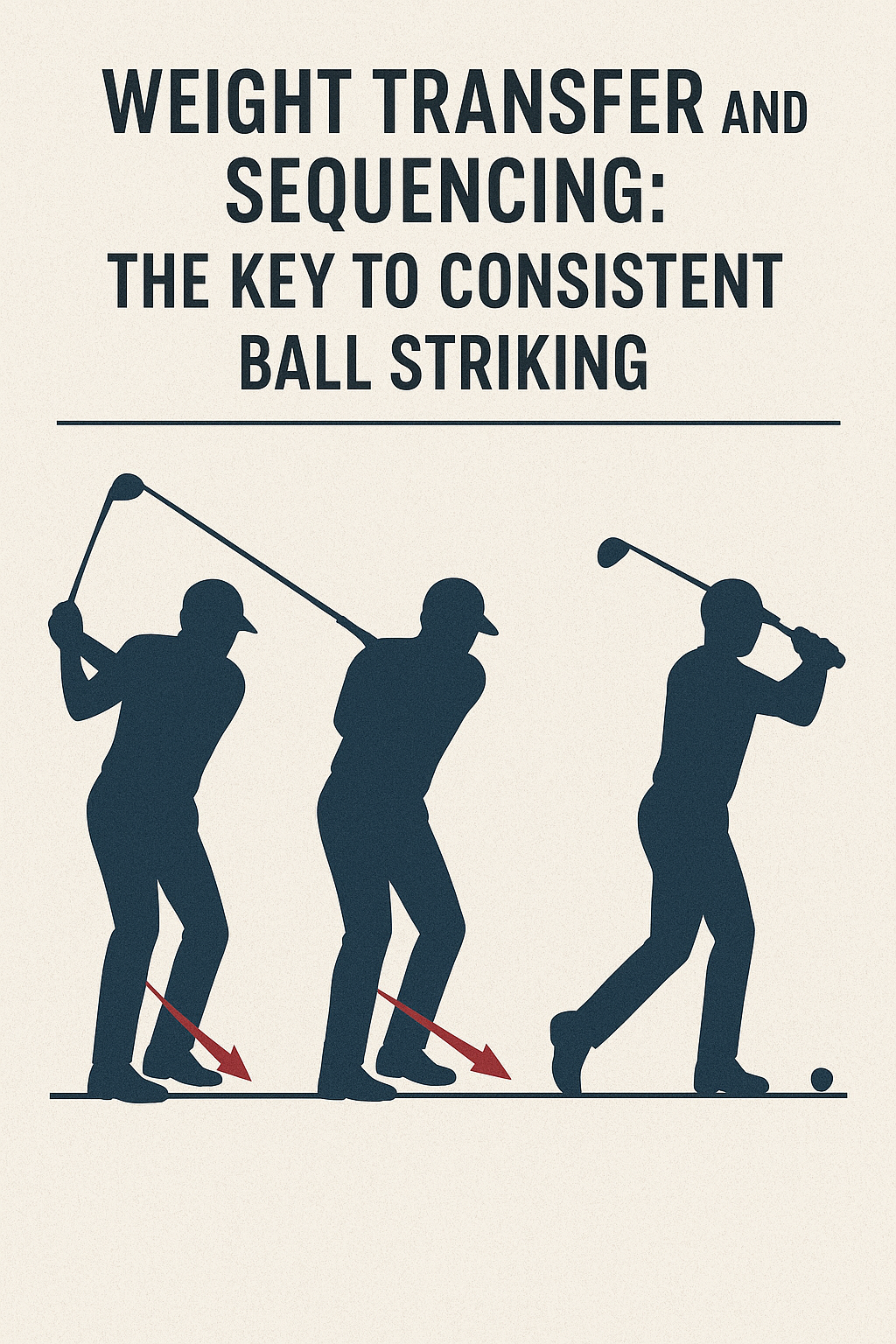
Weight Transfer and Sequencing: The Key to Consistent Ball Striking
In golf, a clean, repeatable strike starts with what your body does before the clubface meets the ball. The concept here is weight transfer—shifting your body’s weight smoothly from the trail foot to the lead foot through the downswing and into impact. Think of it as your lower body leading the arms and the club, not the other way around.
What the concept is
Weight transfer is the controlled, timely movement of your center of mass from the right side (for a right-handed player) toward the left side as you swing. Proper sequencing means your hips initiate the downswing, your torso and arms follow, and your clubface meets the ball with the desired angle. When done well, your weight finishes on your lead side with a balanced, quiet finish.
Why it matters to the golf swing
- Improved contact and solid divots: the club meets the ball with solid compression and consistent contact.
- More predictable ball flight: a clear sequence reduces inconsistencies in path and face angle.
- Better speed and efficiency: the hips store and release energy through the legs and trunk.
- Stability and balance: a steady transfer keeps you from over-rotating or swaying off your line.
What the golfer should feel when doing it correctly
- At address, weight is roughly evenly distributed between feet.
- As you start the downswing, your hips lead the movement; you feel the weight shift gradually toward the lead foot.
- Through impact, most of the weight sits on the lead foot while the trail foot remains connected but lighter.
- Your chest and belt buckle rotate toward the target; you finish balanced with your chest over the lead foot.
- You hear a controlled rhythm—the transition feels like a deliberate “uncoiling” rather than a snap or a flip.
2–3 common mistakes (and fixes)
- Mistake 1: Weight stays on the back foot into impact.
Fix: Begin the downswing with your hips turning toward the target. Allow the belt buckle to rotate and the lead knee to flex as you shift weight. Practice with a slower tempo and a brief pause at the top to feel the sequence before you swing.
- Mistake 2: Weight shifts too early or too quickly.
Fix: Maintain your spine angle in the backswing and initiate the downswing with a subtle, controlled hip move. Think of a two-part motion: 1) hips turn, 2) arms follow. Use a 2-second backswing and a smooth 1-second transition to the ball.
- Mistake 3: Over-rotation or swaying, losing balance.
Fix: Keep your head centered and rotate around a stable spine instead of tipping or sliding. Practicing with your feet closer together helps you feel rotation without excess movement. Finish with a quiet, centered balance.
One easy drill to engrain the feel
Step-Through Drill (great for range or home practice). This drill trains the timing of weight transfer and keeps you honest about sequencing.
- Set up in your normal stance with a light towel under your lead foot (left foot for right-handed players).
- Take your takeaway and, during the downswing, step forward with your lead foot toward the target about 6–12 inches.
- Strike a few balls, maintaining the weight on the lead foot as you finish in a balanced position.
- Gradually reduce the step until you can transfer weight naturally without needing the step.
Tip: Start slowly to feel the hips initiating the move. As you improve, increase tempo toward your normal swing while preserving the sequencing and balance.
Bottom line: prioritize how your weight shifts and how your hips lead the downswing. With deliberate practice, this single focus can transform your consistency and your sense of control over the shot.
Weight Transfer and Sequencing: The Key to Consistent Ball Striking
Weight Transfer and Sequencing: The Key to Consistent Ball Striking
In any ball-striking sport, the ability to transfer weight smoothly and sequence body segments in the right order is the difference between a solid contact and a mishit. This article dives into the mechanics of weight transfer,explains how sequencing contributes to power and accuracy,and provides practical drills and cues to help players of all levels achieve repeatable,confident ball striking.
Why weight transfer matters for consistent ball striking
- Power generation: Transferring weight from the trail side to the lead side during the downswing increases centrifugal force and clubhead speed/ball speed at impact.
- Accuracy and feedback: Proper weight transfer aligns the body’s center of mass with the target line, reducing misdirection and off-center hits.
- Consistency and tempo: A repeatable weight shift creates a reliable tempo, so your swing feel remains similar under pressure.
- Injury prevention: Efficient sequencing reduces compensations that strain the lower back, hips, and shoulders.
- Versatility across sports: While golf is a primary example, weight transfer and sequencing apply to tennis, baseball, and other ball-striking activities where timing matters.
Understanding the mechanics: weight transfer and sequencing in motion
Weight transfer is the controlled movement of your center of gravity from one foot to the other during the swing. sequencing refers to the deliberate order in which body segments contribute to the strike—starting from the ground up and moving through the hips, torso, arms, and hands. the goal is a smooth, coordinated chain reaction where each segment loads and unloads energy at the optimal moment.
Key phases of the swing and the role of sequencing
- Establish a stable anchor through the feet, hinge the knees slightly, and load weight onto the trail foot while maintaining posture. This sets the stage for the sequencing chain.
- Takeaway and trail-side coiling: the hips rotate slightly while the upper body stays behind the ball, storing elastic energy in the torso and core. The trail leg acts as the primary driver to prepare the sequence.
- Transition and downswing start: The hips initiate the downswing, transferring weight toward the lead foot. The torso then trails into a powerful, lagging connection that delivers energy forward.
- Impact and weight transfer peak: Weight moves decisively onto the lead foot as the hands release through the ball. Proper sequencing minimizes early arm winching and maximizes clubhead speed at impact.
- Follow-through and stabilization: After contact, weight continues to shift toward the lead side, guiding the body to a balanced finish and readying for the next shot.
Sequencing fundamentals: setup, move, and finish
Setup and posture
Good sequencing starts with a solid setup. Ensure your feet are shoulder-width apart, a slight knee flex, and spine angle preserved. The weight should be evenly distributed or slightly favoring the trail foot depending on your swing style.A stable base allows for a clean transfer of weight without excessive lateral movement.
Takeaway and loading phase
The takeaway should be smooth and low to high, with a gradual coiling of the torso. The goal is to store energy in the hips and torso without breaking the wrists early. the trail foot remains grounded, and the lead heel remains light enough to react to the next sequence.
downswing initiation and transition
as the downswing begins, the hips lead the move by rotating toward the target.This transfers weight from the trail foot toward the lead foot and sets up the torso and arms to release energy sequentially. Think of a kinetic chain that starts at the ground and progresses upward.
Impact phase
Impact should be the moment of maximal, well-timed energy transfer. The hands should release through the ball as the weight is loaded onto the lead foot. A well-timed hand release and proper body alignment give you solid contact and on-target ball flight.
Follow-through and stabilization
After impact, your body continues to rotate, and weight shift completes to the lead side. A balanced finish indicates your sequencing functioned correctly and you maintained control through the shot.
Drills and practice routines to improve weight transfer and sequencing
These drills emphasize tempo, sequence, and feedback so players can feel the correct chain reactions without overthinking.
Drill 1: Step Drill for ground-to-club sequencing
- Stand with feet hip-width apart and place a step behind the lead foot.
- Take a half swing, stepping onto the lead foot at the downswing start, feeling the weight shift forward through impact.
- Progress to full swings, focusing on keeping the step consistent and the weight transfer controlled.
Drill 2: Floor-to-ball weight transfer cue
- Place a small mat or towel under the trail foot. During the backswing, press slightly into the mat; during the downswing, feel the weight move off the mat toward the lead foot as you strike.
- Use a light cue: “drive and land” to reinforce the sequence from floor to contact.
Drill 3: Lag and release drill (torso-first sequencing)
- Address position, then swing back and feel the torso load while hands stay passive. In the downswing, rotate the hips first, then torso, then arms into impact.
- Focus on maintaining lag (the wrists unhinge late) until just before impact for maximum speed at contact.
Drill 4: Tempo and rhythm drill
- Use a metronome or a count (2-3-4 cadence) to pace the backswing, transition, and through-swing. A steady tempo helps the weight transfer and sequencing stay consistent under pressure.
Drill 5: Resistance-band power transfer
- Attach a light resistance band to a fixed point at waist height. Stand with the band anchored to the trail side and swing through, feeling the resistance help guide the weight transfer toward the lead side in the downswing.
Common faults and fixes: how to diagnose and correct your weight transfer
- Early chest/arms movement before lower body rotation leads to a loss of sequencing.
- Pause briefly at the top to feel the hips initiate the downswing, ensuring the lower body leads the sequence.
- Excess weight on the trailing foot during impact causes hooks or pushes.
- Practice keeping the weight balanced through impact and feel the weight shift to the lead foot on contact.
- Loss of lag and early release reduces clubhead speed.
- Focus on delaying the lead-hand release until after the hips start the downswing,maintaining some wrist lag.
- Over-rotation and sway disrupt the sequencing chain.
- Maintain a steady spine angle and rotate around a stable axis rather than moving the head excessively away or toward the ball.
Case studies: real-world insights into weight transfer and sequencing
Case Study 1: Amateur golfer gains accuracy with improved weight transfer
An amateur golfer with inconsistent contact identified weight transfer as the primary issue. By incorporating the Step Drill and Tempo Drill, the player learned to initiate the downswing with the hips, followed by torso rotation and then arms. After six weeks,they reported more solid contact,a higher percentage of centered strikes,and improved greenside accuracy. The shift was measurable: carry distance improved by an average of 6–8 yards with tighter dispersion.
Case Study 2: Tennis player applies sequencing principles to approach shots
A recreational tennis player noticed that timing and pace of groundstrokes varied with court speed. By applying weight transfer concepts from golf—landing weight on the lead leg at contact and sequencing torso and arm movement—the player achieved more consistent ball contact and improved shot placement on forehands and backhands. The key takeaway was that the same kinetic chain mindset helps across ball sports with similar transfer dynamics.
Practical tips and cues for mastering weight transfer and sequencing
- Feel the ground: Start from the ground up. Imagine driving off the trail foot and feeling the weight move toward the lead foot through impact.
- Use simple cues: “Load, shift, release” or “drive, land, release” can keep sequencing in mind without overthinking.
- Maintain posture: Keep spine angle and balance from setup through follow-through to enable a clean transfer of weight.
- sync with tempo: A consistent tempo helps your weight transfer stay on schedule, reducing timing errors in the downswing.
- Progress gradually: Start with drills that emphasize feel and sequencing, then integrate into full swings as the body adapts.
Visual and data-backed insights: tables and quick references
Below is a quick reference table outlining swing phases, weight actions, and common cues. The table uses WordPress-friendly classes to ensure clean styling in most themes.
| Phase | Weight Action | Key Cues | Common Faults | Drills/Notes |
|---|---|---|---|---|
| Setup | Balanced stance with slight trail-heel bias | “Stable base, slight trail load” | Over-flexed knees, head movement | Posture drill; wall alignment check |
| Takeaway | Trail-side loader; torso coiling | “Coil without early wrist hinge” | arm-dominant takeaway | Lag and load drill |
| Downswing | Hip-driven weight shift to lead foot | “Hips first, then torso, then arms” | early hand release, loss of lag | Lag-release drill; Step Drill |
| Impact | Lead foot supports impact; weight at ball exit | “Ground to ball” | Off-center contact; inconsistent face angle | Floor-to-ball cue drill |
| Finish | Balanced weight on lead side | “Finish where you balance” | Over-rotation or collapse | Tempo and finish drill |
Key takeaways for coaches and players
- Focus on the kinetic chain: ground reaction forces drive the entire sequence upward through the hips, torso, and arms.
- Use practical cues that translate to the field: simple, repeatable phrases help players internalize the correct sequence under pressure.
- Progress drills gradually—from feeling weight shift on the ground to integrating with full swings.
- Record and review: video feedback can definitely help players see where weight transfer and sequencing break down.
- Customize progression: some players respond better to hip-driven cues, others to torso-to-arm sequencing. Assess individual needs and adapt.
Frequently asked questions (FAQs)
- What is the most vital factor in achieving consistent ball striking?
- Effective weight transfer combined with proper sequencing is foundational. Without a reliable weight shift and organized sequence, speed and accuracy suffer.
- Can I overdo weight transfer?
- Yes. Excessive lateral movement or swaying can disrupt sequencing and lead to mis-hits. The goal is efficient transfer with a stable base.
- do different sports require different sequencing timings?
- The general principle remains: load from the trail side, initiate with lower body, and release energy through a coordinated chain.Some sports may emphasize different load timings depending on contact dynamics.
- How long does it take to see improvements?
- With focused drills and deliberate practice, noticeable improvements in contact quality and consistency often appear in 4–8 weeks, depending on frequency and prior technique.
First-hand experience: practical reflections from players and coaches
A seasoned coach recently shared a practical perspective: “Weight transfer and sequencing aren’t about a single move but a consistent habit. If a player can feel their trail foot loading, hips leading, and a smooth lag through impact, their results usually improve across the board—distance, accuracy, and confidence.”
A player reflection from a weekend golfer: “When I focused on keeping my weight on the trail foot during the downswing and allowed my hips to lead, I started hitting more center-face hits. It wasn’t a big change in swing mechanics, just a better order of actions.”
Advanced considerations: integrating biomechanics and coaching cues
- Biomechanics: Modern analysis shows sequencing efficiency correlates with higher clubhead speed at impact and lower variability in ball flight. Emphasize hip-driven downswing and torso-timing to optimize energy transfer.
- Equipment considerations: Proper footwear with adequate grip supports stable weight transfer. Spirometer-like stance sensors and wearable motion trackers can offer granular feedback for advanced players.
- Injury prevention: Poor weight transfer patterns can strain the lumbar spine and knees.Strength and flexibility work for the hips,glutes,and core can complement mechanical improvements.
Implementation plan: how to start today
- Identify your current sequencing pattern by filming a few swings from the front and the side.
- Prioritize one drill at a time (e.g.,Step drill or Lag and Release Drill) for two weeks while maintaining consistent tempo.
- Gradually introduce a second drill if the first becomes automatic.
- Use a simple cue sheet and reference points (trail foot, hip initiation, weight shift) to reinforce correct sequencing during practice and on the course.
- Track progress with a simple metric: center-face contact rate, dispersion, and carry distance consistency.
Related topics and cross-training considerations
- Core stability routines to enhance rotational control during the swing
- Mobility work for hips and thoracic spine to support efficient sequencing
- Breath control and rhythm to maintain tempo under pressure
weight transfer and sequencing form the backbone of repeatable ball striking. By understanding how energy moves from the ground up, and by practicing targeted drills that reinforce the correct order of body actions, players can achieve higher accuracy, more consistent contact, and greater confidence in every shot. Whether you’re refining a golf swing or optimizing a swing for another ball-striking sport, prioritizing weight transfer and sequencing is a proven path to better performance.