
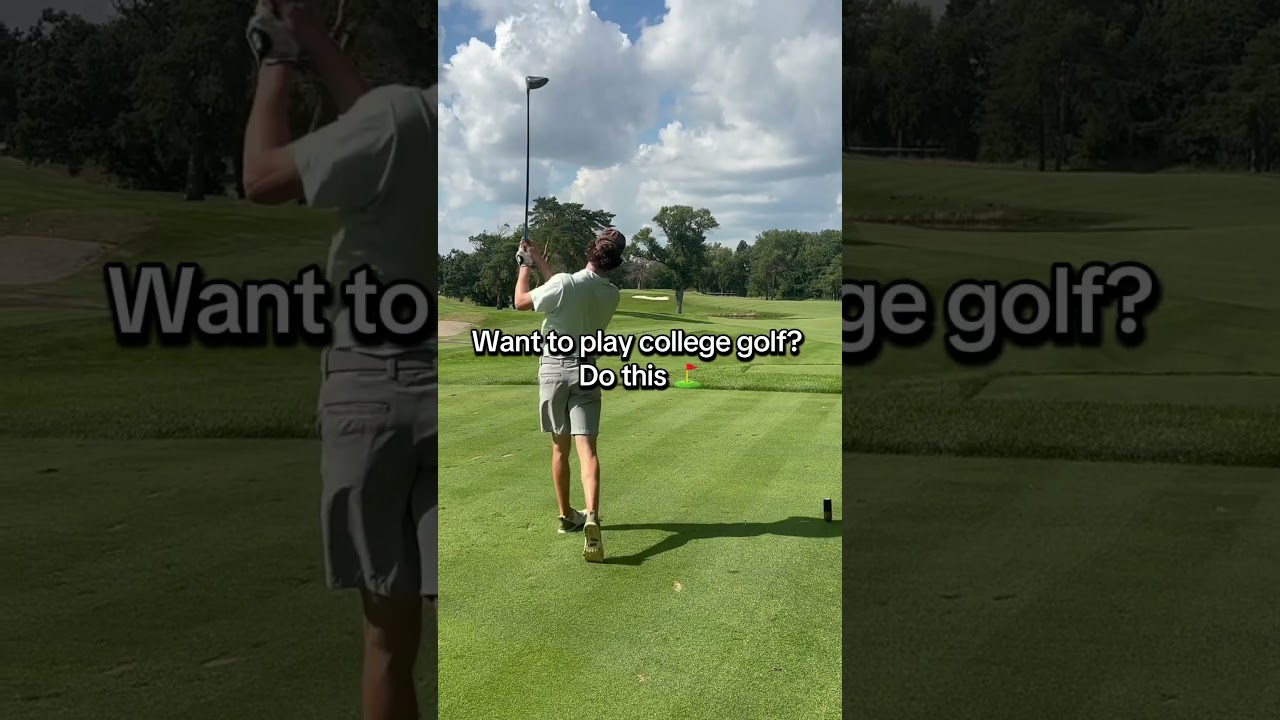
Want to play college golf? Do this ️ full guide in the link in my bio!
Why consider college golf?
Playing college golf blends high-level competition with academics, travel, and skill advancement. It offers structured training, access to coaching staff, and the possibility to balance sports with a college degree. Whether you’re aiming for NCAA Division I,II,III,NAIA,or NJCAA,college golf provides a platform to improve,compete nationally,and build a network for life after golf.
- Competitive surroundings: Regular tournaments, conference play, and national championships.
- coaching influence: Professional guidance on technique, fitness, course strategy, and mental game.
- Academic alignment: Programs that fit into your intended major and degree timeline.
Key pathways to college golf
Each pathway has distinct eligibility rules,scholarships,and recruiting calendars.Understanding where you fit helps you tailor your recruiting plan.
- NCAA (Division I, II, III): Most common route for competitive golfers. Eligibility centers, core-course GPA, and standardized testing vary by division.
- NAIA: focus on character, academics, and athletic achievement; often easier to qualify than top-tier NCAA programs.
- NJCAA: Offers junior college routes with golf programs that can transfer to four-year schools later.Strong option for late bloomers or athletes rebuilding grades.
key steps to get recruited for college golf
1) Start early, build your profile
Begin building your athletic profile by your freshman or sophomore year. A well-documented golf resume helps coaches quickly assess your potential.
2) Create a standout golf resume
A concise, coach-friendly golf resume should include:
- Personal details: name, contact, hometown, graduation year
- Academic status: GPA, test scores, intended major
- Athletic profile: handicap index, best rounds, scoring average, tournament results
- Experience: list of tournaments, tees, course difficulty, level of competition
- Video link: a brief highlight reel (3–5 minutes) showing swing fundamentals, consistency, and on-course decision making
3) Contact college coaches thoughtfully
Reach out with a short, personalized email that includes a resume link and a highlight video. Avoid mass emails and spam; demonstrate knowlege about the program and explain how you’ll contribute to the team. Attach or link to a one-page resume and a clean schedule of your upcoming tournaments.
4) Highlight video and tournament schedule
A 60–180 second highlight video is frequently enough enough for initial interest. Focus on:
- Shot selection and course management
- Consistency and variety (distance control, short game, putting)
- Performance under pressure (closing rounds, clutch shots)
Academic eligibility and NCAA/NAIA rules
Academic eligibility is the gateway to collegiate golf. Coaches rely on the NCAA Eligibility Center, NAIA eligibility rules, and institutional standards. Start planning early to meet core course requirements, GPA targets, and test-score benchmarks.
NCAA Eligibility Center basics
The NCAA Eligibility Center verifies that prospective student-athletes meet academic and amateurism standards. mitigating factors like course selection and GPA matter for eligibility for Division I and II programs.
Core courses and GPA targets
Most NCAA divisions require a specified number of core courses with a minimum GPA. Plan a course schedule that includes a strong math and science base, foreign language, and humanities to maximize your eligibility and competitiveness.
NAIA eligibility basics
NAIA also uses a eligibility framework that includes GPA, coursework, and standardized tests. As NAIA programs frequently enough emphasize holistic fit, you can emphasize leadership, character, and community involvement in addition to athletic metrics.
Standardized tests
Some schools still consider SAT/ACT scores as part of the admissions process or as a factor in scholarship decisions. Check each program’s requirements, and plan accordingly to avoid last-minute pressure.
Recruiting timeline by year
Knowing when to act is half the battle. Use the following year-by-year guide to structure outreach, tournament selection, and school targeting.
Freshman year (9th grade)
- Focus on improving your handicap and consistency.
- Compile your first golf resume and a simple tournament log.
- Attend junior golf showcases or local college camps to observe coaching styles.
Sophomore year (10th grade)
- Increase tournament exposure; aim for higher-tier events with national relevance.
- Begin a formal dialogue strategy with 8–12 targeted coaches.
- Maintain or improve academics; track core-course progress.
junior year (11th grade)
- Attend summer camps and official visits when possible.
- Submit your golf resume and highlight video to coaches with personalized emails.
- Take the NCAA/NAIA eligibility steps early to avoid last-minute hurdles.
Senior year (12th grade)
- Finalize list of preferred programs and confirm scholarship offers or walk-on opportunities.
- Coordinate with coaches for official visits and signing periods if applicable.
- Keep academics strong; final transcript should reflect your eligibility and readiness.
Practical tips for aspiring college golfers
- Consistency matters: focus on a reliable driver and short game to stand out.
- Track data: handicap, scoring average, GIR, sand save percentage, and putts per round.
- Regional balance: consider programs in your geographic region to minimize travel strain.
- Life skills: time management, nutrition, and strength/conditioning are essential for performance and academics.
- Network wisely: attend events where coaches are actively recruiting and avoid pressuring conversations.
Scholarships, aid, and financial planning
Understanding the financial aspects of college golf helps you choose the best fit and minimize debt. Scholarship availability varies by division and program size. Some schools offer athletic scholarships for golf; others provide need-based or merit-based aid, or a mix of athletics and academics support.
Key differences by pathway
- NCAA: Potentially higher athletic scholarships and more national exposure; competitive entry.
- NAIA: Often a better fit for players who excel academically or have mid-level athletic credentials; strong emphasis on character and leadership.
- NJCAA: Entry route if you need to improve GPA or rebuild recruitment momentum; strong path to four-year programs.
Creating a standout golf resume and materials
Your resume is a concise narrative of your golf performance and academic readiness. Keep it to one page for coaches to review quickly, with a clear call to action and links to your video reel and schedule.
- Highlight your best national tournament finishes and course conditions.
- Show your consistent scoring improvements and year-over-year progress.
- include a link to a private video and a downloadable PDF resume.
- Provide your contact details and preferred communication method.
Practice plans, training, and competition scheduling
A structured plan accelerates improvement and demonstrates commitment to coaches.Below is a sample framework to adapt to your schedule and resources.
| Week | Focus | Key drills (30–60 min) | Metrics to Track |
|---|---|---|---|
| Week 1–2 | Ball-striking basics | Iron play drills, warm-up routine, short game reps | Fairways hit %, greens in regulation, up-and-down percentage |
| Week 3–4 | Distance control | Wedges to mid-irons, lag putting | Proximity to hole, putts per round |
| Week 5–6 | Course management | Simulated 18-hole rounds with shot selections | Score differential, mistakes under pressure |
| Week 7–8 | Competition prep | Two practice tournaments, mental routines | Score consistency, mental resilience |
Case studies and first-hand experiences
Case Study: Mia’s path to a Division II program
Mia balanced a rigorous course load with regional tournaments and a strong junior circuit. By sophomore year, she started sending targeted emails to mid-major programs and included a concise video reel.Her GPA remained above 3.6,and her tournament results showed steady improvement in GIR and scrambling. Through a combination of NAIA and NCAA Division II interest, Mia received scholarship offers from two institutions and selected a program that aligned with her major in sports medicine and her long-term goals in coaching.
Case Study: Jake’s late-blooming journey to higher-level golf
Jake didn’t hit his stride until late in high school. He used a junior college path (NJCAA) to bolster his academics and improve his competitive résumé. After two seasons, his USGA handicap dropped, and coaches noticed his improved course management and clutch performance. He transferred to a four-year university with a partial athletic scholarship and finished his degree while continuing to compete at a high level. The key takeaway: a well-planned junior college route can open doors for late developers who show growth and commitment.
Benefits and practical tips
- Structured growth: Regular competition accelerates learning and consistency in scoring.
- Academic alignment: Choose a program that fits your major timing, allowing you to graduate on time.
- Life skills: Time management,travel logistics,and budget planning equip you for life after college golf.
- Networking advantage: Building relationships with coaches early can yield more opportunities and a smoother signing process.
Quick reference: At-a-glance timeline and checklist
Use this concise checklist to stay organized.It pairs well with the detailed sections above and helps you avoid missing key deadlines.
| Step | What to Do | Recommended Timeframe | Resources |
|---|---|---|---|
| 1 | Build golf resume and video reel | Ongoing, update quarterly | SportsRef, Hudl, YouTube (private link) |
| 2 | Identify target programs and coaches | Freshman to sophomore year | Program websites, 247sports, NCSA |
| 3 | Complete NCAA/NAIA eligibility steps | Summer before Junior year | Eligibility Center site, school counseling |
| 4 | Attend camps and showcases | Junior year summer | Junior golf circuits, college camps |
| 5 | Official visits and offers | Senior year fall | Coaches, financial aid offices |
Final notes and the link in my bio
For a more in-depth, step-by-step guide, plus customizable templates and a month-by-month recruiting calendar, check the full guide in the link in my bio. This comprehensive resource covers everything from early prep to signing days, ensuring you won’t miss a beat on your journey to college golf.