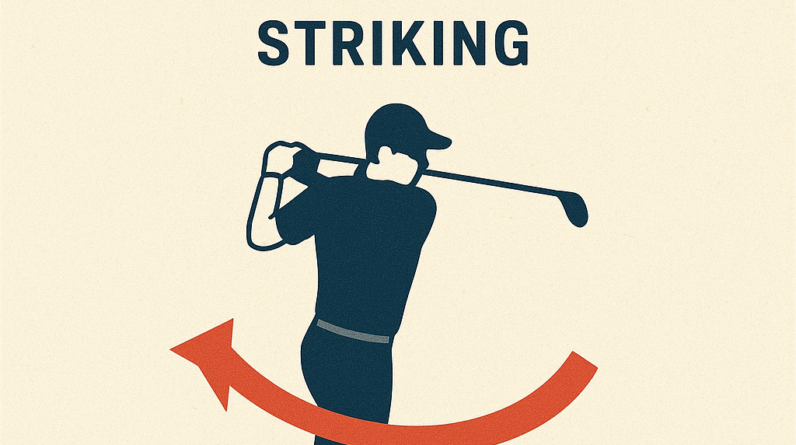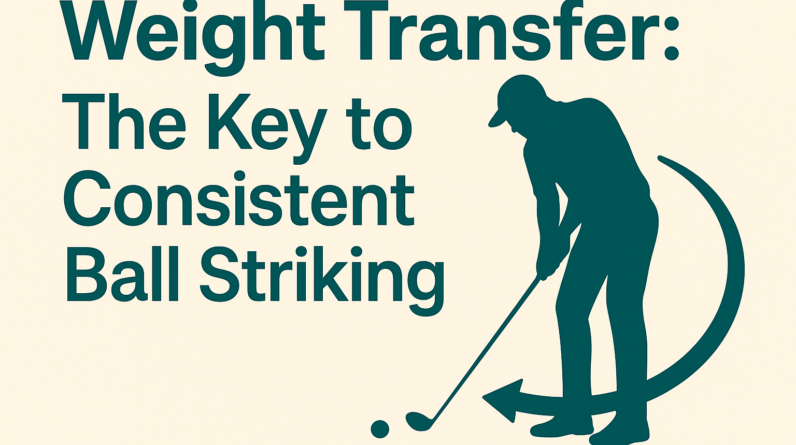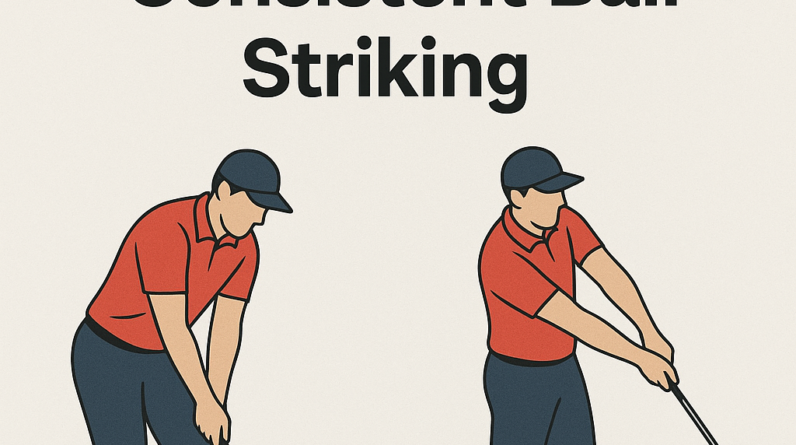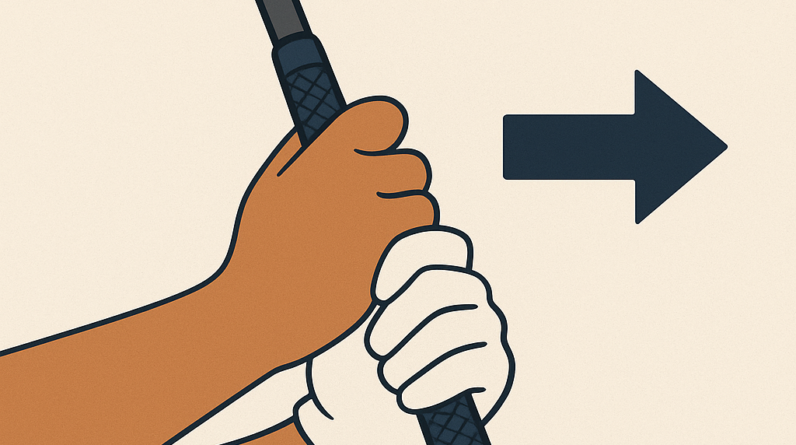

Weight Transfer: The Key to Consistent Ball Striking
Focusing on weight transfer gives you a simple, repeatable way to improve contact, distance, and accuracy. Instead of thinking about every part of the swing, you’re guiding your body to move weight from the trail foot to the lead foot in a smooth, athletic sequence.
What the concept is
Weight transfer is the deliberate shifting of your body’s pressure from the back/trail side toward the front/lead side as you move from the top of the backswing to impact. In a good swing, your hips rotate and your legs drive the shift forward, so the lead foot bears most of the weight at impact. The goal is a balanced, centered finish with solid contact.
Why it matters to the golf swing
- Better contact and solid compression on the ball.
- More control over direction and flight, since the body is aligned to the target at impact.
- Increased power without extra effort, thanks to efficient sequencing of hip turn and leg drive.
- Improved balance, which reduces slices, pulls, and fat shots.
What the golfer should feel when doing it correctly
- Pressure shifting from the trail foot toward the lead foot as you start the downswing.
- Hip rotation leading the move, with the torso turning toward the target while the head stays relatively still.
- Weight planted more on the lead foot at impact, with a stable spine angle and quiet, balanced finish.
2–3 common mistakes and how to fix them
- Mistake: Weight stays on the back foot through impact.
- Fix: Feel the lead foot take the majority of the load at impact. Practice with a small cue: “press into the lead heel/forefoot as you swing through.” Keep your trail knee flexed but not locked, and maintain your spine angle so you don’t stall the move.
- Mistake: Weight shifts too early, before contact.
- Fix: Start the downswing with a hip turn and a deliberate push toward the target, but avoid leaping forward. A simple cue: “hips first, hands second.” Pause slightly at the top to let the timing catch up, then rotate into impact.
- Mistake: Lateral sway or slide instead of turning into impact.
- Fix: Focus on rotating the hips toward the target while keeping your head centered over the ball. Use a wall or alignment rod close to your right hip to remind you not to slide forward. Maintain your posture and finish tall and balanced.
One easy practice drill you can do at home or on the range
Pause-and-Shift Drill
- Take a comfortable stance with a mid-iron height from a normal setup.
- Take the club to the top of your backswing and pause for 1–2 seconds. Keep your spine angle and head in roughly the same place.
- Initiate the downswing with a deliberate hip turn and begin shifting weight toward your lead foot. Hold the shift as you swing through to a balanced finish.
- Repeat 8–12 times, focusing on feeling the weight move forward smoothly and finishing in balance.
Tip: perform this drill slowly at first, then build speed while preserving control. Imagine your weight as a gentle wave moving from the back foot to the front foot, never rushing the move.
Weight Transfer: The Key to Consistent Ball Striking
When athletes talk about solid contact, power, and accuracy, one core principle constantly emerges: weight transfer. Properly sequencing how you shift your body’s weight from back to front during a swing or stroke is frequently enough the difference between a mishit and a clean, crisp contact. in this guide, you’ll learn how weight transfer works across different ball sports, the biomechanics behind it, practical drills you can implement, and real-world examples that illustrate the impact of mastering this basic, yet powerful concept.
What is Weight Transfer and Why It Matters
Weight transfer refers to the purposeful, coordinated movement of your body’s weight from the back foot (or heel) to the front foot (or toe) in the moment of impact with the ball. This shift isn’t random; it’s a controlled transfer that optimizes balance, timing, club or racket head speed, and impact location. When executed correctly, weight transfer helps you:
- Increase clubhead or racket speed through the ball, contributing to distance and power.
- Maintain balance and body control, reducing off-center contact.
- Improve shot-to-shot consistency by creating repeatable contact patterns.
- Enhance timing by aligning the acceleration of the kinetic chain with the ball’s location.
Biophysical Underpinnings: How the Body Generates Power Through Transfer
The science behind weight transfer is rooted in the kinetic chain—the sequence of body segments that generate and transfer energy from the ground up to the ball. Key components include:
- Ground reaction forces: Your interaction with the playing surface provides the starting impulse. Efficient weight transfer converts ground reaction into forward momentum.
- Hip and torso sequencing: Coiled hips and a rotated torso store elastic energy, which is released as you push weight forward toward the target.
- spine and shoulder alignment: A stable spine angle allows the arms and club/racquet to accelerate with fewer energy leaks.
- Lower body engagement: A controlled shift from the back foot through the front foot helps create a forward propulsion path rather than a static “arm swing.”
Common terms you’ll hear
- Center of balance: Keeping your center over a dynamic sweet spot to maintain control.
- Sequencing: The order in which hips, torso, and arms contribute to the swing.
- Ground reaction forces: The pushback from the ground that enables acceleration through impact.
Core Concepts for Consistent Contact
Adopting a repeatable weight transfer pattern starts with solid fundamentals. Here are the core concepts players should internalize for any ball sport:
Stance and Posture
- Balanced, athletic stance with a slight knee bend and athletic spine angle.
- Weight anchored toward the midfoot, ready to move toward the front foot on impact.
- Neutral pelvis and upright upper body to allow clean hip rotation and shoulder alignment.
Footwork and Ground Reaction
- Experiment with a small, controlled shift of weight to the toes as you prepare to strike.
- Push off the back foot first, than transfer weight smoothly to the front foot at impact.
- Avoid excessive lateral weight shifts that destabilize balance.
Hip, Torso, and Arm Connection
- Lead with hips while maintaining a connected torso so the energy flows linearly toward the ball.
- Keep the trail elbow close to the body during the downswing to maintain leverage.
- Maintain a quiet head position to preserve timing and contact point.
Timing and rhythm
- Think of weight transfer as a dynamic cue—“load, unwind, and deliver.”
- Rhythm should feel like a controlled fall forward into the ball, not a sudden lunge.
- Consistency of tempo yields more visible results in both distance and accuracy.
Practical Drills to master Weight Transfer
Below are focused drills designed to ingrain a repeatable weight transfer pattern. They can be adapted for golf, tennis, baseball, or cricket with minor adjustments in stance and contact point.
Drill 1: Sit-Down Drill (Baseball/Basketball analogy)
How to perform:
- Stand tall with your feet shoulder-width apart. sit back slightly as if you’re sitting into a chair without moving your upper body backward.
- From this seated posture, initiate a forward weight shift through the front foot as you swing or strike the ball, focusing on keeping the back heel grounded until impact.
- Return to the starting posture and repeat 8–12 times.
Why it helps: Teaches the sensation of loading on the back leg and unloading through the front leg, which is key for consistent strike quality.
Drill 2: Step-Through Drill (Golf/Tennis Emphasis)
How to perform:
- Take your normal stance. Step forward with the lead foot into a narrow, controlled step that mirrors your swing path.
- as you step, allow your weight to move from the back foot to the front foot, finishing with your hips facing the target and your weight fully forward.
- Rehearse 6–10 repetitions on each side.
Why it helps: Empowers front-side foot contact and promotes forward momentum through impact.
Drill 3: Heel-to-Toe Transfer (Multi-Sport Application)
How to perform:
- Start with a light stance and a small amount of toe pressure, gradually transition weight from the heel to the toe across the step or swing arc.
- Focus on maintaining balance and a slight forward lean of the torso so the energy moves toward the target line.
- Perform 8–12 reps, alternating sides if applicable.
Why it helps: Reinforces the gradient of weight transfer rather than a binary back-to-front shift, improving timing and contact quality.
Drill 4: Pause-At-Impact Drill (Feedback for Timing)
How to perform:
- Swing to the impact zone and hold the position for 1–2 seconds while maintaining balance.
- During the hold,note how much weight is on the front foot and ensure the hips are open toward the target.
- Release smoothly into the follow-through and repeat 5–8 reps.
Why it helps: Improves awareness of weight distribution at impact, making it easier to reproduce a consistent strike.
In-Season and off-Season Training for Weight Transfer
Maintaining progression without causing overuse injuries requires periodized training. Consider these guidelines:
In-Season Focus
- Integrate weight-transfer cues into warm-ups and practice sessions.
- Keep drills low in tempo but high in quality to reinforce consistency under fatigue.
- Use video feedback to ensure the hips and torso are sequencing properly toward the target.
Off-Season Focus
- Emphasize foundational strength and mobility: hip hinge, ankle dorsiflexion, thoracic mobility, and core stability.
- progress weight-transfer drills from static to dynamic and from slower to faster tempos.
- incorporate balance and proprioception work to improve stability during the shift.
Benefits of Proper Weight Transfer
Understanding and applying correct weight transfer yields tangible benefits across sports and skill levels. Here are the most compelling advantages:
- Increased ball speed and distance: Proper transfer maximizes the effective acceleration of the striking implement as it meets the ball.
- Enhanced entry and impact quality: A forward weight shift helps contact occur on the optimal part of the face or sweet spot, reducing mishits.
- Better timing and rhythm: A repeatable transfer sequence simplifies timing, allowing players to hit the ball consistently at the same moment in thier swing or stroke.
- Improved balance under pressure: The ability to maintain a stable center of gravity during impact reduces wobble and off-center hits during matches or games.
- Transferable skill across sports: The same fundamental principles apply to golf swings, tennis groundstrokes, baseball/batting, and even cricket shots, allowing athletes to cross-train effectively.
case Studies and First-Hand Experiences
Case Study 1: Golf – Precision Over Power
A club-level golfer, alex, struggled with inconsistent ball striking, especially under pressure.After incorporating the sit-Down Drill and the Pause-At-Impact drill into a 6-week plan, Alex reported:
- 10–15% increase in fairways hit per round.
- Decrease in miss-hit balls due to improved front-side balance.
- More reliable distance control with consistent contact.
Key takeaway: Small, repeatable weight transfer cues can translate into meaningful on-course enhancement without needing stronger wrists or bigger swings.
Case Study 2: Tennis – Consistency on Groundstrokes
Pro-level amateur Mira observed that her forehand became more consistent after focusing on hip sequencing and weight transfer. Over three months,she noted:
- Increased shot-to-shot consistency,especially in cross-court rallies.
- Reduced grip pressure at impact, leading to less tension and smoother acceleration.
- Quicker recovery between shots due to improved balance after contact.
Key takeaway: Weight transfer is as much about maintaining a relaxed, efficient finish as it is about moving weight forward; tension disrupts timing.
Common Mistakes and How to Fix Them
- Mistake: Hanging back on the rear foot during impact.
- Fix: Practice loading the back leg with a light, controlled load then releasing weight forward through the snap point of contact.
- Mistake: Early forward lean causing early contact or top- or bottom-of-face hits.
- Fix: Work on posture and spine angle; use the Sit-Down Drill to feel proper sequencing before ballistic speed is added.
- Mistake: Over-rotating hips too early, leading to loss of control.
- Fix: Emphasize a stable upper body while allowing hips to rotate in a controlled,stage-by-stage fashion.
- Mistake: Rushing the transfer, resulting in off-center contact.
- Fix: Use tempo-based cues like “load,hold,deliver” to reduce timing confusion.
Fast Reference: Checklists and Practical Cues
Keep these cues in mind during practice sessions to reinforce consistent weight transfer:
- Load on the back foot during setup; feel the weight sit toward the heel.
- Initiate the move with the hips while keeping the upper body quiet.
- Shift weight forward through the midfoot to the front foot at impact.
- Finish with hips square to the target and a balanced, athletic finish.
- Maintain soft grip pressure to avoid decoupling energy transfer from the swing.
Table: Weight Transfer Signals and Corrections
| Stage of Swing | Key Signal/Cue | Common Mistake | Correction |
|---|---|---|---|
| Setup | Balanced, weight toward midfoot | Hanging back on the rear foot | Feel the back heel and toe; prepare to unload forward |
| Takeaway / Backswing | Hips load first, torso stays connected | Upper body early rotation | Lead with hips; keep head steady |
| Approach to Impact | Weight shifts to front foot, hips open | Sliding weight past front foot or stomping forward | Light, controlled forward push through midfoot |
| impact | Forward energy transfer; balanced finish | Over-rotation or late weight transfer | Pause at impact briefly; confirm weight on front foot |
| Follow-Through | Stable, athletic finish | Flailing or losing balance | Maintain finish with hips facing target |
Frequently Asked Questions
Is weight transfer the same for golf, tennis, baseball, and cricket?
The core principle is the same: a deliberate shift of weight from back to front to maximize power and control. The exact mechanics—timing,range of motion,and contact points—vary by sport due to equipment and stroke geometry.Adapting cues to each sport is essential for optimal results.
how long does it take to see improvements from weight-transfer training?
Most athletes notice a noticeable improvement within 3–6 weeks of consistent drills and feedback. For some, benefits appear sooner when they already have a solid base of athleticism; for others, it may take longer as they rewire motor patterns.
Can video feedback accelerate learning?
Yes. Slow-motion and side-view analysis help athletes visualize weight transfer patterns, identify timing gaps, and compare ideal vs. current mechanics. Pair video review with tactile drills for best results.
What role does balance play in accomplished weight transfer?
Balance is foundational. an unstable base makes it challenging to transfer weight smoothly, leading to inconsistent contact. Training balance,proprioception,and core stability supports reliable weight transfer even under fatigue.
Implementation Plan: 4-Week Weight Transfer Improvement Program
To help readers apply the concepts concretely, here is a practical, progressive plan you can follow. Adjust the weeks based on your sport and current skill level.
Focus on stance, posture, and initial back-foot loading. practice Sit-down Drill 3–4 times this week; add 5–10 minutes of balance work daily. - Week 2: Introduce Step-Through Drill and heel-to-Toe Transfer. Begin light ball contact work while maintaining weight on midfoot; record one practice session for feedback.
- Week 3: Add Pause-At-Impact Drill. Start combining with a normal swing or stroke at reduced speed; monitor timing and control.
- Week 4: Increase tempo while maintaining precision cues. Use video feedback or an instructor to confirm improved sequencing and a consistent finish.
First-Hand Experience: Practitioner Perspectives
Coaches and players at all levels consistently report that weight transfer, when taught with clear cues and retrievable drills, accelerates learning and reduces inconsistency. Here are a few succinct observations from seasoned practitioners:
- “The moment I felt the weight move forward at impact, I gained a more repeatable contact point.” — Golf coach
- “In tennis, stabilizing weight transfer helped my forehand cross-court become more reliable under pressure.” — Club player
- “Baseball hitters who started with back-foot loading and forward transfer saw fewer ground-ball hits and more line drives.” — Youth coach
Closing Notes: Integrating Weight Transfer into Your Practice
Weight transfer is a practical, repeatable skill that sits at the heart of consistent ball striking. By focusing on balance, sequencing, and controlled energy release through the strike, athletes across many sports can improve contact quality, power, and consistency. Use the drills and cues provided here to build a robust, sport-specific routine. The more you normalize the forward transfer through systematic practice,the more natural and repeatable your ball striking will become.
Additional Resources
- Video tutorials focusing on hip sequencing and weight transfer
- Printable cue cards with setup, takeoff, and impact cues
- Biomechanics articles explaining ground reaction forces and energy transfer